Cities around the world are embracing a new era of sustainable mobility with the introduction of catenary-free trams, a breakthrough in urban transport that is reshaping tourism experiences. Backed by transport ministries and urban mobility strategies, this innovation eliminates the need for overhead wires while ensuring efficient, high-capacity transit systems. As destinations seek to balance infrastructure development with heritage preservation, ground-based tram electrification is emerging as a preferred solution.
Traditional tram networks have long relied on overhead catenary systems to deliver continuous power. While effective, these visible wires can disrupt the aesthetic appeal of historic districts, cultural landmarks, and tourism-focused urban areas. Recognising this challenge, city planners and government authorities have increasingly turned to alternative solutions that maintain both functionality and visual integrity.
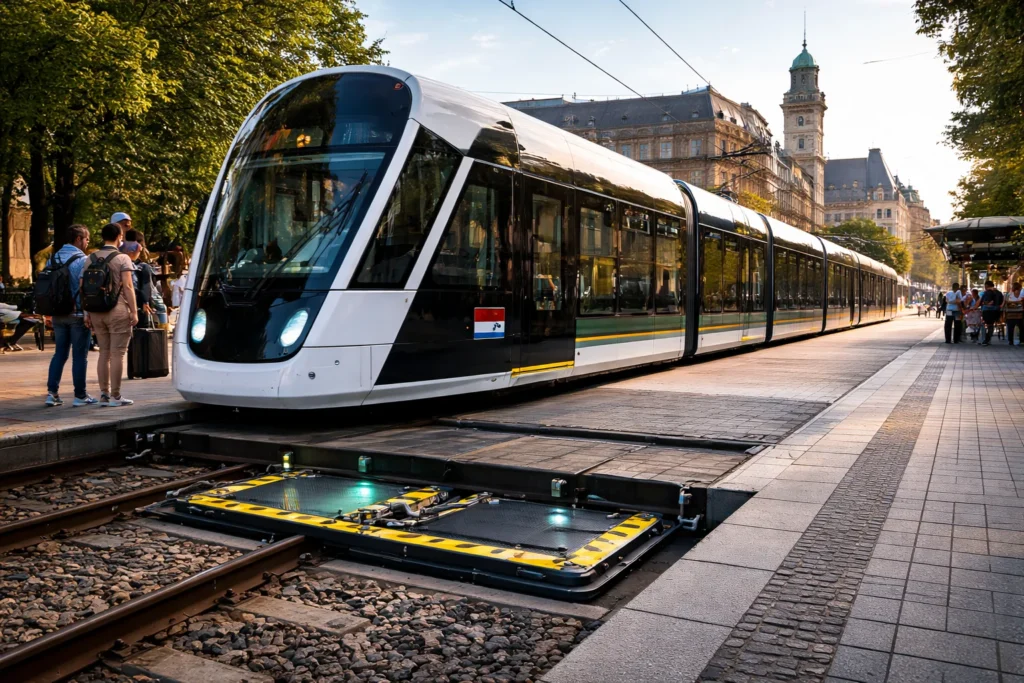
The introduction of static charging technology enables trams to draw power directly from ground-based infrastructure at designated stops. This system operates by embedding conductive rails within stations, which activate only when a tram is correctly positioned. During short dwell times, energy is transferred to onboard storage systems, allowing the tram to continue its journey without relying on overhead lines.
Transport authorities highlight that this approach aligns with broader urban planning goals aimed at enhancing public spaces and preserving architectural heritage. By removing visual clutter from cityscapes, catenary-free trams help maintain the charm of historic centres, making them more attractive to visitors. This is particularly important in tourism-driven cities where aesthetics play a key role in destination appeal.
The technology behind these systems is designed to deliver high levels of efficiency within limited time frames. Advanced collectors mounted on trams connect with ground-based rails to transfer substantial electrical current in just a few seconds. This rapid charging capability ensures that operations remain smooth and schedules are maintained, even during peak travel periods.
Government-led transport initiatives emphasise that such innovations contribute to improved service reliability and passenger comfort. With faster boarding and seamless energy transfer, travellers experience fewer disruptions and enjoy a more efficient journey. For tourists navigating unfamiliar cities, dependable public transport is a crucial factor in enhancing overall satisfaction.
A key advantage of catenary-free systems is their compatibility with modern onboard energy storage technologies. Trams equipped with batteries or supercapacitors can store energy during charging intervals and operate independently between stops. This flexibility allows for the design of routes that prioritise scenic and heritage areas without compromising transport efficiency.
Sustainability is central to the adoption of ground-based tram electrification. By supporting fully electric operations, these systems contribute to reduced greenhouse gas emissions and improved air quality. National and regional transport policies increasingly promote such solutions as part of broader commitments to green mobility and climate action.
Tourism boards have recognised the potential of sustainable transport to enhance destination branding. Cities that invest in eco-friendly infrastructure often attract environmentally conscious travellers who prioritise responsible tourism. The integration of clean transport systems also supports the development of pedestrian-friendly zones, further enriching the visitor experience.
In addition to environmental benefits, the technology offers operational advantages for urban transport networks. Reduced infrastructure requirements mean lower maintenance costs and greater flexibility in route planning. This allows city authorities to expand tram networks into areas where traditional systems may not have been feasible.
The deployment of catenary-free trams in tourism-sensitive locations demonstrates the adaptability of this technology. From historic European city centres to emerging cultural destinations, these systems are being implemented in areas where preserving the visual landscape is essential. Government-backed projects have shown that it is possible to combine modern transport solutions with heritage conservation.
Safety and reliability remain key priorities in the development of static charging systems. Advanced engineering ensures stable contact between the tram and ground rail, even in dynamic urban environments. Continuous testing and validation, supported by transport authorities, ensure that the systems perform consistently under real-world conditions.
As cities continue to evolve, the role of smart transport solutions in shaping tourism infrastructure becomes increasingly significant. Investments in modern tram systems not only improve mobility but also contribute to the overall attractiveness of urban destinations. By offering efficient, clean, and visually unobtrusive transport options, cities can create more welcoming environments for visitors.
The growing adoption of catenary-free trams reflects a broader shift toward integrated and sustainable urban mobility. Governments and transport agencies are prioritising solutions that support economic growth, environmental responsibility, and cultural preservation. These efforts are essential for building resilient tourism sectors that can adapt to changing traveller expectations.
With continued advancements in energy storage and electrification technologies, the future of urban transport looks increasingly innovative. Catenary-free tram systems are set to play a central role in this transformation, offering a model for cities seeking to modernise while preserving their unique identity.
As destinations invest in smarter and greener transport networks, travellers can look forward to more seamless and visually enriching journeys. The rise of catenary-free trams highlights how technology and tourism can work together to create sustainable, efficient, and culturally sensitive urban experiences.