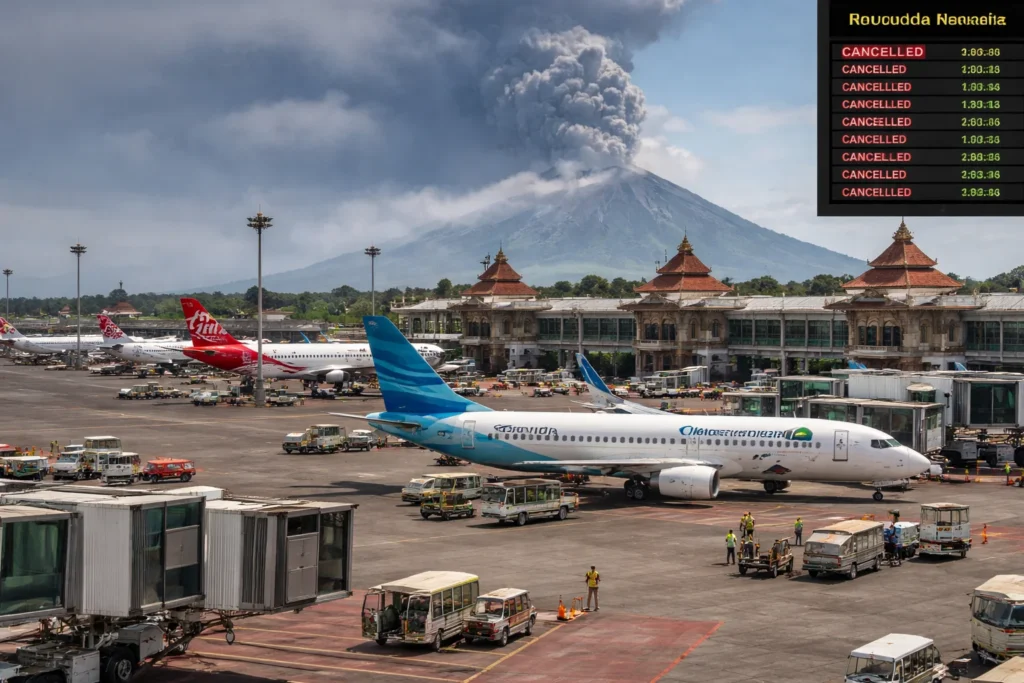
Bali flights are facing fresh disruption in April 2026 after volcanic ash from Mount Lewotobi affected air routes serving one of Southeast Asia’s busiest tourism destinations. The renewed activity has led to cancellations, delays, and rerouted services, creating challenges for travelers heading to or departing from Bali during a high-demand holiday period.
The latest disruption highlights how natural events can quickly affect global tourism hubs that depend heavily on air connectivity. Bali remains one of Asia’s most popular island destinations, welcoming visitors for beach holidays, wellness retreats, luxury resorts, cultural experiences, and family travel. Any interruption to flight schedules can therefore create immediate effects across airlines, hotels, tour operators, and passenger plans.
Authorities and airlines continue to prioritize safety while monitoring volcanic conditions and adjusting operations as needed.
Bali Flights Affected by Volcanic Ash Risk
Volcanic ash poses a serious challenge to aviation because fine particles can damage aircraft engines, reduce visibility, and interfere with onboard systems. For this reason, airlines avoid flying through contaminated airspace whenever ash advisories are issued.
Although Mount Lewotobi is located in East Nusa Tenggara, shifting weather patterns can move ash toward flight corridors connected to Bali’s I Gusti Ngurah Rai International Airport. When this happens, airlines may delay departures, cancel services, or use longer alternate routes.
For passengers, this can mean schedule changes with little notice, especially when weather conditions evolve quickly.
Safety protocols remain the top priority, and temporary disruptions are often necessary to protect passengers, crews, and aircraft.
Bali Tourism Faces Peak Season Pressure
April is an important travel month for Bali as many international markets enter holiday periods. The island usually sees strong demand from Australia, Southeast Asia, Europe, the Middle East, and domestic Indonesian travelers.
Popular visitor segments include:
Beach Holidaymakers: Travelers visiting Seminyak, Kuta, Nusa Dua, and Jimbaran.
Luxury Travelers: Guests booking villas, premium resorts, and wellness retreats.
Family Visitors: Holidaymakers choosing Bali for school breaks and resort stays.
Adventure Seekers: Visitors exploring waterfalls, diving sites, surfing beaches, and volcano landscapes.
Cultural Tourists: Travelers heading to Ubud, temples, dance performances, and local craft villages.
When flights are disrupted during busy periods, accommodation providers, airport services, and transport companies may need to adapt quickly to changing arrival patterns.
Thousands of Travelers Impacted
The latest ash episode has reportedly affected thousands of passengers through cancellations, diversions, and rebookings. Some travelers may face overnight delays, while others could be rerouted through alternative hubs or moved to later departures.
For connecting passengers, delays in Bali can also affect onward travel to destinations such as Australia, Singapore, Kuala Lumpur, Bangkok, the Middle East, and Europe.
In highly connected tourism markets, one disrupted route can create a ripple effect across multiple countries and airlines.
Despite these challenges, many flights may continue operating depending on real-time ash movement, wind direction, and route availability.
Why Bali Remains a Strong Tourism Destination
Temporary flight disruptions do not change Bali’s long-term appeal as one of the world’s leading island destinations. The island continues to attract repeat visitors because of its strong tourism offerings, warm hospitality, and wide range of experiences.
Top reasons travelers choose Bali include:
Beautiful Beaches: Surfing, sunsets, beach clubs, and island relaxation.
Culture and Heritage: Temples, ceremonies, traditional dance, and arts.
Nature Escapes: Rice terraces, waterfalls, jungles, and scenic highlands.
Wellness Travel: Yoga retreats, spas, holistic resorts, and healing escapes.
Affordable Luxury: Strong value across villas, dining, and experiences.
Island Hopping: Easy access to Nusa Penida, Lombok, and nearby islands.
These strengths help Bali recover quickly after temporary disruptions.
What Travelers Should Do Now
Passengers traveling to or from Bali during volcanic activity should remain flexible and stay informed through official channels. Conditions can change rapidly, and airlines may update schedules throughout the day.
Helpful travel tips include:
Check Flight Status Daily: Use airline apps and official airport updates.
Enable Notifications: Turn on alerts for booking changes and gate updates.
Arrive Prepared: Carry essentials, chargers, documents, and medications in hand luggage.
Allow Extra Time: Build flexibility into airport transfers and connections.
Review Booking Policies: Understand rebooking or refund options.
Choose Flexible Hotels: If possible, select accommodation with change-friendly terms.
Follow Local Guidance: Rely on airport authorities and airline instructions.
Prepared travelers can often manage disruptions more smoothly.
Tourism Businesses Adapt Quickly
Bali’s tourism industry has extensive experience responding to weather events, volcanic activity, and changing travel conditions. Hotels, drivers, tour operators, and hospitality staff often adapt quickly when schedules shift.
Common responses include:
- Flexible airport transfers
- Revised check-in arrangements
- Rescheduled excursions
- Support with local transport
- Additional guest assistance desks
- Extended stays when flights change
This adaptability helps protect the visitor experience even during periods of uncertainty.
Wider Importance of Resilient Air Connectivity
Island destinations like Bali depend heavily on aviation. Reliable flights support tourism jobs, local businesses, investment, and international market access. When disruptions occur, resilience becomes essential.
That includes:
- Clear passenger communication
- Fast rebooking systems
- Strong airport operations
- Tourism industry coordination
- Flexible traveler planning
- Real-time weather and hazard monitoring
Bali’s continued popularity means airlines and tourism operators remain highly motivated to restore schedules quickly whenever conditions improve.
Outlook for Bali Travel After the Ash Event
Once volcanic activity eases and airspace conditions normalize, flight operations are expected to recover progressively. Many travelers who postpone trips during disruption periods later rebook rather than cancel Bali holidays entirely.
Demand for Bali remains strong thanks to the island’s global reputation and broad appeal across leisure, family, wellness, and luxury markets.
The latest ash-related disruption is therefore likely to be a short-term challenge rather than a lasting setback.
Bali Flights Disruption Shows Importance of Flexible Travel
The current Bali flights disruption is a reminder that nature can influence even the most established tourism destinations. However, it also shows the strength of modern aviation safety systems and the resilience of Bali’s visitor economy.
For travelers, flexibility and regular updates are key. For tourism businesses, rapid adaptation remains essential. For Bali, the long-term outlook remains positive as the island continues to welcome visitors from around the world.
With safety measures in place and strong tourism demand intact, Bali is expected to remain one of Asia’s most desirable travel destinations long after the current ash event passes.