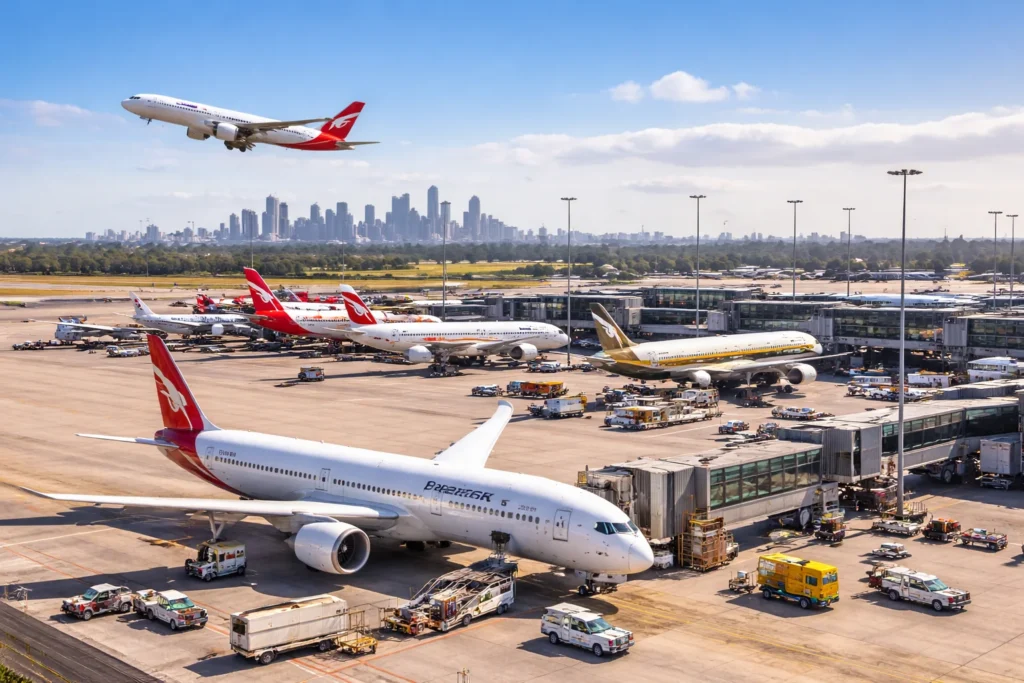
Melbourne Airport has reached a new milestone after welcoming more than one million international passengers in March 2026 for the first time in its history. The achievement highlights the strength of global travel demand to Victoria and reinforces Melbourne’s position as one of Australia’s leading tourism gateways.
According to the latest airport figures, more than 1,002,000 international travellers passed through Melbourne Airport during March, setting a new monthly record and surpassing the previous March high recorded in 2025. Overall passenger traffic also climbed above 3.1 million people, driven by major events, holiday travel and growing airline capacity.
For the tourism industry, the results are a powerful signal that visitor demand remains resilient despite wider geopolitical and economic challenges.
Why This Record Matters for Tourism
Airports are often one of the clearest indicators of tourism performance. Rising passenger numbers usually reflect stronger holiday demand, more business travel and greater confidence among travellers.
Melbourne Airport’s record month suggests growing momentum across several key tourism segments:
- International leisure travel
- Visiting friends and relatives travel
- Business and conference trips
- Major event tourism
- Domestic holidays
- Long-haul gateway traffic
When international arrivals increase, hotels, attractions, restaurants, retailers and local transport providers often benefit across the wider destination economy.
Melbourne’s Global Appeal Continues to Grow
Melbourne has long been one of Australia’s most attractive cities for international visitors. The city is known for its major sporting calendar, cultural precincts, food scene, shopping, laneway experiences and gateway access to regional Victoria.
Popular reasons travellers choose Melbourne include:
- World-class sporting events
- Arts and live entertainment
- Coastal drives and wine regions
- Culinary tourism
- Luxury shopping
- Nature escapes near the city
- Strong education and business links
This broad appeal helps Melbourne attract visitors across multiple seasons rather than relying on one travel period alone.
Formula 1 and Events Tourism Drive Demand
One of the biggest contributors to March travel demand was the Melbourne Formula 1 Grand Prix, which continues to be one of Australia’s most significant annual tourism events. Global sporting events generate strong demand for flights, accommodation and local experiences.
Visitors attending major events often extend their stays to explore more of the destination, increasing tourism spending across the city.
March also included the Labour Day long weekend, supporting domestic leisure demand and short-break travel.
This combination of international event visitors and domestic holidaymakers helped push total airport traffic to record levels.
Strong International Recovery Despite Disruptions
The March result is particularly notable because some international services were disrupted during the month due to airspace issues affecting important global routes. Even with those challenges, passenger demand remained strong enough to set a new record.
This suggests Melbourne’s connectivity is increasingly diversified, with travellers using alternative hubs and carriers across Asia and North America.
A diverse route network is valuable because it improves resilience during temporary disruptions and gives travellers more options.
New Airline Capacity Boosts Choice
Recent airline developments have also strengthened Melbourne’s international offering. New and expanded services improve access, increase competition and support tourism growth.
Recent network highlights include:
- Daily AirAsia flights to Bali
- Additional widebody capacity on Singapore services
- Future daily London Heathrow service announced from 2027
- Strong demand through Southeast Asian hubs
- High loads through China and North American gateways
More capacity usually means greater schedule choice and can help support fare competition over time.
Bali, London and Asia Connections Matter
Direct and one-stop links to major destinations are essential for tourism success. Bali remains one of the most popular leisure markets for Australian travellers, while London is one of the most important long-haul connections for business, family and holiday travel.
Meanwhile, Southeast Asia continues to play a critical role as a connecting bridge between Australia and Europe, India and other global markets.
These links help Melbourne in two ways:
- Outbound Australians can travel more easily
- Inbound international visitors can reach Melbourne more conveniently
That two-way demand strengthens airline confidence in expanding routes.
Infrastructure Investment Supports Future Growth
With passenger demand rising, airport infrastructure becomes increasingly important. Melbourne Airport has outlined major investment plans designed to meet future demand and improve the traveller experience.
Key upgrades include:
- A third runway
- International terminal expansion
- Improved baggage systems
- Enhanced pick-up and drop-off areas
- Greater flexibility for airline scheduling
- More long-term capacity for growth
For tourism, airport expansion is about more than aviation. It supports visitor arrivals, major events, trade activity and destination competitiveness.
Why Domestic Travel Also Matters
While international traffic captured attention, domestic passenger growth also remains important. Domestic routes connect Melbourne with other Australian capitals, regional centres and leisure destinations.
Strong domestic demand supports:
- Interstate city breaks
- Family visits
- Business travel
- Festival tourism
- Regional Victoria exploration
A healthy mix of domestic and international traffic helps stabilise tourism throughout the year.
What Travellers Can Expect in 2026
Passengers using Melbourne Airport this year can expect a busy travel environment as demand remains elevated. Early booking, flexible scheduling and extra time at peak periods may help create a smoother journey.
Travellers are likely to see:
- More route announcements
- Strong school holiday demand
- Busy weekends around events
- Continued terminal upgrades
- More long-haul capacity over time
As infrastructure projects progress, the airport experience is expected to improve further.
Melbourne’s Tourism Outlook Remains Strong
The latest record shows that travel remains a priority for many consumers, even in a period of cost pressures and global uncertainty. People continue to value holidays, family reunions and memorable experiences.
Melbourne is well positioned to benefit because it combines international appeal, major events, strong airline partnerships and ongoing infrastructure investment.
Final Tourism Outlook
Melbourne Airport’s record-breaking March is more than an aviation milestone. It reflects the city’s growing tourism strength and Australia’s continued appeal on the world stage.
For travellers, it means more connectivity and expanding options. For businesses, it signals stronger visitor demand. For Melbourne, it confirms that the city remains one of the Southern Hemisphere’s most dynamic and desirable travel destinations in 2026.