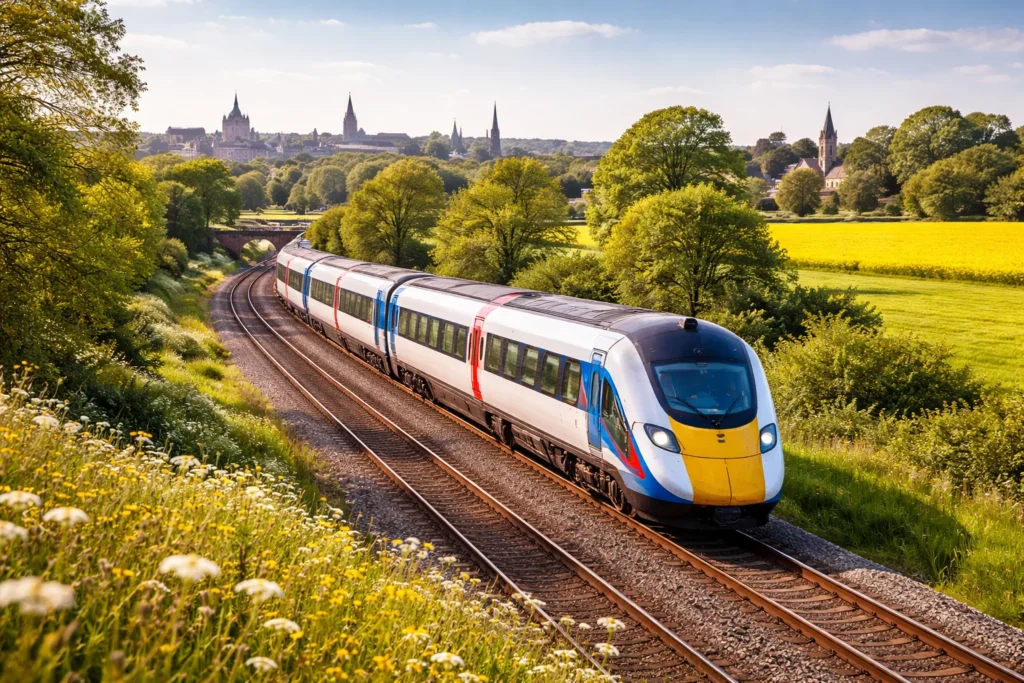
East West Rail has unveiled updated plans that could reshape tourism, regional travel and economic growth across one of England’s most important development corridors. The latest proposals include an accelerated construction programme, new delivery phases, larger trains and services of up to five trains an hour, creating a stronger vision for future connectivity between Oxford, Milton Keynes, Bedford and Cambridge.
The railway is designed to reconnect major knowledge hubs, growing towns and visitor destinations while improving access for residents and businesses. For the tourism sector, the project could become one of the most significant transport upgrades in the United Kingdom over the coming decade.
Faster rail journeys, easier day trips and improved access to future attractions could drive new visitor demand across the region.
Why East West Rail Matters to Tourism
Modern tourism depends on smooth movement between cities, attractions and accommodation hubs. When transport becomes faster and more frequent, travellers are more likely to explore multiple destinations in one trip.
East West Rail is expected to support tourism by:
- Improving regional day-trip travel
- Encouraging multi-city holidays
- Reducing road congestion
- Strengthening business event travel
- Connecting new attractions
- Supporting hotel and hospitality growth
- Expanding sustainable travel options
For domestic and international visitors alike, easier rail travel can turn separate destinations into one connected tourism experience.
Four Major Cities, One Stronger Visitor Corridor
The route linking Oxford, Milton Keynes, Bedford and Cambridge brings together cities already known for education, heritage, innovation and leisure travel.
Each destination offers unique appeal:
- Oxford for historic colleges and culture
- Cambridge for architecture and punting experiences
- Milton Keynes for shopping, family entertainment and events
- Bedford for riverside attractions and gateway access to wider Bedfordshire
When linked by high-frequency rail, these cities become more attractive as part of a combined itinerary rather than standalone visits.
Travellers could spend a morning in one city and an evening in another with far greater convenience.
Up to Five Trains an Hour Could Change Travel Habits
One of the most important updates is the proposal for a core service of four trains per hour across the route, with a possible fifth train during peak periods or all day if required.
High-frequency service matters because travellers value flexibility. They are more likely to choose rail when departures are regular and planning feels simple.
Benefits of frequent service include:
- Shorter waiting times
- Easier spontaneous travel
- Better commuter and leisure balance
- Stronger event travel capacity
- More attractive weekend tourism
- Better links for hotel guests
Reliable frequency can be just as important as speed in shaping visitor choices.
Bigger Trains Reflect Rising Demand
The proposal for five-carriage trains instead of four signals confidence in future passenger demand. Growing capacity can help avoid overcrowding and improve comfort during busy periods.
This is especially important for:
- Summer travel peaks
- University terms
- Sporting events
- Festivals and exhibitions
- Holiday weekends
- Family travel periods
Comfortable capacity supports positive visitor experiences and repeat travel.
Theme Park Access Could Become a Major Tourism Driver
The updated consultation also reflects plans for a major entertainment resort near Bedford, with provision for a station at Stewartby to serve the future destination.
If delivered, direct rail access to a major leisure attraction could become a game changer for UK family tourism. Visitors increasingly prefer attractions that are easy to reach without relying entirely on private cars.
A dedicated station could support:
- Family weekend breaks
- International visitors arriving by rail
- Package holidays with hotels
- Event and conference traffic
- Sustainable visitor transport
Strong rail links often increase the appeal and catchment area of large attractions.
Supporting Sustainable Travel in the UK
Rail continues to play a central role in the UK’s transport and environmental goals. As travellers become more aware of sustainable choices, better train services can encourage lower-emission journeys compared with many road alternatives.
Tourism destinations connected by rail may benefit from stronger sustainability credentials while reducing traffic pressure in historic city centres.
For visitors, rail also offers practical advantages such as city-centre arrivals, less parking stress and easier group travel.
Boost for Regional Economies and Hospitality
Transport investment often creates benefits beyond travel itself. Easier connectivity can stimulate hotel development, restaurant demand, retail spending and conference activity.
A stronger East West corridor may help attract:
- New hotels near stations
- Expanded visitor attractions
- Business events and meetings
- Restaurant and nightlife growth
- Investment in town centres
- New tourism jobs
This can be especially valuable for towns that gain improved visibility through the network.
Why 2026 Is an Important Moment
The consultation period marks a key stage before the project moves toward formal approvals. It also comes at a time when UK tourism is increasingly focused on domestic exploration, regional experiences and transport-led growth.
Travellers now seek:
- Shorter breaks with less hassle
- Easy weekend escapes
- Multi-destination trips
- Sustainable transport choices
- Experience-rich regional travel
East West Rail aligns closely with these trends.
What Travellers Should Watch Next
As planning progresses, future visitors and local businesses should watch for announcements on:
- Construction timelines
- Station locations
- Service patterns
- Journey times
- Integration with existing rail networks
- Attraction development near Bedford
These details will shape how quickly tourism benefits begin to appear.
A New Era for the Oxford-Cambridge Corridor
The broader region is already recognised for innovation, education and business strength. Better rail connectivity could add a powerful leisure dimension, encouraging more people to visit for culture, family travel and short breaks.
With millions of people living across the wider corridor, the route also has strong built-in domestic demand.
That combination of resident travel and visitor growth can create a durable long-term tourism market.
Final Tourism Outlook
East West Rail is more than a transport project. It is a future tourism corridor linking iconic university cities, growing towns and potential new attractions through faster, more frequent and more convenient travel.
For travellers, it promises easier exploration of central England. For destinations, it offers stronger visitor economies and new investment opportunities. If delivered as planned, East West Rail could become one of the UK’s most important tourism success stories of the next decade.