Thailand’s aviation sector is facing fresh travel disruption after a new wave of flight cancellations affected major airports in Bangkok, Phuket and Chiang Rai, reducing both domestic and international connectivity. The latest Thailand flight cancellations impacted routes to Munich, Melbourne, Kuala Lumpur, Colombo, Chiang Mai and Chiang Rai, creating new uncertainty for travelers across one of Asia’s busiest tourism markets.
Although the number of cancelled flights remains limited, the affected routes include high-value long-haul services, regional business links and important domestic sectors. That combination increases the impact on passengers, airlines and tourism businesses alike.
With Thailand entering another active travel period, even a small cluster of cancellations can quickly reshape schedules, hotel arrivals and onward connections.
Bangkok Faces the Biggest Operational Pressure
Bangkok once again sits at the center of the disruption.
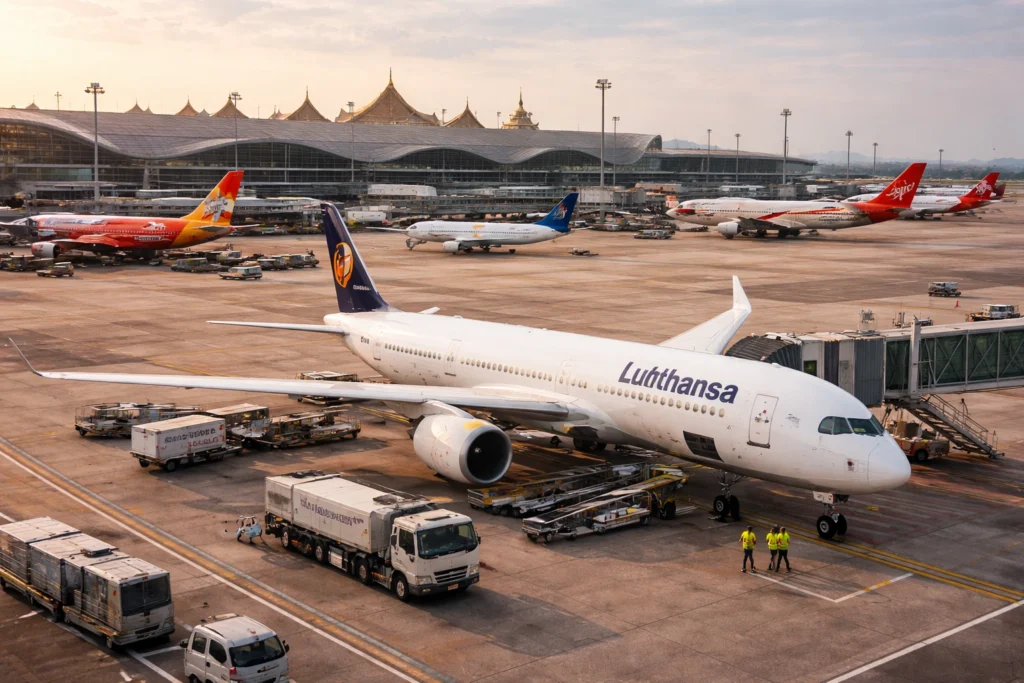
At Suvarnabhumi Airport, several departures were removed from schedules, affecting both overseas and domestic travelers. Among the most notable was a Lufthansa service to Munich, a major route linking Thailand with Europe.
The cancellation matters because Europe remains one of Thailand’s strongest long-haul visitor markets. Flights to Germany support tourism, business travel and connecting traffic across the continent.
Bangkok also saw suspended services to Colombo, Chiang Mai and Chiang Rai. These routes serve very different passenger groups, from international transit travelers to domestic holidaymakers and corporate flyers.
As Thailand’s main gateway, Bangkok handles millions of passengers every year. Therefore, disruptions there can spread quickly across the wider network.
Don Mueang Sees Regional Setback
Don Mueang International Airport, a major low-cost carrier hub, also recorded disruption with a cancelled flight to Kuala Lumpur.
That route remains one of Southeast Asia’s key city pairs, linking two major capitals with strong tourism and business demand. Reduced capacity on the corridor may push some passengers onto later departures or alternative airlines.
Because Don Mueang supports a large volume of budget-conscious travelers, schedule changes there can affect leisure demand quickly.
Phuket Loses a Key Australia Link
Phuket International Airport also reported an important cancellation with a suspended Melbourne departure.
The Phuket–Australia market plays a valuable role in Thailand’s tourism economy, especially for beach holidays, longer stays and premium leisure travel. Australia has long ranked among Phuket’s important inbound markets, making direct connectivity especially valuable.
When a long-haul service is cancelled, the impact often stretches beyond the airport. Hotels, resorts, transfer operators and excursion providers can all feel the effect if arriving travelers delay or change plans.
For visitors already in Phuket, outbound disruption can also create extra nights of accommodation demand and last-minute rebooking pressure.
Northern Thailand Connectivity Tightens
Domestic routes in northern Thailand also came under pressure.
Flights between Bangkok and Chiang Mai, Bangkok and Chiang Rai, plus Chiang Rai back to Bangkok were among those cancelled. These routes are essential for domestic tourism because they connect visitors with cultural attractions, mountain escapes and cooler-season travel markets.
Chiang Mai remains one of Thailand’s most popular domestic destinations, while Chiang Rai draws growing interest for nature, heritage and slower-paced tourism.
When air capacity tightens on these routes, some travelers may shift to rail or road transport. However, that often means longer journey times and less convenience.
What This Means for Travelers
Passengers flying to, from or within Thailand may need to plan more carefully in the short term.
Travelers could face:
Longer waits for rebooking on popular routes
Missed onward connections through Bangkok
Higher fares on remaining seats
Extra hotel or transport costs after delays
Changes to domestic itineraries in northern Thailand
International visitors connecting through Bangkok should allow more time and monitor airline notifications closely.
Why Small Numbers Can Cause Big Disruption
Seven cancellations may appear modest in a large aviation market, yet the route mix explains the wider effect.
Long-haul flights to Munich and Melbourne carry large passenger loads. Regional links like Kuala Lumpur and Colombo support steady traffic. Domestic routes to Chiang Mai and Chiang Rai serve daily tourism flows.
When all three segments face disruption at once, recovery becomes more complex because airlines must manage aircraft positioning, crew schedules and passenger reaccommodation simultaneously.
Tourism Industry Watches Closely
Thailand depends heavily on smooth air access. Tourism businesses across Bangkok, Phuket and northern provinces rely on predictable arrivals, especially during strong demand periods.
Hotels may see later check-ins or booking changes. Tour operators can face altered pickup schedules. Domestic destinations may lose short-break demand if travelers postpone trips.
Even so, Thailand’s diversified tourism base and large airline network often help the market recover quickly from short-term disruption.
Outlook
Thailand remains one of the world’s leading travel destinations, supported by strong regional demand and broad international connectivity. The latest Thailand flight cancellations show that even a limited operational shock can affect multiple parts of the travel economy.
If airlines restore services quickly, disruption should remain temporary. However, continued pressure on aircraft, crews or airport operations could lead to further short-term adjustments in the days ahead.
For more travel news like this, keep reading Global Travel Wire