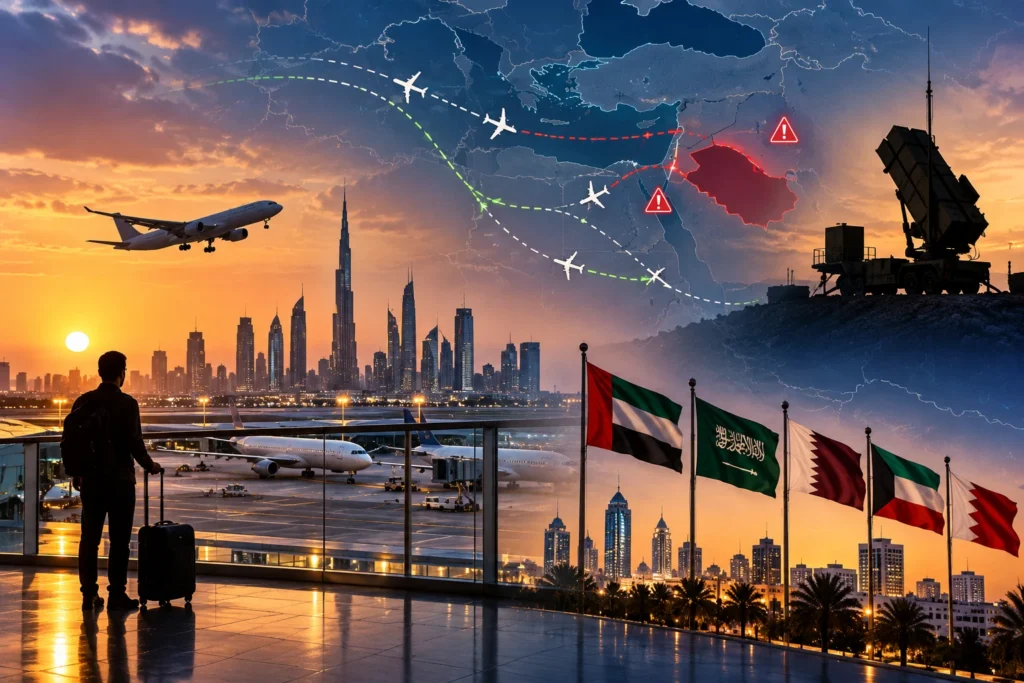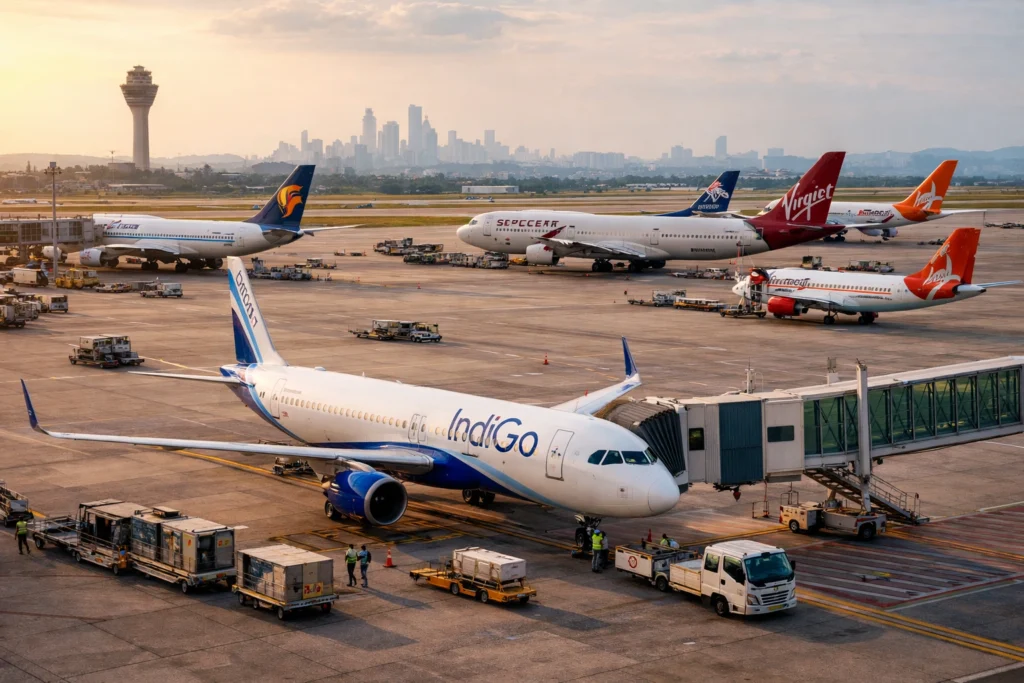
India’s aviation network is facing renewed pressure after more than 40 flights were cancelled across major airports, disrupting both domestic and international travel during a busy operating period. The latest India flight cancellations April 2026 affected Delhi, Mumbai, Bengaluru, Hyderabad, Chennai, Kolkata, Ahmedabad and Kochi, while long-haul services to Frankfurt, Munich, London and Kuwait also dropped from schedules.
The cancellations involved leading carriers including IndiGo, Lufthansa, Virgin Atlantic, SpiceJet, Akasa Air and Kuwait Airways. For travelers, the result has been fewer flight choices, tighter schedules and growing uncertainty across several high-demand routes.
Mumbai Records the Highest Number of Cancellations
Mumbai emerged as the most affected airport in the latest disruption cycle, with the largest concentration of cancelled departures.
International services suffered a major setback as Lufthansa suspended flights to Frankfurt and Munich, while Virgin Atlantic removed two London Heathrow departures from schedules.
Domestic routes also faced widespread disruption. Flights to Nagpur, Jaipur, Varanasi, Chennai, Goa and Delhi were among those cancelled.
Because Mumbai serves as one of India’s busiest business and tourism gateways, operational pressure there can spread quickly through the national network. Missed connections, delayed onward journeys and last-minute fare increases often follow when capacity tightens in the city.
Delhi Sees Domestic and Long-Haul Pressure
Indira Gandhi International Airport also reported multiple cancellations, affecting both internal connectivity and overseas travel.
Lufthansa services to Frankfurt and Munich were among the most notable suspensions. At the same time, domestic flights to Mumbai, Bhubaneswar and Srinagar also dropped from schedules.
Delhi plays a central role in India’s aviation system as a transfer hub for both local and international passengers. Therefore, even a limited number of cancellations can affect travelers across many cities, especially those connecting onward to Europe, the Middle East or regional Indian destinations.
Hyderabad Hit by Strong Domestic Disruption
Hyderabad recorded one of the highest cancellation totals after Mumbai, highlighting heavy pressure on domestic operations in southern India.
Flights to Vijayawada, Tirupati, Surat and Rajahmundry were among those affected. SpiceJet also suspended services to Shivamogga and Chennai, while a Frankfurt-bound Lufthansa departure was cancelled.
This pattern shows how regional networks can feel the impact quickly when airlines rebalance aircraft and crew resources. Routes with fewer daily frequencies often become harder to recover when disruptions begin.
For business travelers and short-break passengers, Hyderabad’s schedule cuts may lead to longer journeys and reduced flexibility.
Bengaluru and Chennai Lose Key Connections
Bengaluru also experienced cancellations, including a Lufthansa Boeing 747 service to Frankfurt. Domestic flights to Mumbai and Kochi were also affected.
As India’s leading technology and corporate travel market, Bengaluru depends on reliable schedules for both domestic and international mobility. Any prolonged disruption could influence business trips, meetings and premium travel demand.
Chennai reported several cancellations as well. A Lufthansa service to Frankfurt was removed, while regional routes to Shivamogga and Hyderabad also faced suspensions.
With both Bengaluru and Chennai under pressure, southern India’s aviation corridor now faces added strain.
Kolkata, Ahmedabad and Kochi Also Affected
The disruption extended beyond India’s largest metro airports.
Kolkata reported cancellations on routes to Chennai and Guwahati. Ahmedabad saw flights to Navi Mumbai, Diu and Chennai suspended.
Kochi also recorded multiple cancellations, including domestic services to Bengaluru and Navi Mumbai, along with an international Kuwait Airways flight to Kuwait.
These developments matter because regional airports increasingly support India’s tourism growth, domestic leisure travel and diaspora traffic. When services drop suddenly, local economies can feel the effect through weaker arrivals and postponed trips.
What the Pattern Reveals
The latest India flight cancellations April 2026 point to several clear trends.
First, multiple Lufthansa services to Frankfurt and Munich were cancelled from different cities, suggesting sustained pressure on Europe-bound operations.
Second, domestic low-cost carriers accounted for a large share of internal disruptions. That indicates network-wide adjustments across high-frequency short-haul markets.
Third, both metro airports and secondary cities were affected at the same time. This often reflects broader operational strain rather than isolated airport issues.
Finally, domestic and international routes were disrupted together, increasing complexity for passengers with onward connections.
What Travelers Should Expect
Passengers flying across India may need extra flexibility in the coming days.
Travelers should monitor airline notifications closely and arrive early at airports. Rebooking on popular routes could become harder, especially to Delhi, Mumbai, Bengaluru and Chennai.
International passengers heading to Europe or London may face longer wait times, alternate routings or revised departure dates if capacity remains tight.
Those with hotel bookings, tours or important meetings should review cancellation terms and keep backup plans ready.
Impact on Tourism and Airlines
For airlines, cancellations can help stabilize punctuality and protect network performance. However, they also reduce seat inventory and increase customer service pressure.
For tourism businesses, fewer flights can slow visitor arrivals, affect weekend demand and create uncertainty for inbound travelers.
Hotels, travel agents and tour operators may also see more short-notice changes as passengers adjust plans.
Outlook
India remains one of the fastest-growing aviation markets in the world, supported by rising demand and expanding airport infrastructure. Yet the latest disruption shows how quickly operational pressure can affect multiple cities at once.
If schedules recover soon, the impact may stay temporary. However, continued cancellations across both domestic and international routes would signal a longer period of volatility for India’s travel sector.
For more travel news like this, keep reading Global Travel Wire