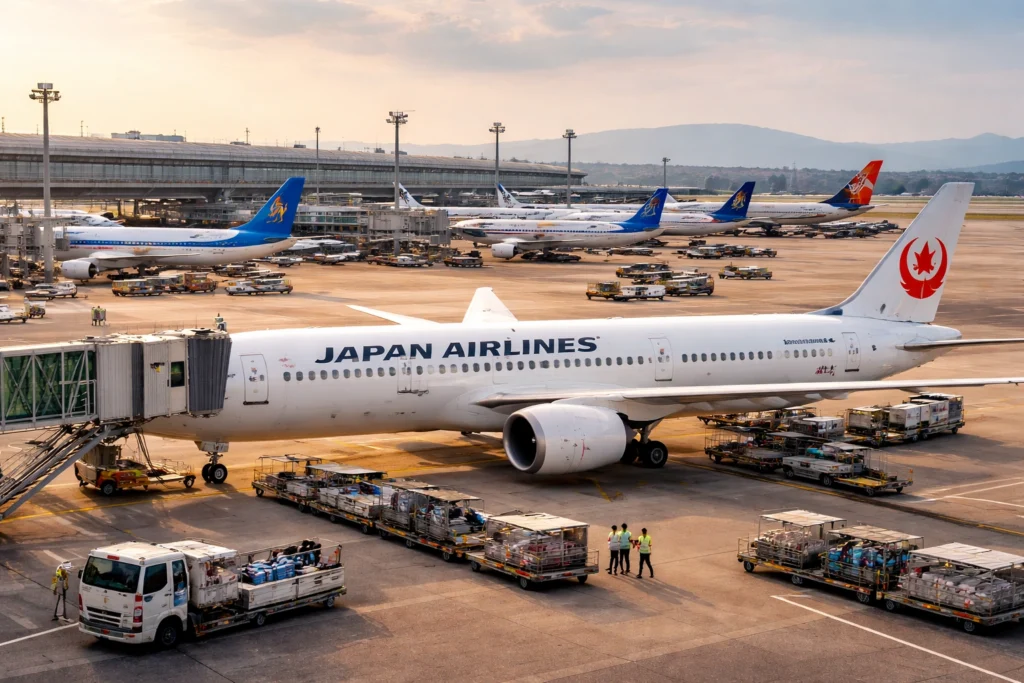
Japan’s aviation network is facing fresh pressure after more than 30 flight cancellations disrupted domestic and international travel across several of the country’s busiest airports. The latest wave of Japan flight cancellations has affected Tokyo Narita, Kansai, Fukuoka, New Chitose, Osaka Itami, Chubu Centrair and Naha, creating challenges for passengers during a busy travel period.
Airlines including Japan Airlines, All Nippon Airways, United Airlines, Jetstar Japan and several regional operators reduced services across multiple routes. The cuts affected high-demand domestic sectors as well as leisure-focused international links to Guam and Saipan.
For travelers, the immediate impact includes fewer departure options, tighter schedules and possible delays when rebooking.
Tokyo Narita Sees the Highest Number of Cancellations
Narita International Airport emerged as the most affected hub in the latest disruption cycle. Because Narita serves both overseas markets and domestic connections, schedule cuts there can quickly spread across the wider network.
Cancelled departures from Narita included flights to Chubu Centrair, Osaka Itami, Takamatsu, New Chitose and Fukuoka. International routes to Guam and Saipan also faced suspensions.
The repeated cancellation of Guam services stands out as a major concern for leisure travelers. Guam remains a popular short-haul overseas destination for Japanese holidaymakers, and reduced capacity can quickly push up fares or limit travel choices.
Narita’s role as a key gateway means even modest disruption can affect inbound tourism, transfer passengers and outbound holiday traffic at the same time.
Domestic Routes Across Japan Face Instability
The latest schedule changes show that Japan’s busiest domestic corridors are not immune to operational strain.
At New Chitose Airport in Hokkaido, flights to Fukuoka and Osaka Itami were cancelled, affecting north-south connectivity across the country. Those routes remain important for both tourism and business travel.
At Osaka Itami Airport, cancellations to Narita and Akita reduced options for passengers traveling between the Kansai region and eastern Japan.
Fukuoka Airport also saw multiple disruptions, with flights to Tokyo Haneda, Narita and Fukue removed from schedules. The repeated nature of these cancellations suggests a wider effort by airlines to stabilize operations rather than isolated route issues.
For domestic travelers, that means advance planning has become more important, especially on major city pairs where remaining seats may sell quickly.
International Flights to Guam and Saipan Hit Hard
International routes also faced notable pressure, particularly services to Pacific island destinations.
Several Guam-bound flights were cancelled from Narita, Kansai and Chubu Centrair. A Saipan service from Narita also dropped from the schedule.
These routes depend heavily on leisure demand, seasonal patterns and efficient aircraft rotation. When airlines face network strain, they often prioritize core trunk routes first. As a result, holiday markets can see faster capacity adjustments.
Travelers with beach vacations, package holidays or connecting itineraries to island destinations may need to monitor airline updates closely.
Kansai and Chubu Reflect Wider Network Pressure
Kansai International Airport recorded fewer cancellations than Narita, yet the affected flights still highlight broader system pressure.
A cancelled Guam service from Kansai reduced international options from western Japan. That matters because Kansai serves both the Osaka metropolitan area and a large regional catchment.
At Chubu Centrair near Nagoya, cancellations included flights to Tokyo Haneda, Narita and Guam. Those changes affected both domestic business travel and outbound leisure demand.
When multiple regional hubs experience disruption at the same time, passenger recovery becomes more difficult because alternate routing choices narrow quickly.
Regional Connectivity Also Feels the Impact
Smaller regional routes were not spared.
At Naha Airport in Okinawa, two flights to Amami were cancelled simultaneously. Although smaller in scale, such services are essential for island mobility, local tourism and community access.
Regional air links often operate with lower frequency than trunk routes. Therefore, one cancellation can create a much larger inconvenience for passengers than it would on a route with hourly departures.
What This Means for Travelers
Passengers across Japan may need greater flexibility over the coming days.
Travelers should expect reduced availability on popular routes, especially to Tokyo, Osaka and Fukuoka. Rebooking may involve longer waits or alternative airports. Some itineraries may require overnight stays or revised connection plans.
Those traveling internationally should arrive early, monitor flight status regularly and review baggage and check-in deadlines if moved to another service.
Business travelers may also shift some trips to rail, particularly on routes where Japan’s high-speed train network offers strong alternatives.
Impact on Tourism and Airlines
For airlines, proactive cancellations can help protect punctuality and reduce last-minute disruption. However, they also lower seat capacity and create extra customer service pressure.
For tourism businesses, fewer flights can slow visitor arrivals, especially in destinations that rely heavily on air access such as Okinawa, Hokkaido and island markets.
Hotels, tour operators and attractions may also see more last-minute changes as travelers adjust plans.
Outlook
Japan remains one of Asia’s most resilient travel markets, supported by strong domestic demand and world-class transport infrastructure. Yet the latest Japan flight cancellations show that even highly efficient networks can face sudden operational strain.
If airlines restore schedules quickly, the disruption may remain short-lived. However, continued adjustments across multiple hubs would signal a longer period of volatility for travelers heading into the next travel wave.
For more travel news like this, keep reading Global Travel Wire