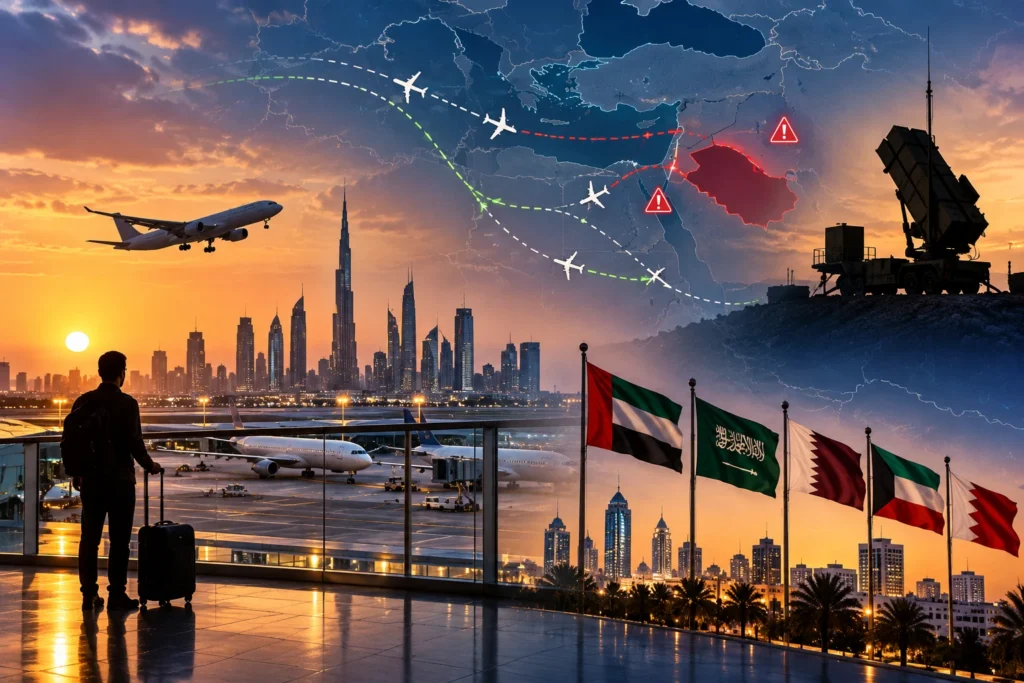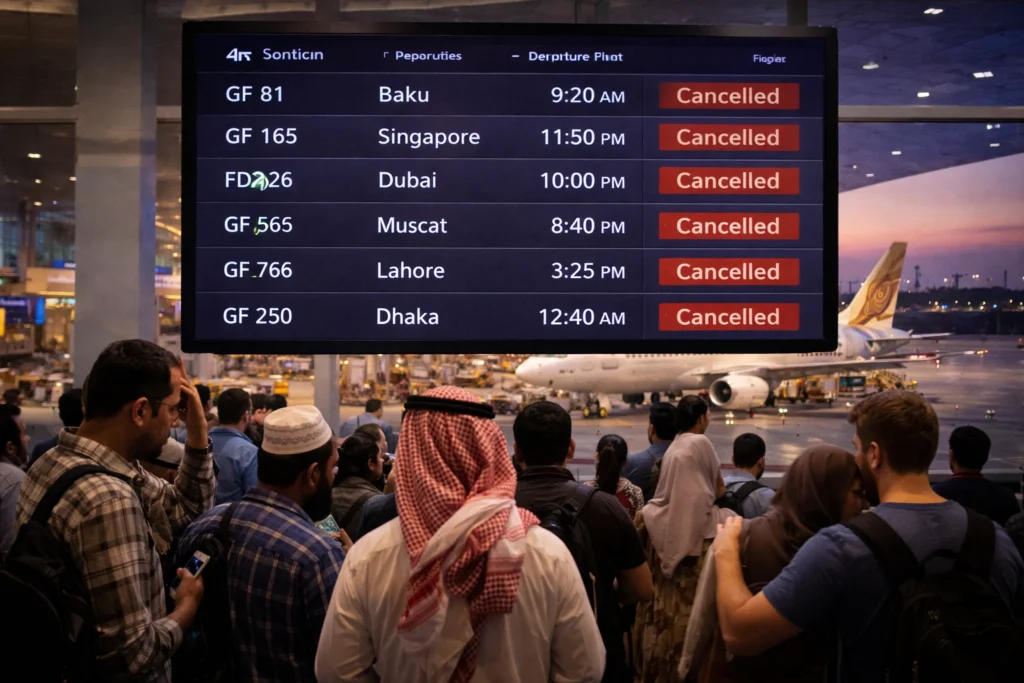
A fresh round of flight cancellations at Bahrain International Airport has disrupted travel across major regional and long-haul routes after six scheduled departures were withdrawn. The affected services included Singapore, Dubai, Muscat, Lahore, Dhaka and Baku, creating immediate challenges for passengers traveling through one of the Gulf’s strategically positioned aviation hubs.
The cancellations involved Gulf Air and flydubai, with Gulf Air accounting for most of the affected departures. While the total number of flights was limited, the route mix meant the impact reached travelers heading across the Middle East, South Asia and Southeast Asia.
Key Routes Grounded from Bahrain
Among the cancelled services, the Bahrain–Singapore route stands out as the most significant long-haul disruption. Singapore is one of Asia’s leading global hubs, and flights on this corridor are important for business travel, tourism and onward international connections.
Regional sectors to Dubai and Muscat were also affected, reducing short-haul travel options within the Gulf. These routes are popular with corporate travelers, weekend passengers and transit customers connecting through wider airline networks.
Flights to Lahore and Dhaka carry especially strong demand from family travelers, labor mobility traffic and visiting-friends-and-relatives markets, making cancellations on these sectors particularly disruptive.
Why Bahrain Matters as a Hub
Bahrain may be smaller than some neighboring Gulf hubs, but it plays an important role in regional aviation. Bahrain International Airport supports business travel, financial sector mobility, tourism and efficient connections across nearby markets.
Its location allows fast links between Gulf capitals and onward access to Asia, Europe and Africa. When several departures are cancelled in a short period, the consequences can extend beyond local passengers to travelers using Bahrain as a transfer point.
This is especially true when flights are timed to connect with broader departure banks.
Long-Haul and Regional Pressure at the Same Time
The latest disruption is notable because it affected both long-haul and short-haul markets simultaneously. A cancelled Singapore service reduces intercontinental connectivity, while suspensions to Dubai, Muscat and South Asian cities weaken high-frequency regional demand channels.
This combination can strain rebooking efforts. Passengers on short sectors may compete for limited same-day alternatives, while long-haul travelers may face longer waits for replacement seats.
Airlines often need to juggle aircraft rotations, crew assignments and slot availability when restoring schedules after such disruptions.
Passenger Challenges on the Ground
For affected travelers, the immediate reality can include last-minute itinerary changes, extended airport waits and uncertainty over alternative flights. Some passengers may miss hotel check-ins, business meetings or onward connections booked separately.
Families traveling with children and passengers on multi-leg journeys are often among the most impacted when sudden cancellations occur.
Those heading to labor markets or family destinations such as Lahore and Dhaka may also face urgent scheduling pressure if travel dates are inflexible.
What Travelers Should Do Now
Passengers booked through Bahrain should closely monitor airline updates and act quickly if flights change. Early rebooking requests often improve the chance of securing preferred alternatives.
Useful steps include:
- Check flight status regularly
- Enable airline notifications
- Keep travel documents ready
- Review alternate routes and dates
- Ask about assistance during long delays
Flexibility remains essential whenever schedules shift unexpectedly.
Wider Implications for Gulf Aviation
The latest Bahrain flight cancellations reflect a broader reality across the Middle East aviation market: networks are highly interconnected and sensitive to disruption. Even a handful of cancelled flights can create ripple effects across inbound aircraft schedules, crew planning and passenger flows.
As travel demand continues to grow, airlines across the region are under pressure to maintain punctuality while operating complex, high-frequency schedules.
Outlook for Bahrain Travel
Bahrain continues to develop as a destination for business events, leisure breaks, motorsport tourism and regional stopovers. Reliable air connectivity is central to that growth, supporting hotels, attractions, restaurants and trade activity.
While six cancellations do not define the wider market, they are a reminder that operational resilience matters as much as expansion. For passengers traveling in the coming days, staying informed and keeping plans flexible will be the best response while airlines work to stabilize schedules.
For more travel news like this, keep reading Global Travel Wire