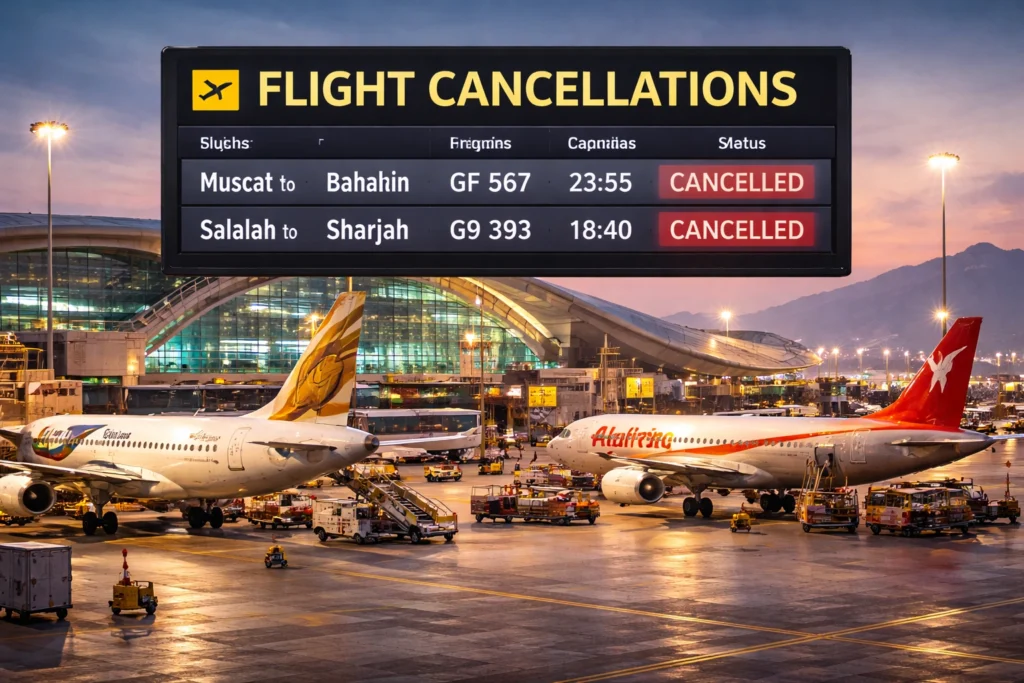
Oman’s aviation network has faced fresh disruption after two scheduled departures were cancelled from Muscat and Salalah, affecting key regional links to Bahrain and Sharjah. While the number of cancellations was limited, the impact was significant for passengers relying on evening services and onward connections through major Gulf hubs.
The affected flights were operated by Gulf Air and Air Arabia, two important carriers in the regional market. The latest changes highlight how even a small number of schedule interruptions can create wider travel challenges in the tightly connected Gulf aviation system.
Key Flights Cancelled in Oman
At Muscat’s Seeb International Airport, Gulf Air cancelled its late-night service to Bahrain. In Salalah, Air Arabia suspended a scheduled departure to Sharjah. Both routes are important short-haul connectors linking Oman with larger aviation hubs in the Gulf.
For travelers, these cancellations may appear minor in volume but not in consequence. Bahrain and Sharjah both provide access to broader route networks, making them important gateways for passengers continuing to Asia, Europe and other Middle East destinations.
Evening departures are particularly valuable because they often align with overnight bank connections and next-morning arrivals.
Why Bahrain and Sharjah Matter
The Muscat–Bahrain route supports business traffic, family travel and transit passengers connecting through Gulf Air’s wider network. Bahrain remains an important center for finance, trade and regional meetings, generating steady demand throughout the year.
Sharjah, meanwhile, is a major low-cost aviation hub serving leisure travelers, expatriate communities and price-sensitive passengers heading across the Middle East, South Asia and beyond.
When flights to these hubs are cancelled, the effect often extends beyond the direct route. Travelers may lose onward bookings, hotel reservations or time-sensitive appointments.
Short-Haul Networks Operate on Tight Margins
The latest disruption also reveals why short-haul Gulf routes can be especially vulnerable. Unlike many long-haul services, regional flights often run with quick aircraft turnarounds and dense scheduling. There is less room in the timetable to absorb unexpected issues.
If an aircraft arrives late, requires technical checks or must be reassigned elsewhere, the next departure may be delayed or cancelled. Crew availability and airport slot timing can also become critical on tightly planned schedules.
This operating model helps airlines maximize efficiency, but it also means minor issues can quickly escalate into passenger-facing disruption.
Passenger Impact and Rebooking Challenges
For affected travelers, the immediate issues may include missed onward connections, longer wait times and the need to rebook on alternative carriers. On lower-frequency regional routes, replacement options may be limited within the same day.
Passengers traveling for business may lose meeting time, while leisure travelers could face late hotel arrivals or changes to holiday itineraries. Families and transit passengers are often the most exposed when schedules shift unexpectedly.
Those connecting through Bahrain or Sharjah may need entirely new itineraries if original onward flights cannot be held.
Wider Implications for Gulf Aviation
The Gulf’s aviation model depends heavily on punctuality, fast transfers and strong hub connectivity. Airports across the region have built their reputations on efficiency and schedule reliability. When disruptions occur, they can have an outsized impact because so many journeys depend on smooth transfers.
As travel demand continues rising, airlines may need to build greater resilience into schedules through spare aircraft planning, stronger recovery systems and more flexible operations.
Even small incidents can offer useful lessons for improving network performance.
What Travelers Should Do
Passengers flying within the Gulf should stay proactive during periods of disruption. Practical steps include:
- Check flight status before heading to the airport
- Monitor airline app alerts and messages
- Keep booking details accessible
- Review alternative same-day options
- Allow extra time for onward connections
Being prepared can significantly reduce stress when last-minute changes occur.
Outlook for Oman Travel
Oman continues to strengthen its tourism appeal through beach escapes, mountain experiences, cultural heritage and growing international connectivity. Reliable domestic and regional air services are central to that progress, especially for visitors connecting through Gulf hubs.
Although only two flights were cancelled, the latest disruption is a reminder that network reliability remains essential for airlines, airports and travelers alike. As carriers refine operations, passengers will be looking for smoother journeys across the Gulf in the weeks ahead.
For more travel news like this, keep reading Global Travel Wire