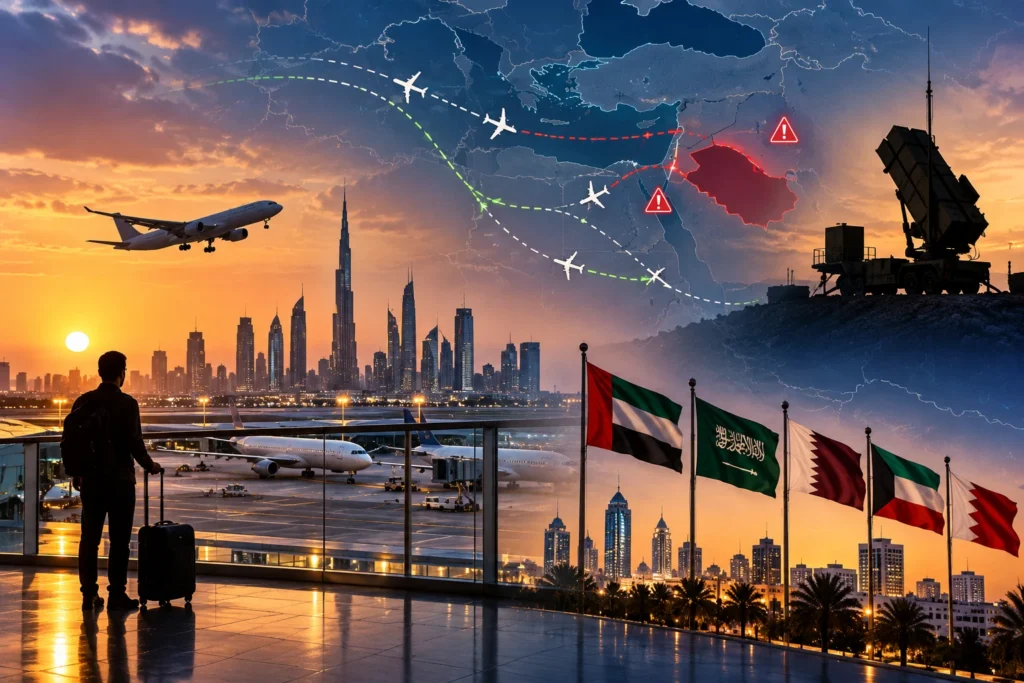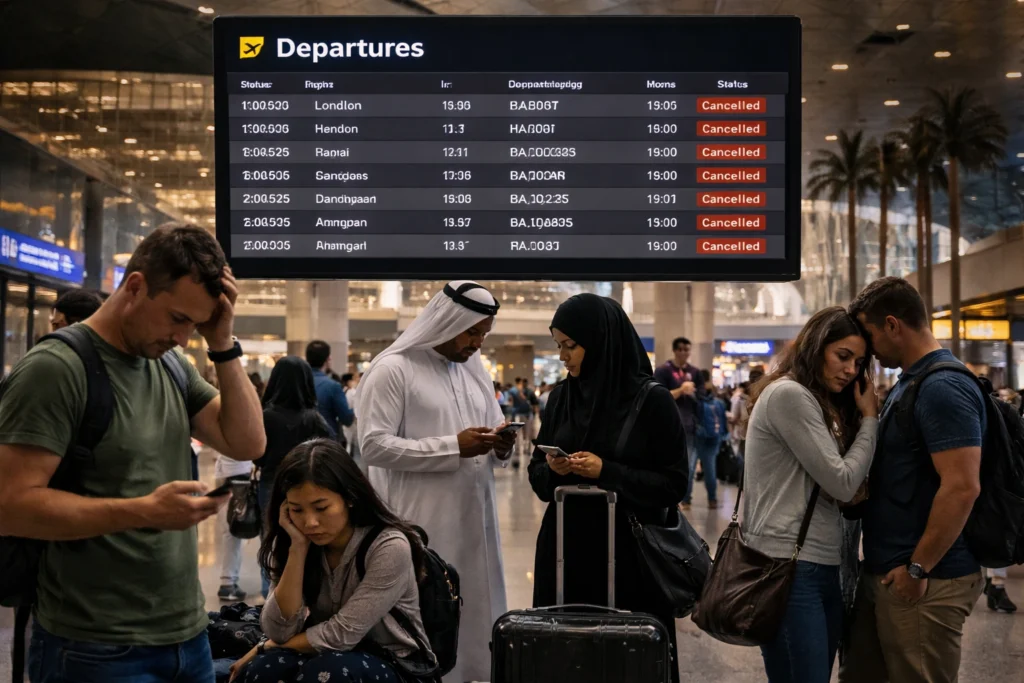
A fresh wave of flight cancellations at Hamad International Airport has disrupted international travel from Doha after five outbound services operated by Qatar Airways and Royal Jordanian were withdrawn from schedules. The affected routes included London, Bali, Hanoi and Amman, creating immediate challenges for passengers using one of the world’s most important global transit hubs.
Although the number of cancelled flights was limited, the impact was magnified by Doha’s strategic role in global aviation. Hamad International connects travelers across Europe, Asia, Africa and the Middle East, meaning disruptions in Qatar can quickly ripple through multiple regions and airline networks.
Key International Routes Affected
The cancelled departures included three Qatar Airways services and two Royal Jordanian flights. Among the most significant was the suspension of a London Heathrow service, one of the highest-demand long-haul routes from the Gulf. Flights to Bali and Hanoi were also removed, reducing connectivity between the Middle East and Southeast Asia.
Royal Jordanian’s two cancelled services to Amman were especially notable because repeated disruption on the same route can affect both point-to-point traffic and onward connections through Jordan.
Together, the changes temporarily reduced travel options across several strategically important markets.
Why Doha Disruptions Matter Globally
Doha is far more than a local airport. It functions as a major transfer hub where passengers connect between continents on tightly timed itineraries. A cancellation in Doha may affect travelers heading not only to the listed destination, but also to dozens of onward cities connected through London, Amman, Bali or Hanoi.
For example, a passenger missing a Doha–London service could also lose onward rail links, domestic UK flights, hotel reservations or cruise departures. Similar challenges apply to travelers connecting deeper into Southeast Asia or Europe.
This is why even a small cluster of cancellations at Hamad International can feel much larger in real-world travel terms.
London Route Impact Stands Out
The cancelled London Heathrow departure is likely to attract the most attention because the route is central to business travel, premium traffic, tourism and student movement between Qatar and the United Kingdom. Seat demand on Gulf–London sectors is typically strong year-round.
When a long-haul service is cancelled, rebooking can be more complex than on short-haul routes because replacement seats may already be limited. Travelers may need to depart later, route through another hub or split itineraries across multiple airlines.
That can create additional accommodation costs and scheduling pressure for passengers with fixed plans.
Southeast Asia Connectivity Reduced
The withdrawal of flights to Bali and Hanoi also matters for the tourism sector. Bali remains one of the world’s most popular leisure destinations, while Hanoi continues to grow as a gateway for cultural tourism, business travel and wider Southeast Asia exploration.
For travelers using Doha as a one-stop connection point, fewer seats on these routes can mean longer layovers or the need to rebook via alternate hubs such as Singapore, Bangkok or Kuala Lumpur.
Hotels, tour operators and destination transfer services can also feel the impact when delayed arrivals shift visitor schedules.
Passenger Advice During Disruption
Travelers affected by the latest Doha cancellations should monitor airline communication closely and act quickly when rebooking options become available. Early decisions can improve the chance of securing preferred alternatives, especially on busy long-haul sectors.
Recommended steps include:
- Check flight status frequently
- Use official airline apps and alerts
- Review alternate dates or nearby destinations
- Allow extra time for connections
- Confirm hotel or transfer changes if needed
Flexibility remains one of the most valuable tools during fast-changing travel conditions.
Pressure on Global Airline Networks
The latest cancellations also show how carefully balanced airline schedules have become. Aircraft rotations, crew availability, airport slots and passenger loads all depend on precise timing. When one flight is removed, the effect can extend across later services and different markets.
Major hubs like Doha are designed for efficiency, but they are also highly interconnected. That makes recovery planning essential whenever disruption occurs.
Outlook for Travelers
Qatar remains a vital aviation crossroads with strong demand for tourism, stopovers, business travel and long-haul connections. Hamad International Airport continues to rank among the world’s leading hubs, supported by an extensive route network and premium passenger experience.
However, the latest five cancellations are a reminder that even top-tier hubs are not immune to operational volatility. For passengers traveling in the coming days, staying informed and maintaining flexible plans will be the best way to navigate any further changes.
For more travel news like this, keep reading Global Travel Wire