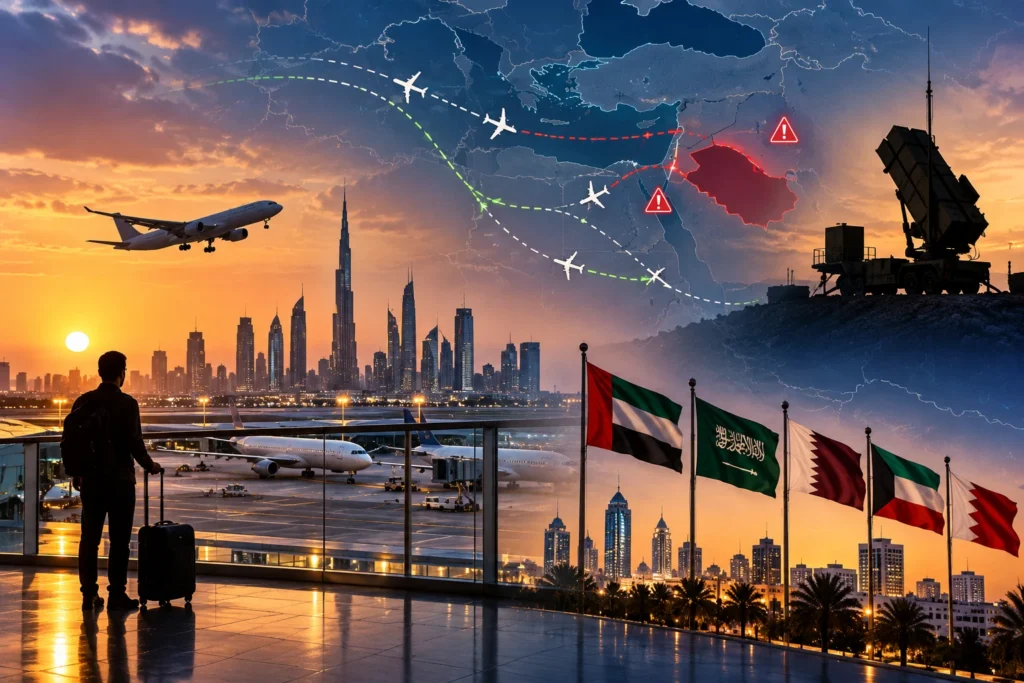
Air travel across the United Arab Emirates has been disrupted after 18 flight cancellations were recorded across Dubai, Abu Dhabi and Sharjah, affecting routes to Kabul, Nairobi, Amman, Islamabad, Cairo, Erbil, Baghdad, Kathmandu and other major destinations. The latest schedule changes involve several regional carriers, including Air Arabia and flydubai, and highlight fresh pressure on one of the world’s most important international transit markets.
The cancellations stretch across three major hubs that collectively connect millions of passengers between Europe, Asia, Africa and the Middle East. For travelers, the effect reaches beyond individual airports, influencing onward journeys, hotel bookings, business travel and regional tourism flows.
Dubai Faces Repeated Route Interruptions
Dubai International Airport recorded multiple cancellations affecting regional and medium-haul routes. Among the most notable were repeated suspensions on the Kabul service, alongside cancelled departures to Amman and Nairobi.
Repeated disruption on the Kabul route suggests ongoing constraints affecting that corridor. Meanwhile, suspended services to Nairobi and Amman reduce options on two strategically important markets linking the Gulf with East Africa and the Levant.
Dubai’s role as a global hub means even a limited number of cancellations can create wider consequences. Many passengers use the airport for onward connections, so delays or cancellations on one leg can affect itineraries spanning several continents.
Abu Dhabi Routes Under Pressure
Abu Dhabi also experienced recurrent cancellations, particularly on flights to Islamabad and Cairo. Both routes were cancelled more than once across separate days, indicating sustained operational pressure rather than isolated schedule adjustments.
The Islamabad route is a major connector for family travel, labor mobility and visiting-friends-and-relatives traffic between the Gulf and South Asia. Cairo, meanwhile, remains one of the region’s highest-demand city pairs for tourism, commerce and government travel.
Repeated disruption on these sectors can reduce seat availability and push passengers onto later services or alternate hubs.
Sharjah Records Highest Number of Cancellations
Sharjah International Airport saw the largest concentration of cancelled departures, with ten services removed from schedules across a broad range of destinations. Routes affected included Erbil, Dammam, Baghdad, Basrah, Damascus, Sialkot, Kathmandu and Salalah.
The scale and variety of affected routes suggest broader network strain rather than a single-route issue. Several of these services connect diaspora communities, religious travel markets and important regional business corridors.
For Sharjah-based travelers, widespread cancellations across one airport can quickly lead to rebooking challenges and longer wait times, particularly when multiple departures are affected in the same day.
Why UAE Disruptions Matter Globally
The UAE sits at the center of global aviation flows. Dubai, Abu Dhabi and Sharjah serve as transfer points for passengers traveling between Europe, Africa, Asia and Australasia. As a result, local schedule changes often have international consequences.
A canceled departure from Sharjah or Dubai may not only affect direct travelers. It can also disrupt cruise connections, hotel arrivals, business meetings and onward flights in entirely different countries.
This is especially relevant during peak travel periods when aircraft loads are high and rebooking space becomes harder to find.
What Travelers Should Do Now
Passengers flying through the UAE should closely monitor airline updates and verify schedules before leaving for the airport. Flexible planning remains important, especially for travelers with same-day connections or fixed itineraries.
Practical steps include:
- Check flight status regularly
- Arrive early if traveling
- Keep booking references accessible
- Review rebooking options
- Allow extra time for connections
Using official airline channels is the fastest way to receive real-time updates during operational changes.
Tourism and Hospitality Impact
The UAE’s tourism economy depends heavily on smooth air connectivity. Visitors arriving for city breaks, luxury stays, shopping, beach holidays, exhibitions and stopover tourism all rely on efficient airport operations.
Flight disruptions can influence hotel occupancy patterns, airport transfers, attraction bookings and conference attendance. Even short-term operational instability can create ripple effects across airlines, hotels and tourism businesses.
Outlook for UAE Aviation
The latest cancellations across Dubai, Abu Dhabi and Sharjah show how even highly developed aviation systems remain vulnerable to fast-changing operational challenges. While each airport experienced different route impacts, the broader pattern points to pressure across the regional network.
As travel demand continues to evolve, airlines and airports will need agile planning, rapid communication and efficient recovery strategies to maintain confidence in the UAE’s role as a leading global transit hub. For passengers, staying informed and flexible remains the best response during periods of disruption.
For more travel news like this, keep reading Global Travel Wire