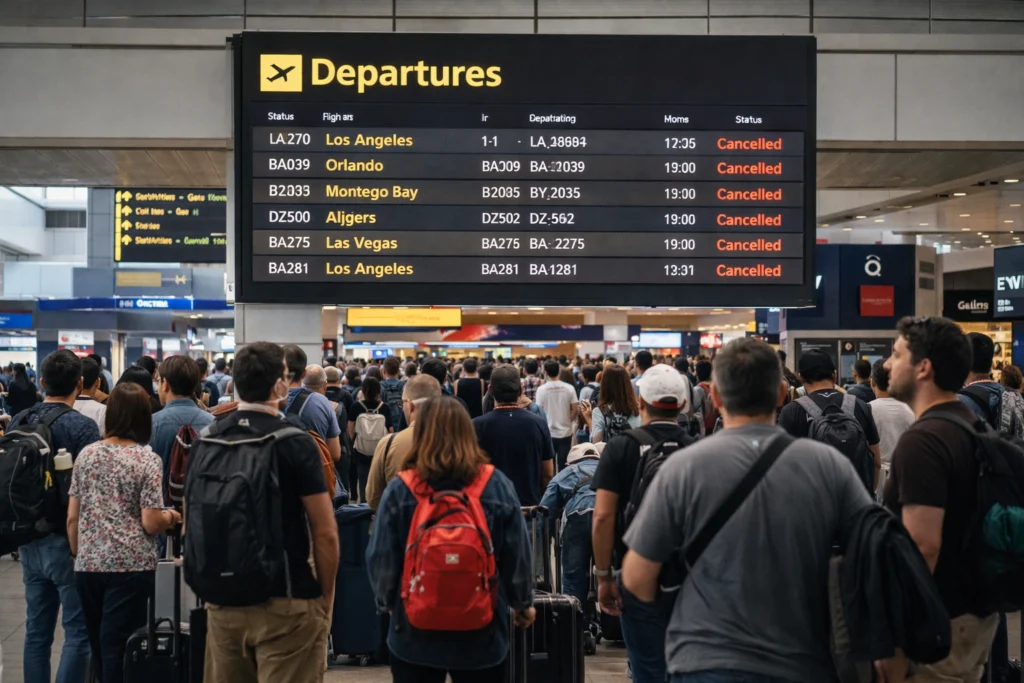
Fresh data from the United Kingdom’s aviation regulator is drawing attention to cancellations and schedule changes affecting long-haul flights from London, as airlines adjust networks in response to shifting market conditions. The latest figures underline how operational changes at major hubs such as London Gatwick and London Heathrow continue to reshape travel options for passengers heading to key international destinations.
The Civil Aviation Authority, the UK’s statutory aviation regulator, oversees safety, consumer protections and operational standards across the country’s air transport system. Its official reporting on punctuality, cancellations and airline performance offers one of the clearest views into how the market is evolving. For travelers, the numbers matter because schedule changes can affect fares, route availability, holiday planning and business travel decisions.
London Long-Haul Networks Under Review
Long-haul services from London remain among the most competitive and strategically important in Europe. Flights from Gatwick and Heathrow connect the UK with North America, the Caribbean, Asia, the Middle East and major leisure destinations worldwide. However, airlines regularly refine these networks to match aircraft availability, operating costs and passenger demand.
Recent schedule snapshots indicate that some long-haul routes have seen reduced availability or temporary absence during certain timetable periods. While route decisions are commercial matters for airlines, the broader effect is visible in the regulator’s performance data through changing flight volumes and cancellation trends.
For passengers, that can mean fewer nonstop choices on selected routes and a greater need to compare alternative departure dates or connecting itineraries.
Why Cancellations and Schedule Changes Happen
Airlines constantly evaluate route performance. Long-haul flying requires substantial investment in aircraft, crew, fuel and airport slots. If demand weakens, costs rise or aircraft are reassigned elsewhere, services may be reduced, suspended or consolidated.
Seasonality also plays a major role. Leisure destinations often perform strongly during school holidays and summer months, while some routes may see softer winter demand. Carriers therefore adjust schedules throughout the year to maximize efficiency.
Operational factors such as fleet maintenance, aircraft delivery delays and staffing pressures can also influence network planning, especially on resource-intensive long-haul sectors.
What This Means for Travelers
For travelers planning international trips, reduced long-haul capacity can have immediate consequences. Popular dates may sell out earlier, fares may rise faster during peak periods and preferred nonstop options may become limited. Some passengers may need to route through alternative hubs or shift travel dates.
Holidaymakers booking beach destinations, city breaks or family visits may need to act earlier to secure the best options. Business travelers may also face tighter schedules if morning or evening departures are reduced.
Travel agents, tour operators and hotel partners often feel the impact as flight changes can influence booking patterns and destination demand.
Passenger Rights Remain Protected
UK law provides protections for passengers when flights are cancelled. Depending on the circumstances, travelers may be entitled to rebooking, refunds, meals, accommodation and care while awaiting replacement transport. Compensation rules can also apply based on notice given, route distance and the cause of cancellation.
These protections are especially important on long-haul journeys, where disruptions can involve overnight delays, missed onward connections or significant changes to travel plans.
Passengers are advised to keep booking confirmations, monitor airline notifications and understand available rebooking options if schedules change.
London Airports Still Central to Global Travel
Despite adjustments on selected routes, London remains one of the world’s strongest aviation markets. Heathrow continues to serve as a major global connector for premium, corporate and long-distance travel, while Gatwick remains a key gateway for leisure traffic and transatlantic demand.
Both airports support the UK tourism economy by bringing inbound visitors who spend on hotels, attractions, restaurants, transport and retail. Reliable long-haul connectivity is therefore critical not only for airlines but also for the broader visitor economy.
As global travel demand evolves, carriers are likely to continue fine-tuning their London operations to balance profitability with customer demand.
Industry Outlook
The latest regulator data highlights a simple reality: long-haul networks are dynamic, and route maps can change quickly. Airlines must remain agile as fuel prices, traveler demand and competitive pressures shift throughout the year.
For consumers, staying informed has never been more important. Checking schedules before booking, understanding cancellation rights and remaining flexible with travel dates can help navigate an evolving market.
Final Takeaway
London’s long-haul flight landscape is changing, but the bigger picture remains one of resilience and adaptation. The UK aviation regulator’s data offers valuable insight into cancellation patterns and operational trends, helping travelers and industry observers understand where the market is heading.
As airlines recalibrate networks from Gatwick and Heathrow, passengers can expect continued adjustments—but also ongoing opportunities across one of the world’s most connected international aviation hubs.
For more travel news like this, keep reading Global Travel Wire