India’s aviation network is facing fresh disruption as adverse weather in Delhi causes growing flight delays and operational changes, prompting IndiGo to issue a travel advisory for passengers flying to and from the capital. With Delhi serving as one of the country’s busiest hubs, the disruption is spreading beyond the city and affecting schedules across multiple domestic and international routes.
Passengers have been urged to check flight status before leaving for the airport, allow extra travel time and remain flexible as airlines work to manage changing conditions. The latest delays underline how quickly weather events in the capital can impact the wider Indian travel system.
IndiGo Warns Passengers as Conditions Worsen
IndiGo, India’s largest carrier by market share, activated its travel advisory as weather conditions in Delhi continued to interfere with normal airport operations. The airline advised customers to stay informed through official channels and prepare for possible delays or schedule adjustments.
Such advisories are increasingly important during peak travel periods, when even short interruptions can affect thousands of passengers. For travelers using Delhi as a connecting point, delays on one sector may influence onward flights to other cities or overseas destinations.
The advisory also reflects the growing need for real-time communication between airlines and passengers during fast-changing operational events.
What Is Causing the Delhi Disruption
The current disruption is being driven by thunderstorms, rainfall and reduced visibility over New Delhi. These conditions can slow take-offs and landings, reduce runway capacity and require wider spacing between aircraft movements for safety reasons.
When visibility drops or weather becomes unstable, airports often experience slower traffic flow. Aircraft may be held on the ground, arrivals may circle longer before landing, and departure queues can quickly build up. Even after weather improves, schedules can take hours to recover fully.
Because aviation depends on tightly timed aircraft rotations, delays in one city can rapidly spread across an airline’s network.
Why Delhi Matters to India’s Air Network
Delhi is one of India’s most important aviation gateways, linking major metros, leisure destinations and international markets. Large volumes of travelers connect through the capital daily for business trips, family travel, tourism and onward global journeys.
That means disruption in Delhi rarely stays local. A late inbound flight from Mumbai, Bengaluru or Kolkata can delay a later departure to another city. International services may also face timing changes if aircraft and crews arrive behind schedule.
For India’s growing tourism sector, dependable hub operations are critical. Delhi connects travelers to destinations ranging from Rajasthan and Goa to the Himalayas and spiritual circuits across the country.
Passenger Impact at Airports
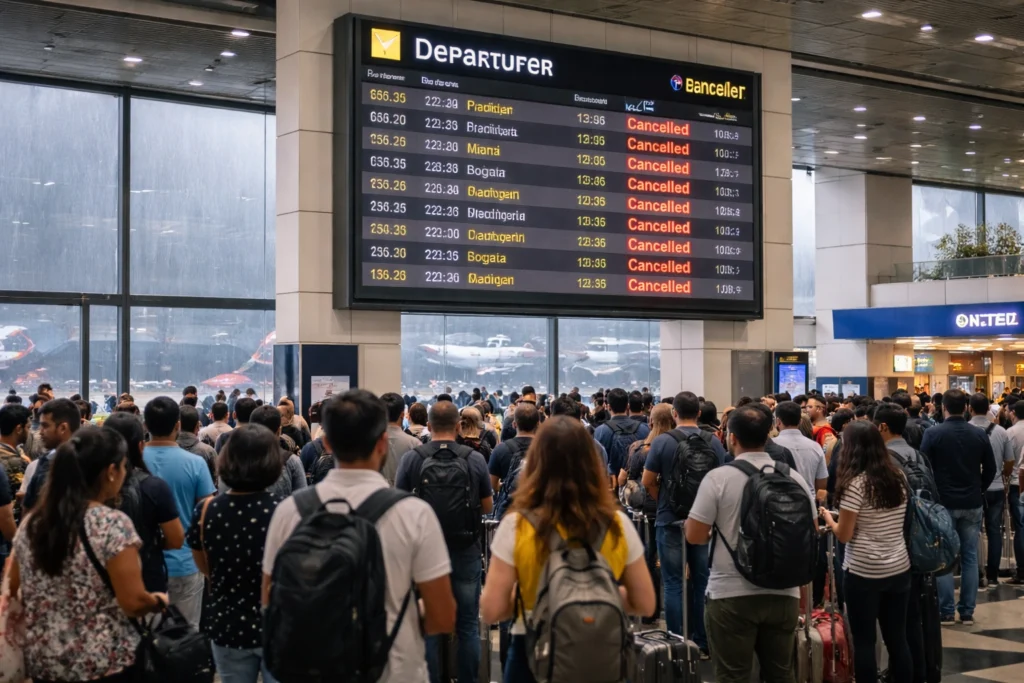
For travelers, the immediate effects include longer waiting times, uncertainty over departure times and missed connections. Some passengers may need to rebook flights, adjust hotel reservations or change onward transport plans.
During heavy traffic periods, airport terminals can become more crowded as delayed passengers remain in waiting areas while new travelers continue to arrive. Ground transport around airports may also see pressure as travelers reschedule pickups or extend stays.
Families, business travelers and tourists on fixed itineraries are often the most affected when schedules shift with little notice.
Why Weather Delays Are Difficult to Prevent
Unlike technical issues, weather cannot be controlled and can change rapidly. Airlines and airports rely on forecasting tools, radar systems and real-time monitoring, but operational decisions must always prioritize safety.
That means delays are sometimes unavoidable when storms, strong winds or low visibility create unsuitable flying conditions. While technology helps improve planning, no airline can eliminate the risk of weather-related disruption entirely.
The challenge for carriers is not only managing flights safely, but also restoring schedules quickly once conditions improve.
What Travelers Should Do Now
Passengers traveling through Delhi in the coming hours should take practical steps to reduce inconvenience:
- Check flight status before leaving for the airport
- Arrive earlier than usual
- Monitor airline messages and app alerts
- Keep alternative travel plans in mind
- Allow extra connection time where possible
Staying informed through official airline communication remains the best way to respond during fast-changing weather events.
Wider Impact on Tourism and Business Travel
India’s aviation market continues to expand rapidly, with strong demand for domestic holidays, corporate travel and international connections. However, weather disruptions at major hubs show how fragile schedules can become during sudden storms.
Hotels may experience late check-ins, tour operators may adjust transfers, and business meetings can be rescheduled when travelers arrive behind plan. For airlines, recovery often requires aircraft repositioning, crew changes and close coordination with airport authorities.
Outlook for Indian Aviation
The latest Delhi weather disruption is another reminder that strong demand must be matched by resilient operations and responsive passenger communication. As airlines like IndiGo adjust schedules and guide customers through delays, travelers should remain alert for further changes.
While weather systems will eventually pass, the ripple effect across India’s aviation network may continue until aircraft rotations and departure banks return to normal. For passengers, flexibility and timely updates will be essential as the country navigates another challenging day in the skies.
For more travel news like this, keep reading Global Travel Wire