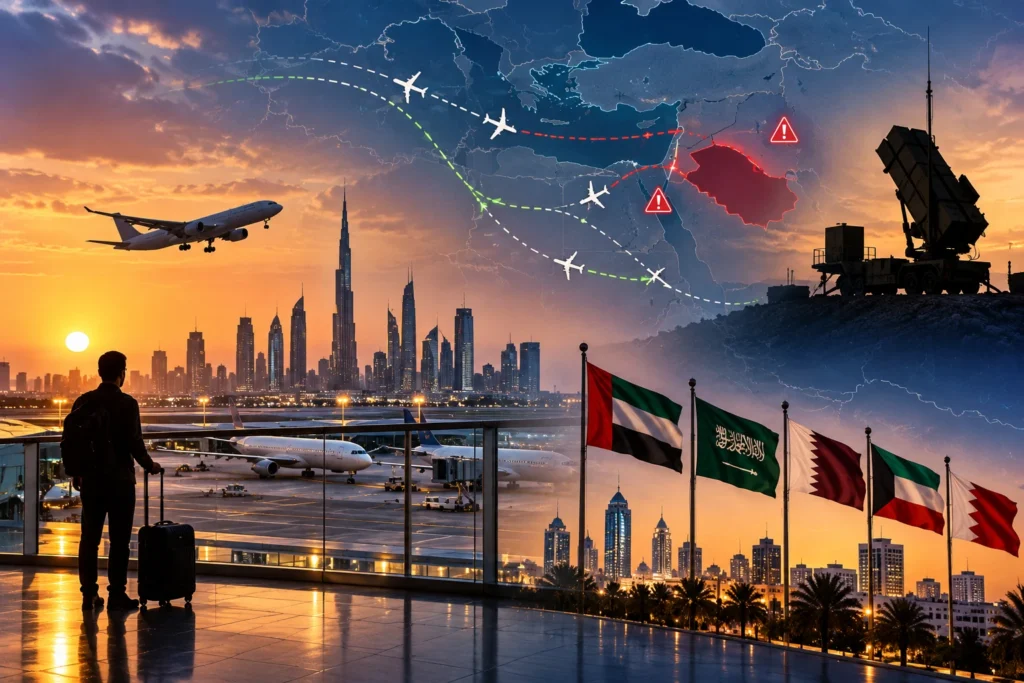
Official announcements from international defense ministries and aviation security authorities confirm ongoing developments across Middle East transit corridors. A multi-nation defense agreement involving Turkey, Qatar, Pakistan, and Indonesia aims to bolster regional security frameworks and air defense coordination. Meanwhile, official statements from regional foreign ministries highlight persistent diplomatic tensions affecting flight routes and maritime transit across surrounding international airspace sectors.
Travelers planning journeys through major regional hubs are encouraged to consult official government advisories, national aviation updates, and maritime safety bulletins. Transport authorities maintain continuous monitoring across critical air navigation boundaries to safeguard international passenger routes.
Four-Nation Defense Agreement Strengthens Regional Security Frameworks
According to an official release from the Turkish Ministry of National Defence, an agreement has been signed by representatives from Turkey, Qatar, Pakistan, and Indonesia to enhance joint security cooperation. The landmark accord establishes unified operational frameworks intended to bolster defensive capabilities and safeguard strategic trade and air corridors connecting Europe, the Middle East, and South Asia.
Key elements detailed in official defense briefings include:
Corridor Protection: Joint protocols focused on maintaining stability across vital aviation transit corridors and maritime shipping lines.
Defense Capabilities: Collaborative technology sharing and operational coordination to enhance defense readiness.
Regional Stability: A shared framework aimed at reassuring international commerce, civil aviation, and travel infrastructure across participating territories.
Regional transit authorities note that enhanced defense cooperation contributes to stabilizing civilian airspace management, allowing commercial carriers to maintain safe routing options through regional air corridors.
Official Diplomatic Statements and Airspace Safety Bulletins
Official statements from the Ministry of Foreign Affairs of the Islamic Republic of Iran confirm ongoing diplomatic interactions regarding international security parameters. Foreign Minister Abbas Araghchi stated during an official press briefing that diplomatic progress remains limited under current operational conditions, citing persistent military readiness postures across surrounding territories.
Concurrently, public announcements from Israeli state agencies confirm high levels of military preparedness across domestic airspace and coastal boundaries. Defense leadership statements emphasize ongoing strategic reviews aimed at addressing regional security concerns.
International civil aviation authorities continue to monitor these diplomatic developments to ensure real-time routing adjustments for commercial passenger traffic. Travelers should note key operational travel safety practices during periods of regional military monitoring:
Flight Tracking: Monitor official carrier advisories for route diversions or revised departure schedules avoiding specific flight corridors.
Transit Visas: Verify updated entry and layover requirements with official embassy portals prior to international travel.
Travel Insurance: Ensure active travel protection policies include coverage for severe weather, unexpected airspace closures, and travel disruptions.
Civilian transport ministries across major transit countries confirm that national airspace boundaries remain actively monitored to preserve the highest levels of passenger aviation safety.
For more travel news like this, keep reading Global Travel Wire