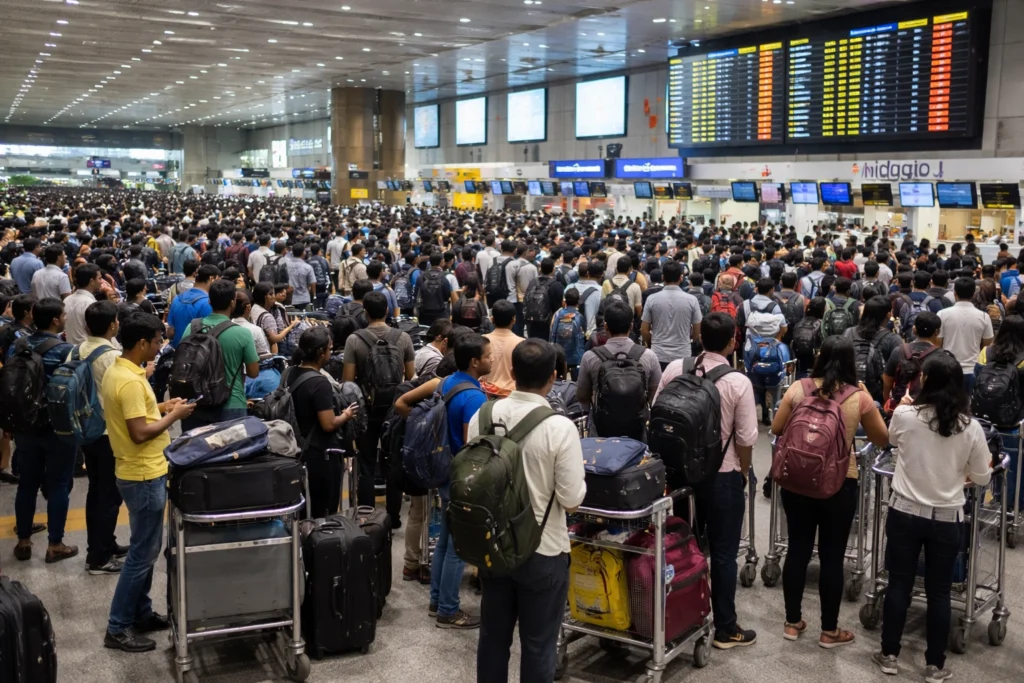
A sudden runway shutdown at Pune Airport sent shockwaves through India’s travel network after a reported fighter jet mishap forced authorities to suspend civilian flight operations for several hours, stranding passengers and disrupting schedules nationwide. The closure, triggered after the military aircraft reportedly made a hard landing and damaged runway infrastructure, created immediate delays, cancellations and missed connections during busy travel hours. Officials moved quickly to repair the airfield and later confirmed the airport had resumed operations after emergency works were completed.
The incident placed one of western India’s most important air gateways under intense pressure. Pune Airport is a vital connector for business travelers, students, leisure visitors and residents traveling across India. Even a short closure can create ripple effects because aircraft rotations, crew schedules and onward passenger connections are tightly linked across domestic aviation networks. As operations restarted, airlines began the complex task of repositioning aircraft and clearing the backlog of delayed services.
Emergency Repairs Restore Operations
According to official updates, runway restoration was treated as a priority response. Technical teams launched urgent repairs immediately after the incident, with authorities emphasizing that safety protocols guided every step of the reopening process. The runway remained unavailable for around five hours, during which no civilian aircraft movements were permitted.
That swift turnaround helped prevent a longer shutdown, but the operational impact did not disappear once the first flights resumed. Airport reopenings often require phased recovery, with departures and arrivals returning gradually while airlines recalculate schedules and reassign available aircraft. Pune’s reopening followed that familiar pattern, with recovery efforts continuing well after the runway became operational again.
Passengers Face Delays and Last-Minute Changes
For travelers inside terminals and en route to the airport, the disruption translated into uncertainty. Many passengers encountered extended waits, gate changes, revised departure times and rebooked itineraries. Some missed connecting flights, while others had to rearrange hotel stays, business meetings or family plans.
The incident also highlighted the growing importance of real-time travel communication. During airport disruptions, passengers increasingly depend on airline apps, text alerts and official airport announcements to make quick decisions. Travelers who monitored updates were better placed to adjust arrival times, seek alternate flights or postpone non-essential journeys.
Tourism and Hospitality Feel Immediate Impact
The runway closure also affected Pune’s wider visitor economy. The city has become a fast-growing destination for culture, food, events, education and corporate travel, while serving as a gateway to popular leisure circuits across Maharashtra. Travelers often use Pune as a base for weekend escapes to nearby hill stations, heritage attractions and wellness retreats.
When airport operations stop unexpectedly, the effect reaches beyond airlines. Hotels may receive delayed check-ins or cancellations, tour operators must revise transfers, and local transport providers can lose bookings. Even short interruptions can create temporary pressure on occupancy levels and visitor spending, especially during periods of strong domestic travel demand.
Spotlight on Shared Civil-Military Infrastructure
The reported involvement of a military aircraft has renewed focus on airports where civilian and defense operations share infrastructure. Mixed-use airports can operate efficiently, but they also require highly coordinated scheduling, safety oversight and contingency planning when incidents occur.
Aviation authorities stressed that passenger safety remained the overriding priority throughout the response. The immediate suspension of commercial traffic, followed by inspections and repairs, reflects the standard principle that operational continuity must never come at the expense of safety assurance. Transparent communication during such events is also essential to maintaining traveler confidence.
Airlines Work to Normalize Schedules
Once flights resumed, carriers began restoring network stability. That process can take several rotations because a single delayed aircraft may affect multiple sectors throughout the day. Crews may exceed legal duty limits, inbound aircraft can arrive late from other cities, and airport slots must be reallocated.
Passengers scheduled to fly from Pune in the hours following the reopening were advised to check their flight status before leaving for the airport. Across India, that guidance has become increasingly relevant as weather events, technical issues and operational incidents occasionally disrupt tightly scheduled domestic networks.
Travel Lesson for Passengers
The disruption is also a reminder that modern travel plans benefit from flexibility. Allowing extra connection time, using mobile check-in tools, keeping notifications enabled and understanding airline rebooking policies can reduce stress when sudden changes occur. For business travelers and holidaymakers alike, preparedness is now part of the journey.
Outlook Improves as Pune Airport Stabilizes
With Pune Airport back in operation, the immediate crisis has eased, though residual delays may continue until schedules fully normalize. The rapid response demonstrated the importance of resilient airport infrastructure, coordinated crisis management and fast passenger communication. As one of India’s key aviation gateways returns to normal service, attention now turns to smoother journeys, restored confidence and stronger readiness for future disruptions.
For more travel news like this, keep reading Global Travel Wire