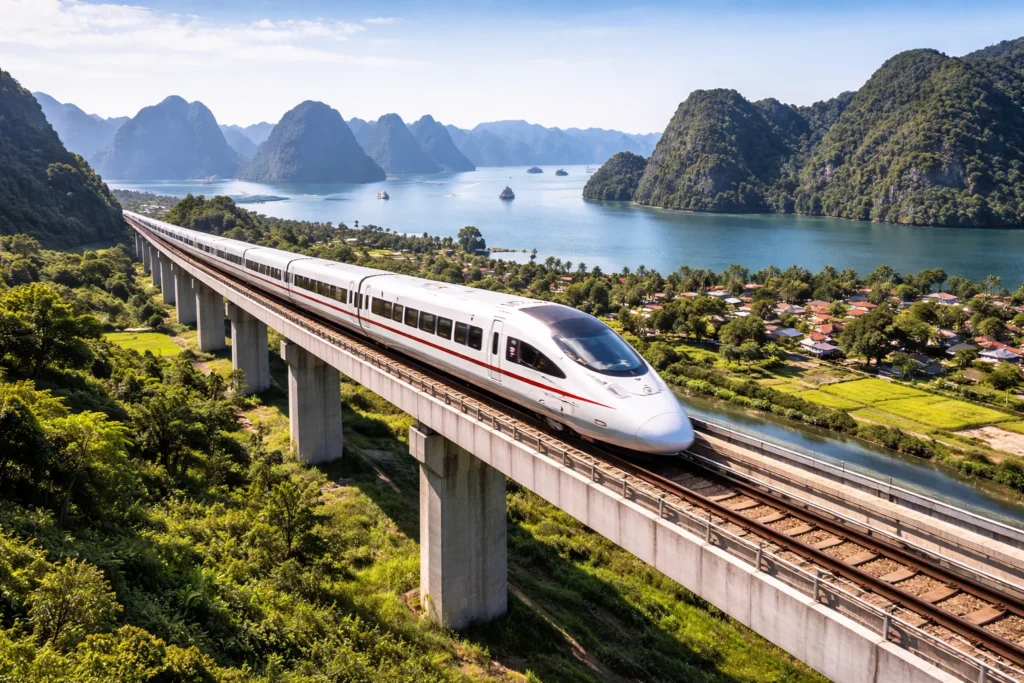
Vietnam has officially begun construction of the Hanoi–Halong high-speed rail line, a landmark infrastructure project expected to transform tourism travel in northern Vietnam. The new route will dramatically reduce journey times between the capital city of Hanoi and the world-famous Halong region, creating faster, more convenient, and more sustainable access for domestic and international visitors.
The groundbreaking ceremony for the 120-kilometer railway was held in Quang Ninh on April 12, marking the start of one of the country’s most closely watched transport developments. Once completed, the line is expected to become Vietnam’s first operational high-speed railway and a major catalyst for regional tourism growth.
With trains designed to run at speeds of up to 350 kilometers per hour, the route is planned to cut travel time between Hanoi and Halong to just 23 minutes. For travelers, that could redefine how one of Southeast Asia’s most iconic destinations is experienced.
A New Era for Vietnam Tourism Connectivity
The launch of construction signals a major step in Vietnam’s broader strategy to modernize transport and strengthen tourism infrastructure. Fast and efficient connectivity is increasingly essential in competitive tourism markets, where travelers value convenience, flexibility, and seamless movement between destinations.
Hanoi is already one of Asia’s most visited capitals, known for its old quarter, cuisine, culture, and heritage attractions. Halong, meanwhile, remains one of Vietnam’s best-known tourism destinations thanks to its dramatic seascapes, island cruises, and UNESCO-recognized natural beauty.
Connecting these two high-demand destinations by high-speed rail is expected to unlock stronger visitor flows and encourage more multi-destination travel.
Journey Time Falls to Just 23 Minutes
One of the most remarkable aspects of the project is the planned travel time. A journey that currently takes several hours by road will be reduced to only 23 minutes once the line enters service.
This shift could change traveler behavior in several ways:
- Easier same-day trips from Hanoi to Halong
- More weekend breaks for domestic travelers
- Greater flexibility for international tourists with limited time
- Stronger conference and business travel links
- Increased hotel stays across both destinations
When destinations become easier to reach, tourism demand often rises significantly. Shorter travel times also help spread visitors across regions rather than concentrating them in one city.
Strategic Route Across Northern Vietnam
The new railway will begin at Co Loa station in Hanoi before passing through Gia Binh, Ninh Xa, and Yen Tu, then arriving in Halong. A rolling stock depot will also be developed in Halong to support operations and maintenance.
Each stop along the corridor has potential to benefit from stronger tourism and economic activity. Improved rail access can stimulate investment in hotels, attractions, retail, dining, and supporting services.
Transport corridors often create new travel opportunities for secondary destinations that may previously have been overlooked by visitors.
Halong Bay Gains Stronger Access
Halong Bay remains one of Vietnam’s most internationally recognized attractions, famous for limestone karsts, island cruises, caves, and coastal scenery. Easier rail access from Hanoi could make the destination even more attractive to travelers who prioritize speed and convenience.
For international visitors arriving in Hanoi, the new line may simplify onward travel plans and encourage longer stays in northern Vietnam. Instead of spending valuable time on road transfers, tourists could move quickly between city culture and coastal nature.
This improved accessibility can also support year-round tourism by making short escapes more practical during all seasons.
Sustainable Travel Benefits
High-speed rail is widely seen as one of the most sustainable forms of mass transport, particularly when compared with short domestic flights or heavy road traffic. As global travelers become more environmentally conscious, destinations with efficient rail systems often gain a competitive advantage.
Potential tourism benefits include:
- Reduced road congestion
- Lower emissions per passenger
- Smoother intercity travel
- Greater comfort and reliability
- Stronger appeal for eco-conscious travelers
For Vietnam, investing in modern rail supports both tourism growth and long-term mobility goals.
Technology and Global Expertise
The project includes advanced railway systems and high-speed train technology, with modern signaling, telecommunications, electrification, and automated operations expected to form part of the network.
International cooperation and technology transfer are also expected to support local expertise, maintenance capabilities, and future rail development. This can create lasting benefits beyond a single line by helping build domestic knowledge and skills for future projects.
As more Asian countries expand high-speed rail networks, Vietnam’s entry into this sector marks an important milestone.
Quang Ninh Positioned for Growth
Quang Ninh province, home to Halong, is likely to be one of the biggest beneficiaries of the project. The region already attracts strong visitor demand and has invested in airports, roads, ports, and tourism facilities.
High-speed rail can complement these assets by adding another premium access option for visitors. Easier movement from Hanoi may increase hotel occupancy, boost tour demand, and support local businesses ranging from restaurants to transport providers.
For residents, improved transport can also enhance regional mobility and economic opportunities.
Why This Matters for Southeast Asia Tourism
Across Southeast Asia, transport upgrades are becoming a key driver of tourism competitiveness. Countries that reduce travel friction between major attractions often gain stronger visitor satisfaction and higher repeat visitation.
The Hanoi–Halong project reflects this trend. It is not only a railway investment but also a tourism investment that can strengthen Vietnam’s position as a leading destination in the region.
Travelers increasingly compare destinations based on how easy it is to move between cities, beaches, cultural sites, and natural landmarks. Fast rail can be a decisive advantage.
Looking Ahead to 2028
Completion is targeted by the end of 2028, and anticipation is already building around what the line could mean for Vietnam travel. If delivered on schedule, it would become the country’s first operating high-speed railway and a flagship symbol of modern tourism infrastructure.
For visitors, the promise is simple: breakfast in Hanoi, a cruise in Halong by morning, and a return to the capital the same day if desired.
For Vietnam, the new railway represents speed, connectivity, and a bold new chapter in tourism development.
For more travel news like this, keep reading Global Travel Wire