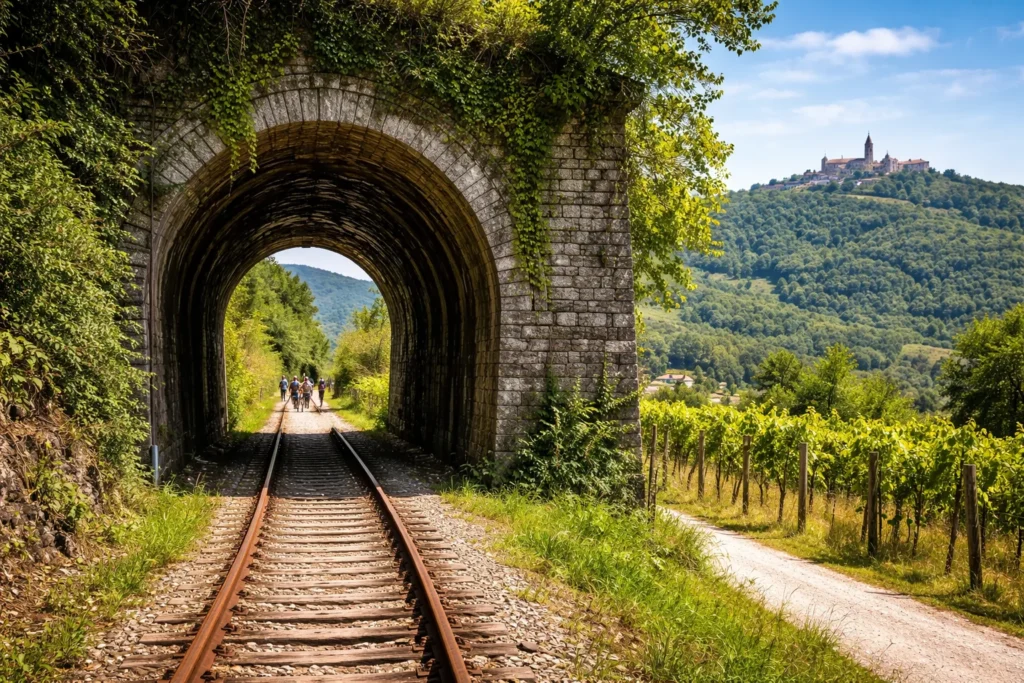
Croatia’s abandoned railway corridors are finding new life as scenic walking paths, cycling routes, and heritage attractions, creating a fresh chapter in the country’s tourism story. Once built for trade, industry, and regional transport, many of these lines were gradually closed due to war damage, changing borders, and shifting transport priorities. Today, they are being rediscovered by travelers seeking slower, nature-focused, and offbeat experiences.
Across Croatia, former railways now pass through vineyards, mountain landscapes, coastal hills, tunnels, and stone bridges, offering visitors a different way to explore the country beyond beaches and famous historic cities. What were once forgotten transport routes are now becoming green tourism corridors that combine history, adventure, and local culture.
As global travelers increasingly look for sustainable and authentic experiences, Croatia’s old rail lines are emerging as some of Europe’s most intriguing hidden trails.
From Industrial Routes to Tourism Trails
Many of Croatia’s abandoned railway lines date back to the Habsburg era, the early twentieth century, or the Yugoslav period. Some routes were damaged during the conflicts of the 1990s and never fully restored. Others became obsolete as road transport expanded.
Instead of disappearing completely, these corridors are being reused in creative ways. In some urban areas, they have become pedestrian links and green spaces. In rural regions, they are attracting hikers, cyclists, photographers, and heritage travelers.
Rail trails are increasingly popular worldwide because they often offer gentle gradients, scenic routes, and direct connections through landscapes that roads bypass. Croatia is now benefiting from this trend.
The Parenzana Trail Leads the Revival
One of the country’s best-known examples is the Parenzana Trail in Istria. Originally a narrow-gauge railway linking Trieste and Poreč between 1902 and 1935, the route has been reborn as a 123-kilometer cycling and hiking trail crossing Croatia, Slovenia, and Italy.
Today, visitors can follow the former rail corridor through vineyards, olive groves, hill towns, tunnels, and old viaducts. The route passes dozens of settlements and offers a rich mix of nature and culture.
Highlights include:
- Stone tunnels carved through hillsides
- Elevated viaducts with panoramic views
- Historic villages and hilltop towns
- Wine and olive oil regions
- Easy cycling sections and walking paths
The Parenzana has become a model for how abandoned infrastructure can be transformed into a high-value tourism experience.
Why Istria Is Perfect for Rail Tourism
Istria’s landscape makes it especially attractive for this type of travel. The region combines rolling hills, Mediterranean scenery, gastronomy, and charming villages in a compact area that is ideal for active tourism.
Travelers can spend a morning cycling through tunnels, stop for lunch in a village known for truffles, then continue through vineyards before ending the day in a historic town.
This blend of outdoor activity and local food culture is exactly what many modern visitors seek. It also encourages longer stays and spending across smaller communities rather than only in major tourist centers.
The “Drunk Railway” Offers a Unique Experience
Another unusual attraction in Istria is the locally known “Drunk Railway” near Kršan and Plomin. This short section of abandoned track has become famous for rails bent and warped by shifting ground and erosion.
The surreal appearance of the line makes it one of Croatia’s most curious industrial relics. Rather than a polished tourist site, it offers a raw and unusual landscape where nature and old infrastructure meet.
The area is now popular with hikers and outdoor enthusiasts who combine the railway remains with nearby walking routes and countryside views.
Experiences like this appeal to travelers interested in hidden places, photography, and destinations with strong character.
Dalmatian Railway Fragments Hold Coastal Charm
Along the Dalmatian coast, remnants of former narrow-gauge railways survive in scattered sections. Old embankments, tunnel entrances, stone bridges, and partial corridors still appear between olive groves, limestone hills, and coastal scenery.
Unlike fully restored trails, these fragments often feel more adventurous and exploratory. Travelers may discover stretches of path that emerge from scrubland, pass through cool tunnels, and reveal glimpses of the Adriatic Sea.
This kind of slow exploration adds a different layer to Croatia’s coastal tourism, which is often dominated by beaches and island hopping.
For repeat visitors, forgotten railway paths can provide a quieter and more atmospheric way to experience the region.
Urban Rail Heritage in Zagreb, Rijeka and Zadar
Croatia’s railway revival is not limited to rural landscapes. In cities such as Zagreb, Rijeka, Osijek, and Vinkovci, old rail corridors are being reused as pedestrian links and urban green spaces.
These routes help residents and visitors move through cities while preserving traces of industrial heritage. They also support sustainable urban tourism by encouraging walking and cycling.
Meanwhile, former station areas in places such as Zadar and Gračac remain powerful reminders of the country’s rail past. Disused platforms, rusting wagons, warehouses, and locomotives create compelling heritage sites for travelers interested in history and photography.
Why Travelers Are Choosing Rail Trails
Travel preferences are changing. More visitors now want experiences that are active, meaningful, and environmentally conscious. Rail trails fit this shift perfectly because they offer:
- Car-free routes through nature
- Heritage storytelling and industrial history
- Access to small villages and local businesses
- Walking and cycling opportunities
- Scenic photography locations
- Slower, less crowded tourism experiences
For Croatia, these routes also help diversify tourism beyond peak summer beach seasons.
Spring and autumn are especially well suited to hiking and cycling, which can extend visitor demand into shoulder months.
Benefits for Local Communities
When former railways become tourism assets, nearby communities often benefit through guesthouses, cafes, bike rentals, guided tours, and local food sales.
Small villages that were once bypassed can become stopovers for active travelers. Regional products such as wine, olive oil, truffles, and handmade goods gain new exposure.
This type of distributed tourism supports local economies while reducing pressure on already crowded hotspots.
Looking Ahead
Croatia’s forgotten rail lines are no longer symbols of decline. They are becoming pathways to a more sustainable and diverse tourism future.
From the celebrated Parenzana Trail to hidden coastal remnants and unusual rail relics in Istria, these routes offer travelers something increasingly rare: space, history, and discovery at a slower pace.
As interest in nature travel and heritage tourism continues to grow, Croatia’s abandoned railways may become some of the country’s most rewarding journeys.
For more travel news like this, keep reading Global Travel Wire