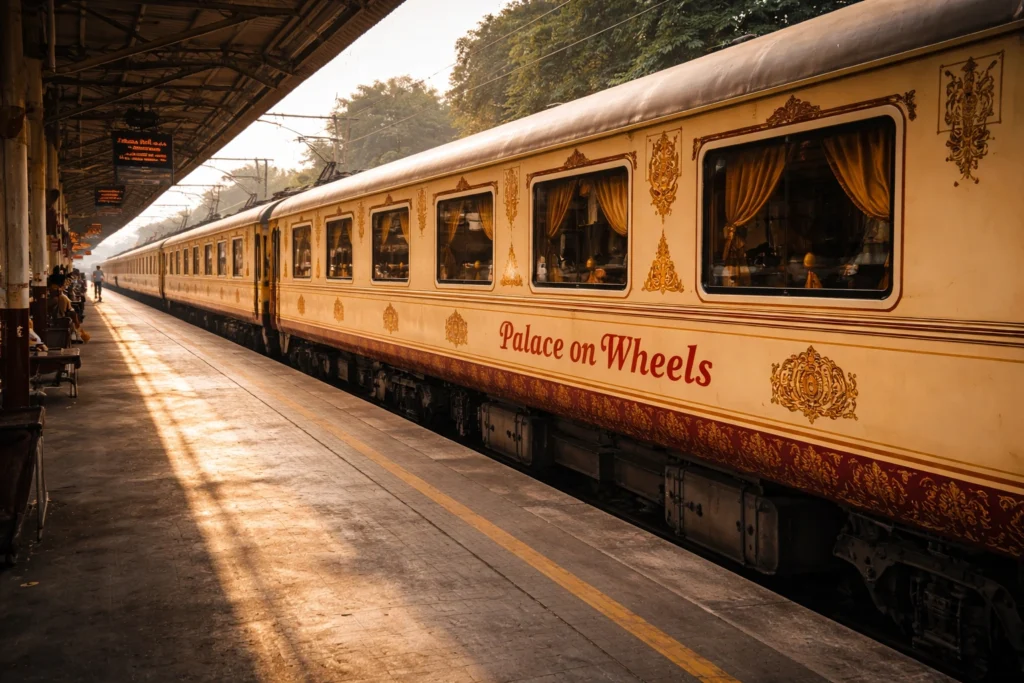
Rajasthan’s iconic Palace on Wheels is facing a major tourism setback after empty cabins, cancelled departures and softer international demand disrupted one of India’s most prestigious luxury travel experiences. Long celebrated as a flagship product of Indian heritage tourism, the luxury train has been hit by a combination of geopolitical uncertainty, cautious long-haul travel sentiment and premium ticket prices that have narrowed its customer base.
The slowdown is significant not only for the train itself but for Rajasthan’s wider visitor economy. Palace on Wheels has historically attracted high-spending international guests whose itineraries support hotels, guides, transport providers, artisans and cultural performers across the state. When occupancy falls, the impact extends far beyond the rail platform.
Empty Seats on a Luxury Icon
Operating since 1982, Palace on Wheels has built a global reputation for royal interiors, curated excursions and immersive journeys through Rajasthan’s forts, palaces and desert landscapes. The train has long symbolized aspirational travel in India, offering guests a premium way to explore one of the country’s most tourism-rich states.
However, the latest season has proven challenging. A substantial share of scheduled departures did not operate after failing to meet minimum booking thresholds, while some journeys ran with far lower passenger numbers than capacity. That marks a sharp contrast with stronger occupancy levels seen in previous years.
Why Demand Has Softened
Luxury travel is highly sensitive to global confidence. When geopolitical tensions rise, international travelers often postpone expensive long-haul holidays or choose closer destinations perceived as lower risk. Broader instability affecting parts of the Middle East and other global regions has added uncertainty to travel planning.
For premium rail journeys that require significant upfront spending and long booking windows, hesitation can quickly translate into lower occupancy. Travelers spending several lakh rupees on a trip may delay decisions until global conditions feel more stable.
High Ticket Prices Narrow the Market
Pricing is another key challenge. Palace on Wheels remains one of India’s most expensive travel products, with fares reaching premium levels that place it in competition with international luxury cruises, safari lodges and bespoke private tours.
While affluent travelers still seek exclusive experiences, value expectations have risen sharply. Today’s premium guests compare flexibility, personalization and global alternatives before committing. That means even a famous brand must continually prove its value proposition in a competitive luxury marketplace.
Rajasthan’s Tourism Economy Feels the Ripple Effect
The train’s influence stretches across multiple destinations including Jaipur, Jaisalmer, Udaipur and other heritage centers. Guests typically spend on excursions, handicrafts, cultural shows, transport and hospitality services during their journey.
When departures are cancelled or underfilled, local businesses can lose valuable high-yield spending. Folk artists, boutique retailers, guides and destination suppliers are especially exposed because luxury tourists often spend more per capita than mass-market visitors. In tourism economies, fewer visitors can matter as much as fewer trains.
Upgrades Have Not Yet Solved the Problem
The product has undergone modernization efforts in recent years, including refurbishment and operational changes aimed at enhancing standards. Upgraded interiors and service improvements were designed to keep the experience aligned with five-star expectations.
Yet refreshed hardware alone does not guarantee demand. Successful luxury tourism increasingly depends on dynamic pricing, targeted international marketing, flexible packages and strong distribution through travel advisors and premium tour operators. Product quality must now be matched by sharper commercial strategy.
Opportunity in Domestic and Regional Luxury Travel
While international demand has weakened, new opportunity may lie closer to home. India’s affluent domestic travel market has expanded rapidly, with growing appetite for experiential, heritage and premium short-break travel. Regional travelers from Asia and the Gulf may also represent future growth segments.
Adapting itineraries, creating shorter journeys, seasonal offers or themed departures could help broaden appeal beyond traditional overseas audiences. Luxury brands that diversify their source markets are often better positioned during periods of global uncertainty.
Heritage Value Still Remains Strong
Despite current challenges, Palace on Wheels retains powerful brand equity. Few travel experiences combine rail nostalgia, royal hospitality and access to Rajasthan’s cultural landmarks in such a distinctive format. The emotional appeal of slow luxury travel and curated storytelling remains highly relevant in today’s experience economy.
That means the current downturn does not necessarily define the future. With the right positioning, the train can still attract travelers seeking authenticity, comfort and prestige.
Outlook for Rajasthan Luxury Tourism
For now, Rajasthan’s tourism sector faces a reminder that even iconic products are not immune to global shocks. Recovery will depend on rebuilding traveler confidence, widening the customer base and sharpening competitiveness in the premium segment.
If those adjustments succeed, Palace on Wheels could once again become a symbol not of empty seats, but of renewed demand for one of India’s most celebrated luxury journeys.
For more travel news like this, keep reading Global Travel Wire