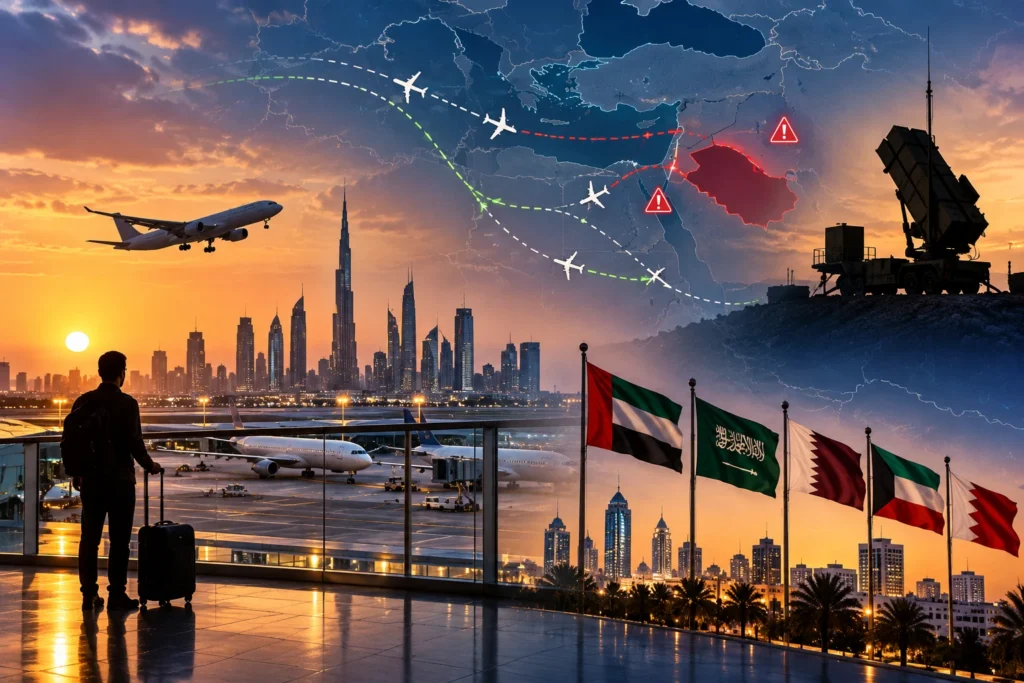
The Middle East’s travel scene just got hit with more uncertainty after an attack on Kuwait International Airport left damage and doubt in its wake. It not only messed up the airport’s stuff but also raised major safety questions for airlines across the Gulf.
The attack sparked a flurry of action from airlines, tour operators, and government types. They want to stay on top of things as tensions in the region keep shaking up air travel. Terminal 1 at Kuwait International Airport took a major hit, causing casualties and scaring folks enough that authorities diverted flights and halted some airport operations altogether.
This couldn’t have happened at a worse time for the Middle East aviation industry. Passenger numbers had been soaring due to a revival in tourism and expanded airline routes. Carriers there have been busy connecting Europe, Asia, and Africa, turning Gulf airports into key hubs for trips around the world.
After the attack, aviation chiefs quickly jumped into action. They put emergency measures in place and eventually got some operations going again. But still, many airlines rethought their schedules. A few made service changes and watched the situation closely to decide what to do next.
The disruption has also highlighted the growing importance of aviation security across the Gulf region. Airports in Kuwait, Bahrain, the United Arab Emirates, Qatar, and Saudi Arabia serve as major transit points for millions of international travelers every year. Any disruption at one major hub can create ripple effects across global airline networks, impacting passenger itineraries, flight schedules, and cargo operations.
Industry analysts note that airlines operating through the Gulf may increasingly evaluate alternative routing options if regional tensions continue. Changes in airspace availability can lead to longer flight times, higher fuel consumption, and increased operational costs, challenges that airlines worldwide have faced during previous geopolitical crises.
The incident has also attracted attention from the global tourism industry, which remains highly sensitive to security developments. Travel advisors and tour operators are encouraging travelers to stay informed about airline updates and official travel guidance. While most destinations across the Gulf remain open to visitors, travelers are advised to monitor flight schedules and remain flexible when planning regional trips.
Tourism experts emphasize that the Gulf region remains one of the world’s most important travel markets. Major destinations such as Dubai, Abu Dhabi, Doha, Riyadh, and Kuwait City play vital roles in international tourism, business events, and global aviation connectivity. Maintaining confidence in regional travel infrastructure remains a priority for governments and industry stakeholders.
This attack shows how connected modern aviation is. Airports aren’t just places we fly from anymore; they drive the economy by fueling tourism, trade, and creating jobs. So any problems at airports hit airlines, hotels, and the local economy too.
To stay ahead of threats, airport and airline folks in the area are stepping up their game. They’re putting more money into new security tech, emergency teams, and backup plans to keep things running smoothly when issues arise. Even though there are hurdles, bigwig industry types are still hopeful about the future. With tons of folks wanting to travel internationally, airlines buying more planes, and building awesome new infrastructure, things seem bright.
That being said, the latest trouble reminds everyone that political peace is super crucial for keeping tourism and travel booming. As people look into what happened and flights get back to normal, it’s clear how much we need solid security, prep, and teamwork between countries to protect this vital part of the world.