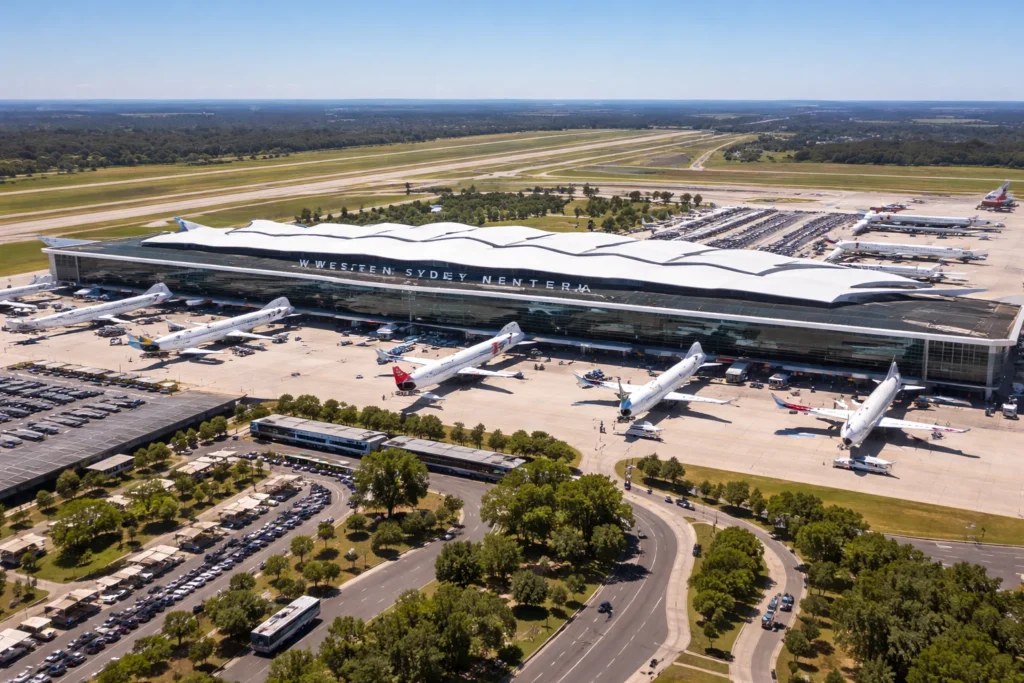
Australia’s tourism and aviation sectors are preparing for a major shift as Western Sydney International Airport moves closer to opening. Even before the first passenger boards a flight, the airport is already influencing airline schedules, travel planning, and future tourism growth across New South Wales and beyond.
Designed as a modern 24-hour aviation gateway, Western Sydney International Airport introduces something Sydney has never had at this scale: a major airport operating without night curfews or strict movement caps. This new operating model is expected to create greater flexibility for airlines, more travel options for passengers, and stronger economic opportunities for one of Australia’s fastest-growing regions.
The project has become one of the country’s most significant transport developments, with tourism leaders, government planners, and airlines closely watching how the new hub will reshape domestic and international travel.
A New Era for Sydney Air Travel
For decades, Sydney Kingsford Smith Airport has served as the city’s primary gateway. While it remains one of Australia’s busiest airports, curfew rules and slot restrictions have limited how airlines schedule flights, especially during late-night and early-morning periods.
Western Sydney International Airport changes that model entirely.
By operating around the clock, the airport gives airlines the freedom to launch flights at times that better match global connections, passenger demand, and fleet efficiency. This means more opportunities for overnight departures, smoother aircraft rotations, and stronger connections to Asia, Europe, and the Americas.
For travellers, the benefits could include wider flight choices, more convenient departure times, and potentially better access to competitive fares as airlines expand services.
Why the New Airport Matters for Tourism
Tourism authorities view the airport as more than a transport project. It is expected to become a major driver of visitor growth for Greater Sydney and regional New South Wales.
Western Sydney is home to cultural attractions, heritage sites, food districts, natural landscapes, and family-friendly destinations that have often been overlooked by international visitors arriving through central Sydney. With a new airport on the doorstep, these areas may now receive stronger tourism attention.
The airport is also expected to support easier access to the Blue Mountains, regional wine areas, Indigenous tourism experiences, wildlife parks, and major sporting venues.
By improving access to western suburbs and surrounding regions, the airport can help spread tourism benefits more evenly across the state.
Airlines Already Adjusting Future Plans
Although commercial flights have not yet started, airlines are already planning how to use the new airport’s flexible operating model.
The ability to schedule late-night departures and early arrivals creates major commercial advantages. Airlines can improve aircraft use, reduce idle time, and better connect Sydney passengers with international hub airports.
This can be especially valuable for routes to Asia, where timing is critical for onward connections to Europe, North America, and other parts of the world.
Industry analysts believe both domestic and international carriers will evaluate new route opportunities once operations begin, creating fresh competition in the Sydney market.
Boost for Western Sydney Economy
Government planning documents have highlighted the airport’s role in supporting jobs, business investment, logistics, and tourism development.
Large airports often become economic anchors, attracting hotels, conference centres, retail projects, cargo operations, and transport links. Western Sydney International Airport is expected to do the same, creating a new economic corridor in one of Australia’s fastest-expanding population centres.
For tourism businesses, this could mean stronger demand for accommodation, car rentals, restaurants, attractions, and event venues.
The airport may also encourage new visitor experiences tailored to international travellers looking for authentic local culture beyond traditional city sightseeing.
Modern Passenger Experience
The airport has been designed with a focus on efficiency, sustainability, and modern passenger expectations. New terminals are expected to offer faster processing, contemporary facilities, and easy transfers between domestic and international services.
As travellers increasingly seek seamless airport experiences, modern infrastructure can play a major role in destination appeal. Faster check-ins, smoother arrivals, and convenient transport links help shape first impressions of a city.
Tourism experts note that airports are often the first and last experience visitors have in a destination, making design and service standards increasingly important.
What It Means for Australian Aviation
The opening of a second major Sydney airport creates a new competitive landscape for Australia’s airline sector.
Instead of relying on a single primary gateway, carriers will now have two distinct airport models to choose from. One offers an established central location, while the other provides 24-hour flexibility and room for future expansion.
This dual-airport system may lead to smarter route planning, stronger competition, and greater resilience for Sydney’s aviation network during peak travel seasons.
It also positions Sydney for long-term growth as international travel demand continues to rise in the Asia-Pacific region.
Looking Ahead
As the launch date approaches, Western Sydney International Airport is already proving that infrastructure can influence tourism and airline strategy long before the first scheduled flight.
Its curfew-free model, growth potential, and regional location make it one of Australia’s most closely watched travel developments. For visitors, airlines, and tourism businesses alike, the airport promises to open new doors across Sydney and beyond.
The message is clear: Western Sydney International Airport is not simply adding capacity. It is redefining how Australia’s largest city connects with the world.