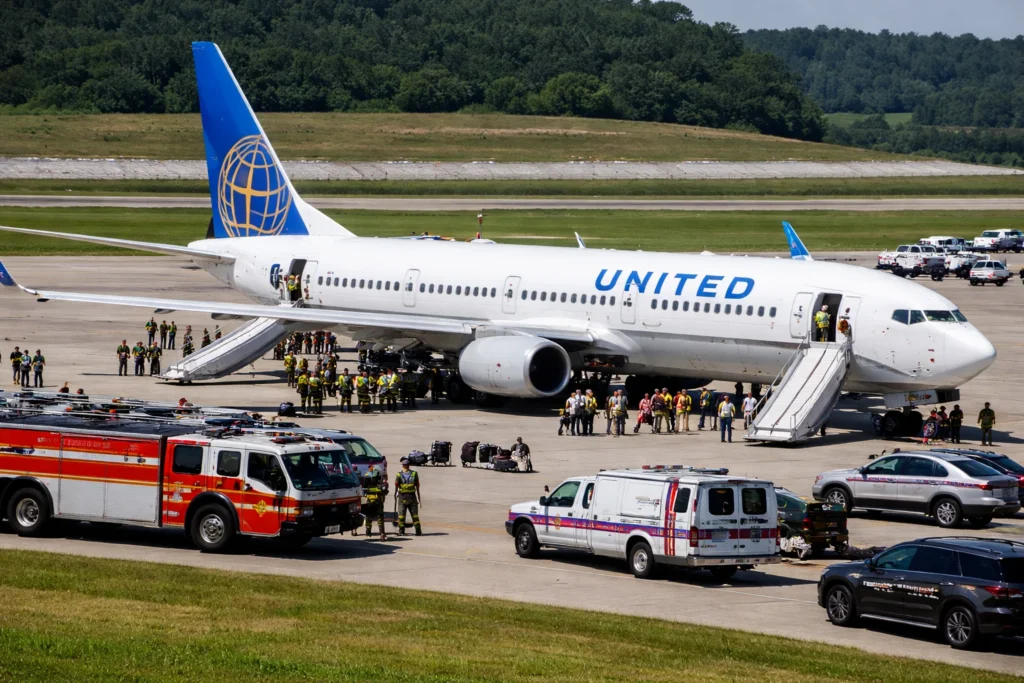
Passengers traveling from Chicago to New York resumed their journey after a precautionary diversion to Pittsburgh International Airport triggered a full-scale security response. The incident ended safely, with all travelers and crew evacuated, the aircraft cleared, and passengers later transferred to another plane for onward travel.
The event highlights how modern aviation systems prioritize passenger safety through rapid coordination between airline crews, airport teams, emergency responders, and federal authorities. While unexpected diversions can be stressful for travelers, the successful handling of the situation demonstrates the strength of established airport security procedures.
According to airport and aviation officials, the flight was rerouted to Pittsburgh after a possible onboard security concern was reported. The aircraft landed safely, and emergency teams immediately began standard response measures.
Safe Landing and Rapid Evacuation
The aircraft touched down without incident at Pittsburgh International Airport late in the morning. Once on the ground, passengers were evacuated using emergency slides as a precaution.
Officials confirmed that everyone onboard exited safely and no injuries were reported. Emergency vehicles, including fire and medical support units, were positioned near the aircraft as part of standard airport readiness protocols.
For travelers, such scenes can appear dramatic, but aviation experts note that precautionary evacuations are designed to prioritize safety while allowing authorities to quickly secure the aircraft and surrounding area.
The successful evacuation of all passengers and crew reflects the importance of regular training for airline staff and airport emergency teams.
Security Screening and Investigation
After the aircraft was secured, law enforcement and specialist response teams conducted a detailed inspection. Bomb disposal experts, trained security personnel, and canine units were involved in the screening process.
Authorities later confirmed that inspections of the aircraft, passengers, and baggage returned negative results. Once the sweep was completed, the incident was officially cleared.
These layered checks are a key part of aviation safety systems worldwide. Even when no threat is ultimately found, the decision to respond thoroughly helps maintain public confidence and ensures no risk is overlooked.
For airports, quick containment and structured investigation are essential to keeping operations safe and minimizing wider disruption.
Passengers Rebooked on New Aircraft
Following clearance of the incident, passengers were rebooked and boarded another aircraft to continue to New York. Airport officials confirmed onward travel arrangements were made as quickly as possible.
This step is especially important in travel recovery situations. Passengers affected by diversions often value timely updates, efficient rebooking, and clear communication as much as the resolution itself.
Airlines increasingly focus on customer support during irregular operations, recognizing that how disruptions are managed can strongly shape traveler satisfaction.
By arranging an alternative flight within hours, the travel experience for passengers was brought back on track despite the unexpected delay.
Why Diversions Happen in Modern Aviation
Flight diversions occur for many reasons, including weather, medical emergencies, technical checks, or security concerns. In each case, airline crews and air traffic controllers work together to choose the safest and most practical airport for landing.
Security-related diversions are handled with particular caution. Even limited or unverified concerns can trigger immediate action because aviation safety standards are built around prevention rather than reaction.
This means airlines may divert first and investigate second, especially when passenger wellbeing could be affected.
Although diversions can interrupt schedules, they are also evidence that safety systems are functioning exactly as intended.
Pittsburgh International Airport’s Role
Pittsburgh International Airport has become an important operational hub capable of handling diversions, domestic services, and emergency responses efficiently. Airports with strong infrastructure, runway capacity, and coordinated security teams are often selected when immediate action is needed.
The incident also placed a spotlight on how regional airports support the wider U.S. aviation network. Beyond serving regular travelers, they play a vital role in resilience planning during unexpected events.
For tourism and business travel, dependable airport operations are central to traveler confidence. Passengers want assurance that wherever they fly, safety systems are ready to respond.
What Travelers Can Learn
While such incidents are uncommon, they offer useful reminders for passengers. Travelers are encouraged to keep phones charged, listen closely to crew instructions, and remain patient during unexpected delays.
Cabin crews are trained extensively for emergency procedures, and following their guidance is the fastest route to a safe and organized outcome.
Travel insurance, flexible bookings, and real-time airline app notifications can also help reduce stress when schedules change unexpectedly.
Most importantly, events like this show that safety checks may cause delays, but they are in place to protect everyone onboard.
Positive Signal for Air Travel Confidence
Despite the temporary disruption, the outcome was positive: safe landing, no injuries, successful security clearance, and passengers continuing their trip the same day.
That is an important message for the travel industry. Public trust in air travel depends not only on preventing incidents, but also on handling them effectively when they arise.
Airlines, airports, and authorities continue to invest in technology, training, and coordination to make journeys safer and smoother. Every successful response reinforces the reliability of the system.
For passengers heading into busy travel seasons, the Pittsburgh diversion serves as a reminder that while unexpected events can happen, aviation safety remains the highest priority—and the systems built to protect travelers are working every day.