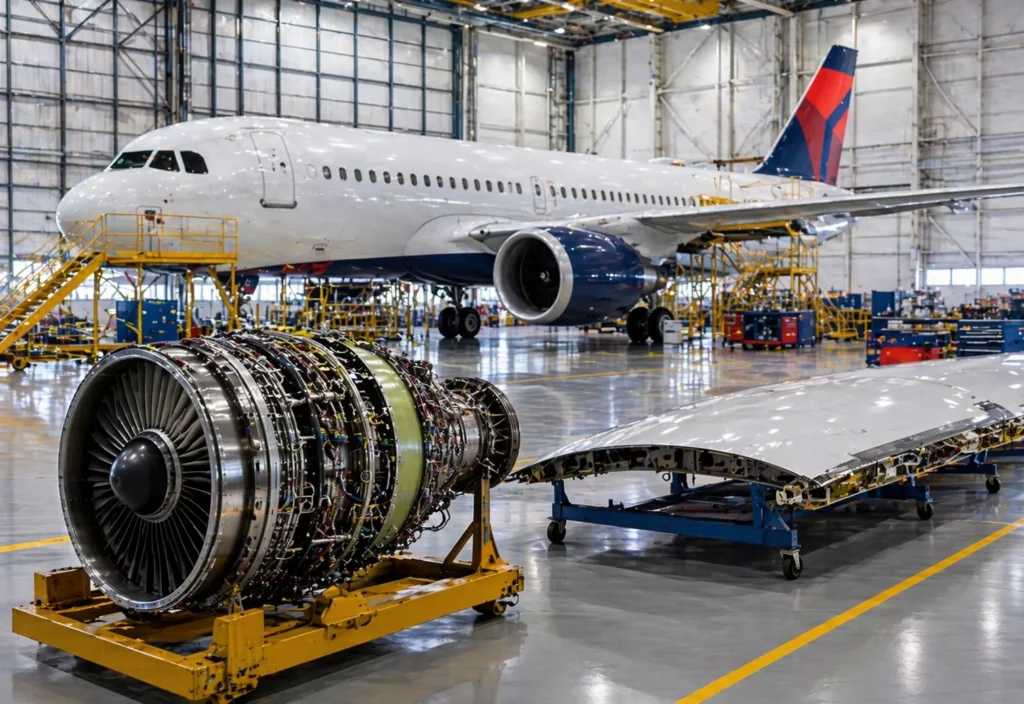
Delta TechOps and LATAM Airlines Brasil have announced a new Airbus A320 component repair agreement that is expected to strengthen aviation infrastructure, improve fleet reliability, and support tourism growth across the Americas. The partnership highlights how airline maintenance investments play a vital role in keeping travel networks strong, especially as global passenger demand continues to rise.
The agreement, announced on April 21, 2026, at the MRO Americas industry event in Orlando, Florida, will route repair work through LATAM Airlines Brasil’s major maintenance base in São Carlos, Brazil. Delta TechOps will serve as the single commercial interface for customers while LATAM provides technical repair services from its established facility.
For the tourism industry, this development is significant because stronger maintenance support means airlines can keep more aircraft in service, reduce delays, and expand travel options for passengers.
New Partnership Strengthens Air Travel Operations
The collaboration focuses on Airbus A320 family aircraft, one of the most widely used aircraft groups in the world. These jets are central to short-haul and medium-haul travel, serving domestic routes, regional leisure markets, and popular tourism corridors.
By increasing repair capacity for A320 components, the new agreement can help airlines maintain schedules more efficiently. Aircraft that return to service faster create better operational reliability, which benefits travelers through improved on-time performance and fewer disruptions.
As tourism rebounds globally, dependable airline operations are becoming increasingly important for destinations that rely on steady visitor arrivals.
Why the Airbus A320 Matters for Tourism
The Airbus A320 family is a backbone of modern tourism aviation. Used by airlines across Europe, North America, Latin America, Asia, and the Middle East, these aircraft connect travelers to beaches, cities, islands, and business hubs every day.
They are especially valuable for:
- Domestic holiday routes
- Regional city breaks
- Short international getaways
- Business travel links
- Seasonal tourism demand
With more than 12,000 A320 family aircraft operating globally, maintenance support for this fleet has direct implications for the wider travel economy.
When repair networks grow stronger, destinations can benefit from more stable air access and airlines can respond faster to growing passenger demand.
São Carlos Emerges as a Key Aviation Hub
The repair work under the agreement will take place at LATAM Airlines Brasil’s maintenance center in São Carlos. The facility has become one of the most important aviation service hubs in Latin America.
According to official company information, the site covers approximately one million square feet and employs around 2,400 people. It includes nine hangars, 22 specialized workshops, and the ability to support up to 16 aircraft at the same time.
This scale gives the partnership a strong platform for future growth. It also reinforces Brazil’s position as an important player in the regional aviation supply chain.
For tourism in South America, investments in aviation hubs can create a positive ripple effect by supporting airline growth, route development, and stronger international connectivity.
Better Connectivity for Travelers Across the Americas
Delta and LATAM already play major roles in connecting North and South America. Their broader relationship has expanded travel choices for passengers heading between the United States, Brazil, Chile, Peru, Colombia, and other destinations.
The new maintenance agreement adds another layer of cooperation by improving back-end operational support. While passengers may never see component repairs directly, they experience the benefits through:
- Reliable schedules
- Greater fleet availability
- Potential route growth
- Improved customer confidence
- Stronger peak-season readiness
As more travelers seek seamless journeys across the Americas, airline partnerships like this can help meet rising expectations.
Tourism Recovery Drives Demand for Aviation Support
Global tourism has continued to recover with strong leisure demand, increased international bookings, and renewed interest in long-delayed holidays. Tourism boards across the Americas have promoted city tourism, eco-travel, beach escapes, and cultural experiences, helping drive passenger growth.
With more people flying, airlines need dependable maintenance networks to keep fleets ready for busy travel seasons. Technical partnerships can also help carriers manage costs, improve turnaround times, and scale operations more effectively.
This makes maintenance strategy an important but often overlooked pillar of tourism growth.
Economic Benefits Beyond Aviation
The agreement is also expected to support skilled jobs, technical training, and industrial growth in Brazil. Large maintenance centers generate employment across engineering, logistics, supply chain services, and specialist trades.
For local communities, aviation investment can bring long-term economic value while strengthening international business ties.
Tourism economies benefit indirectly when aviation ecosystems grow stronger, because healthy airline networks are essential for attracting international visitors, hosting events, and supporting domestic travel.
Regulatory Approval Still Required
The companies have stated that the agreement remains subject to regulatory approval in Brazil. If approved, implementation is expected to begin in the second quarter of 2026 through a phased transition of selected Delta A320 components to the São Carlos facility.
A phased rollout allows technical teams to align processes, maintain quality standards, and ensure smooth integration before expanding the service portfolio further.
Industry observers will be watching closely, as successful implementation could open the door to broader cooperation in future maintenance areas.
What It Means for the Future of Travel
The Delta TechOps and LATAM Airlines Brasil partnership demonstrates how behind-the-scenes aviation investments help power the visible side of tourism. Every repaired aircraft component contributes to safer, more efficient, and more dependable journeys for millions of travelers.
As destinations compete for visitors and airlines expand networks, technical readiness will remain a key advantage. Stronger maintenance partnerships can help carriers respond faster to demand, support new routes, and deliver better travel experiences.
For tourists planning future trips across the Americas, this type of aviation investment is good news. It signals a travel industry preparing for growth, strengthening reliability, and building the infrastructure needed for the next generation of journeys.