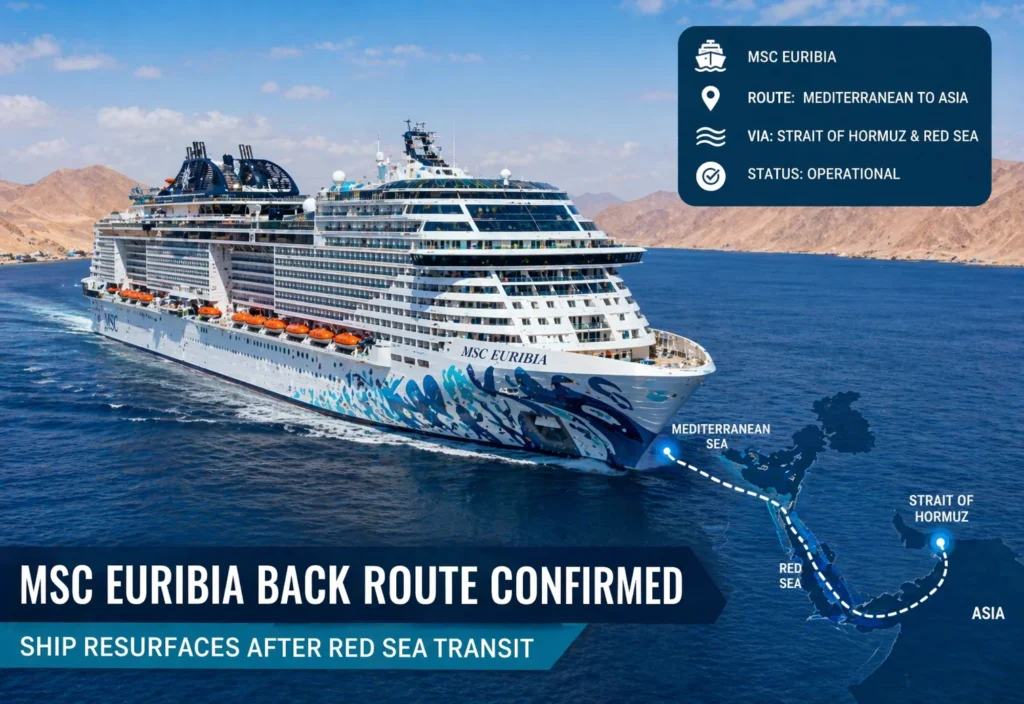
The return of MSC Euribia to public maritime tracking systems has drawn major attention across the tourism and cruise industry, as it signals renewed confidence in one of the world’s most strategically important cruise corridors. After several days without public position updates, the vessel has now reappeared and is continuing its voyage through the Red Sea.
For cruise operators, tourism authorities and travelers, the development is significant. It suggests that cruise activity through the Red Sea corridor is moving forward again after a period of uncertainty affecting global maritime travel routes.
As international tourism continues its recovery, the reopening and operational use of major sea passages is becoming increasingly important for cruise schedules, regional economies and passenger confidence.
Why the Red Sea Matters for Cruise Tourism
The Red Sea is one of the world’s most valuable maritime tourism regions. It connects Europe, the Middle East, Asia and Africa through key shipping and travel lanes, while also offering attractive leisure destinations along its coastline.
Cruise itineraries using this corridor can link Mediterranean ports with Arabian Gulf destinations, Indian Ocean routes and wider international sailings. This makes the region strategically important for repositioning voyages, long-haul cruises and seasonal deployment plans.
The Red Sea is also a destination in its own right. Travelers are drawn by coral reefs, beach resorts, diving tourism, ancient heritage sites and growing luxury tourism projects.
As a result, the return of cruise traffic through this route carries both operational and tourism value.
MSC Euribia’s Reappearance Signals Operational Confidence
The vessel’s temporary absence from public tracking systems created interest among cruise followers and maritime observers. Such gaps can occur for operational or security reasons, particularly when ships transit sensitive waterways.
Now that MSC Euribia has resumed visible tracking and continues through the Red Sea, it offers reassurance that planned operations are progressing.
For the cruise industry, confidence is essential. Cruise lines must balance itinerary planning, passenger expectations, port coordination and security assessments when deciding where ships can sail.
The successful continuation of this voyage indicates that operators still see value in maintaining important regional routes with appropriate precautions.
Modern Cruise Ships Depend on Global Connectivity
Today’s cruise industry relies heavily on route flexibility. Ships move seasonally between regions based on weather patterns, customer demand and holiday calendars.
A vessel may sail Europe in summer, the Middle East in shoulder seasons and Asia or the Caribbean at other times of the year. Strategic waterways such as the Red Sea allow cruise brands to reposition ships efficiently while offering unique itineraries to passengers.
Without access to these routes, operators may face longer diversions, higher fuel costs and reduced itinerary variety.
That is why developments involving major transit corridors are closely watched across the travel sector.
Passenger Confidence Is Central to Recovery
Travelers want memorable holidays, but they also prioritize reliability and peace of mind. When ships continue operating on important routes, it helps rebuild confidence in future bookings.
Cruise demand remains strong globally, especially among guests seeking all-in-one holidays with accommodation, dining, entertainment and multiple destinations included in one package.
The continued movement of vessels such as MSC Euribia supports the message that cruise travel remains adaptable and resilient even in complex operating environments.
For many travelers considering future sailings, visible signs of operational continuity can influence booking decisions.
Red Sea Destinations Could Benefit
Cruise operations through the region can generate significant economic benefits for coastal destinations and port cities.
Every cruise call may create spending on:
- Shore excursions
- Local transport
- Restaurants and cafés
- Souvenirs and retail
- Museums and attractions
- Port services
- Tour guides and hospitality jobs
Countries investing in coastal tourism, heritage tourism and luxury developments can benefit from restored cruise flows.
Several tourism authorities around the Red Sea have been expanding destination infrastructure in recent years, aiming to attract higher-value international visitors.
As confidence improves, cruise arrivals could support these long-term strategies.
Technology and Safety Shape Modern Operations
Modern cruise vessels are equipped with advanced navigation systems, communication tools and operational planning capabilities. These technologies help captains and cruise lines respond to changing conditions while maintaining guest comfort and safety.
Cruise brands also work closely with maritime authorities, ports and global security assessments when planning sailings.
The broader lesson is that route availability today depends not only on geography, but also on technology, preparedness and real-time decision-making.
For travelers, much of this happens behind the scenes—but it plays a major role in delivering smooth holidays.
What This Means for 2026 Cruise Travel
The reappearance of MSC Euribia and the confirmation of continued movement through the Red Sea arrive at an important time for tourism.
Global cruise demand is expanding, and travelers are seeking new destinations, longer voyages and more adventurous itineraries. The ability to operate through key maritime corridors helps cruise lines meet that demand while preserving route diversity.
For travelers, it may mean:
- More itinerary choices between Europe and Asia
- Expanded long-haul cruise options
- Greater confidence in regional sailings
- Continued access to Red Sea destinations
- Stronger competition and pricing across routes
For destinations, it can mean visitor spending, job creation and renewed tourism visibility.
Positive Outlook for Cruise Tourism
Cruise tourism has repeatedly shown resilience by adapting to market changes, traveler expectations and operational challenges. The latest movement of MSC Euribia is another example of that flexibility in action.
As ships continue returning to strategic routes, the sector gains momentum for the next phase of growth. Destinations along the Red Sea and beyond may benefit from stronger arrivals, while passengers gain more opportunities to explore the world by sea.
The message for 2026 is clear: cruise tourism is moving forward, and key global routes are once again helping power the journey.