São Paulo has taken a major step forward in urban mobility and tourism access with the opening of two long-awaited transport projects connecting key airports to the wider public transit network. The launch of the new monorail service to Congonhas Airport and the peoplemover system serving Guarulhos Airport marks an important milestone for one of Latin America’s busiest travel destinations.
For residents, business travelers and international visitors, the new services promise easier airport transfers, faster city access and more seamless journeys across Brazil’s largest metropolis. Improved connectivity is increasingly important as cities worldwide compete for tourism, events and investment through better infrastructure.
With these openings, São Paulo strengthens its position as a modern gateway for domestic and international travel in South America.
New Monorail Connects Congonhas Airport
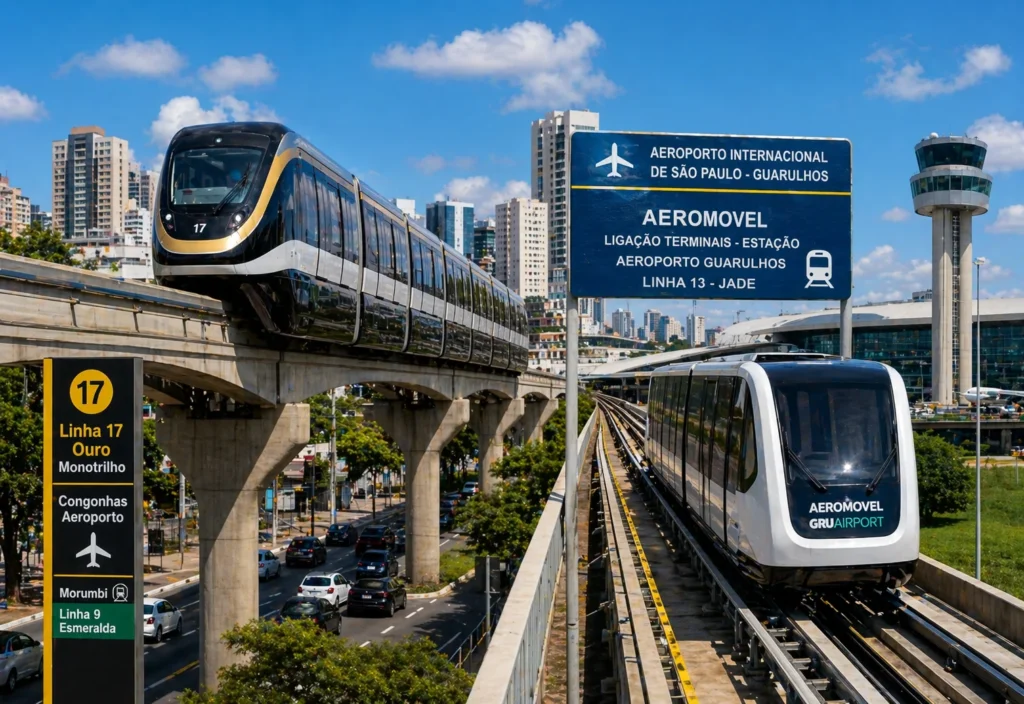
The first section of São Paulo’s new Line 17-Gold monorail has now entered service, linking Congonhas Airport with the suburban rail network. The line creates a long-awaited rail connection for one of the city’s most important domestic aviation hubs.
Congonhas Airport is widely used by business travelers and domestic passengers due to its central location and strong route network. Until now, many visitors depended heavily on taxis, buses or private cars to reach the airport.
The new monorail changes that by offering a direct public transport option integrated with the wider metropolitan system.
For tourists arriving in São Paulo, easier airport access can improve first impressions and reduce travel stress from the moment they land.
Why Airport Rail Links Matter for Tourism
Fast and reliable airport transport is now considered essential for leading tourism cities. Visitors increasingly expect smooth journeys between airports, hotels, convention centers and attractions.
Strong airport rail connections can deliver several tourism benefits:
- Reduced congestion on city roads
- Faster transfers during peak hours
- Lower transport costs for visitors
- Easier navigation for first-time travelers
- Better links to hotels and attractions
- Stronger image as a modern destination
Cities with efficient airport mobility often gain a competitive edge in attracting leisure travelers, corporate events and international conferences.
São Paulo’s latest upgrades support that trend.
Congonhas Access Supports Business and Leisure Travel
Congonhas Airport plays a unique role in Brazil’s travel network because of its popularity for short-haul domestic routes, especially business travel between major cities.
By connecting this airport to rail transit, São Paulo improves mobility for corporate visitors attending meetings, trade fairs and events. It also benefits leisure travelers exploring museums, cultural districts, gastronomy and nightlife across the city.
São Paulo is one of South America’s leading destinations for events and business tourism. Better transport access helps strengthen that reputation while also supporting city-break tourism.
As travel demand grows, airport efficiency becomes increasingly valuable.
Guarulhos Peoplemover Enhances International Arrivals
In addition to the monorail, services have also begun on the new automated peoplemover linking Guarulhos Airport rail station with the airport terminals.
Guarulhos is São Paulo’s primary international airport and one of the busiest gateways in Latin America. Millions of travelers pass through its terminals each year for domestic and international journeys.
The new peoplemover improves the final connection between rail services and terminal buildings, making public transport access more convenient for passengers carrying luggage or transferring between modes.
For international visitors, simple airport navigation can significantly improve the overall travel experience.
Innovative Transport Technology on Display
The peoplemover uses advanced propulsion technology designed for efficient short-distance airport movement. Automated systems like this are becoming more common in global airports because they reduce transfer times and improve passenger flow.
Modern travelers are increasingly familiar with airport trains, automated shuttles and integrated mobility systems. As expectations rise, destinations must continue upgrading infrastructure to remain competitive.
By investing in both a monorail and peoplemover, São Paulo demonstrates how transport innovation can support tourism growth and urban quality of life at the same time.
Tourism Benefits Beyond the Airport
Improved transport infrastructure often creates benefits far beyond terminals and stations. Easier mobility can encourage visitors to stay longer, explore more neighborhoods and spend more across the local economy.
Travelers with convenient transit access are more likely to visit:
- Cultural attractions
- Shopping districts
- Restaurants and nightlife areas
- Sports venues
- Convention centers
- Historic neighborhoods
- Day-trip destinations
This wider movement spreads tourism revenue across the city rather than concentrating it in limited zones.
For São Paulo, a city known for diversity, creativity and large-scale urban experiences, stronger connectivity can help unlock broader visitor spending.
A Positive Signal for Brazil Tourism
The openings also send a wider message about Brazil’s tourism readiness. Major cities that modernize airports, rail systems and urban transport become more attractive to global travelers.
Brazil already benefits from world-famous beaches, nature tourism, culture, festivals and sporting heritage. Urban gateways like São Paulo are crucial because they often serve as the first stop for international visitors.
When arrival experiences are efficient and well connected, it enhances the country’s overall tourism brand.
Infrastructure improvements can therefore support both city tourism and national tourism growth.
Future Expansion Could Increase Impact
Officials have also outlined future extensions for the monorail network, suggesting that the current opening may be only the beginning of a broader mobility transformation.
If more stations and longer corridors are added, additional districts, hotels and commercial areas could gain easier access to airport services and rapid transit.
Long-term expansion would increase convenience for residents while making São Paulo even more attractive for tourism and investment.
Integrated transport planning remains one of the strongest foundations for sustainable urban tourism.
What This Means for Travelers in 2026
For visitors heading to São Paulo in 2026 and beyond, the city now offers a stronger arrival experience with more transport choices and better airport links.
Travelers can expect:
- Easier access to Congonhas Airport
- Better terminal transfers at Guarulhos
- More convenient public transport journeys
- Reduced dependence on road traffic
- Improved city mobility during events and holidays
These upgrades matter because the quality of a trip often begins with how easily visitors move through a destination.
São Paulo’s new airport monorail and peoplemover are more than transport projects—they are tourism investments that help shape the future of travel in Brazil’s biggest city.