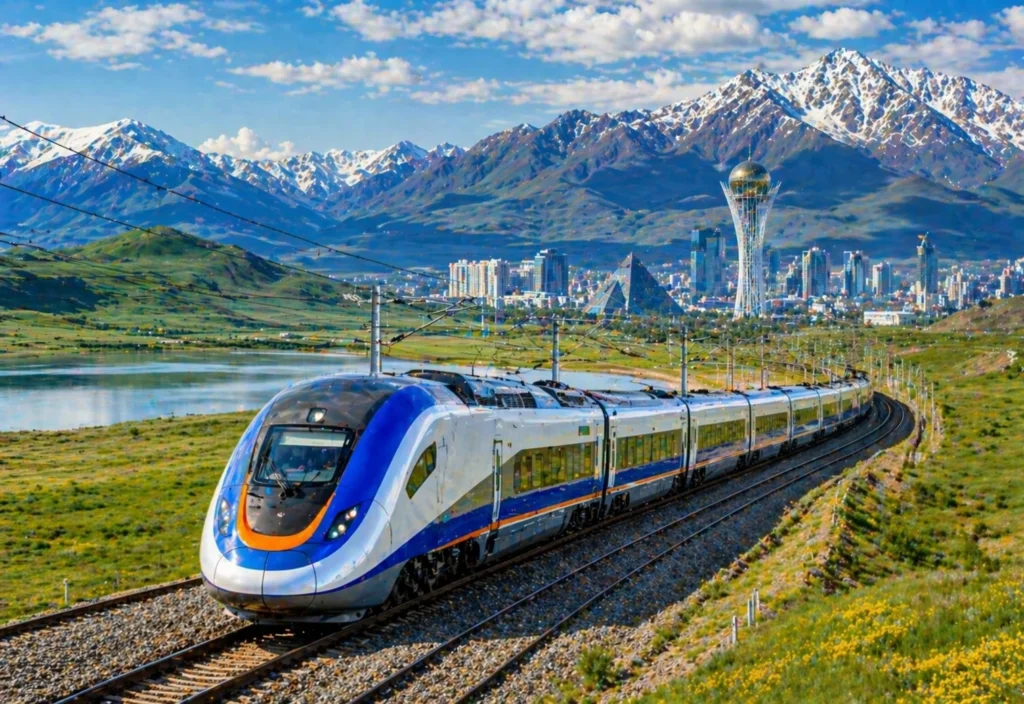
Kazakhstan is accelerating one of the most ambitious transport transformations in Central Asia, using large-scale railway expansion and upgraded international corridors to strengthen its role as a bridge between Europe and Asia. The strategy is designed to improve trade, logistics and regional mobility, while also creating long-term opportunities for tourism and cross-border travel.
With thousands of kilometers of new rail lines planned, modernized ports, faster border processing and stronger links to major international markets, Kazakhstan is positioning itself as a key gateway for Eurasian movement.
For travelers, these developments could reshape how Central Asia is explored in the coming decade. Improved rail infrastructure can make multi-country journeys easier, open emerging destinations and support more sustainable tourism across a region rich in culture, landscapes and heritage.
Kazakhstan Strengthens Its Strategic Position
Kazakhstan sits at the heart of Eurasia, sharing routes that connect China, Central Asia, the Caucasus, Russia and Europe. This geographic location gives the country a natural advantage as a transport hub.
National leaders have emphasized long-term investment in rail and logistics to turn that location into lasting economic and mobility value. Over recent years, the country has expanded rail infrastructure significantly, with more construction planned through the next decade.
While much of the current focus is on freight and supply chains, modern transport corridors often create major tourism benefits over time. Once routes become faster, more reliable and better connected, passenger travel opportunities usually grow alongside commercial use.
Why Rail Matters for Tourism
Rail travel is becoming increasingly important for tourism worldwide. Many travelers are choosing trains for comfort, scenic experiences, lower emissions and easier city-center arrivals.
In regions such as Europe and Asia, strong rail networks support:
- Multi-country holidays
- City-to-city tourism
- Business travel
- Cultural routes
- Airport access
- Sustainable travel choices
- Regional weekend breaks
Kazakhstan’s investment in rail infrastructure could help bring similar advantages to Central Asia, where tourism potential remains high but connectivity has often been a challenge.
As transport improves, destinations once considered remote may become more accessible to international visitors.
Middle Corridor Gains Global Attention
A major part of Kazakhstan’s strategy is the expansion of the Trans-Caspian International Transport Route, often called the Middle Corridor. This route connects China with Europe through Central Asia and the Caspian region.
Travel times along the corridor have already been reduced, with further improvements targeted in the years ahead. While the corridor is known for freight movement, its long-term significance for tourism should not be overlooked.
Efficient east-west routes can encourage future passenger rail services, integrated travel products and easier access between multiple countries.
For travelers interested in Silk Road heritage, overland adventures or new rail experiences, these corridors may become increasingly attractive.
Ports and Rail Create New Tourism Gateways
Kazakhstan is also investing in the Caspian Sea ports of Aktau and Kuryk, increasing capacity and strengthening links with international partners.
Ports connected to rail systems can evolve into wider tourism gateways, especially when combined with ferry services, cruise opportunities or overland travel packages.
Travelers may eventually use these hubs to combine rail and maritime journeys across Central Asia and the Caucasus.
This type of intermodal travel is growing in popularity as visitors seek more immersive routes rather than simple point-to-point flights.
Faster Borders Improve Visitor Experience
One of the biggest barriers to cross-border tourism can be slow or complicated border procedures. Kazakhstan’s digital modernization strategy includes systems designed to reduce processing times and improve movement efficiency.
Faster borders are important not only for cargo but also for future passenger journeys. Travelers value predictability, convenience and smooth transit between destinations.
Digital tools can support:
- Faster document checks
- Better scheduling
- Real-time travel information
- Simpler customs procedures
- Improved journey planning
As these systems expand, the overall travel experience across the region can improve significantly.
New Routes Could Unlock Hidden Destinations
Large rail investments often bring attention to places beyond capital cities and famous landmarks. Towns, landscapes and heritage areas along railway corridors can become new tourism stops when access improves.
Kazakhstan offers vast natural scenery, steppe landscapes, mountain regions, modern cities and Silk Road heritage. Easier rail movement could encourage travelers to spend more time exploring beyond traditional gateways.
Potential tourism growth areas include:
- Nature and eco-tourism regions
- Cultural heritage towns
- Adventure travel routes
- Domestic city breaks
- Cross-border itineraries with neighboring countries
Infrastructure can turn overlooked destinations into future highlights.
Sustainable Tourism Opportunity
Global tourism is increasingly focused on sustainability, and rail travel plays a central role in that shift. Compared with many short-haul flights or long road journeys, trains can offer a lower-impact transport option while improving comfort.
As travelers become more environmentally conscious, destinations with stronger rail networks may gain competitive advantage.
Kazakhstan’s rail expansion therefore supports not only mobility and trade, but also the foundations of future sustainable tourism growth.
Business Travel and Events Could Rise
Improved transport also helps corporate travel, conferences and investment events. Faster connections between cities and international markets make destinations more attractive for meetings and trade activity.
Business travelers often become leisure visitors later or extend trips for tourism. This creates additional economic value across hotels, restaurants and attractions.
As Kazakhstan strengthens its position in global transport networks, its profile as a business destination may continue to rise.
What Travelers Could Expect by 2035
With major projects underway and further expansion planned, travelers may see significant changes in the years ahead.
Possible benefits include:
- Faster regional rail journeys
- Better international connections
- Easier multi-country travel
- More tourism routes across Central Asia
- Stronger digital travel systems
- Greater access to emerging destinations
While freight remains the immediate focus, tourism potential will likely grow as infrastructure matures.
Positive Outlook for Central Asian Tourism
Kazakhstan’s railway strategy shows how transport investment can shape the future of tourism. Better connections create easier journeys, stronger regional cooperation and new reasons for travelers to explore lesser-known destinations.
As Eurasian routes become faster and more integrated, Kazakhstan could move from being a transit nation to becoming a major tourism gateway in its own right.
For travelers seeking new experiences between East and West, the expanding Kazakhstan rail network may soon become one of the most exciting routes on the map.