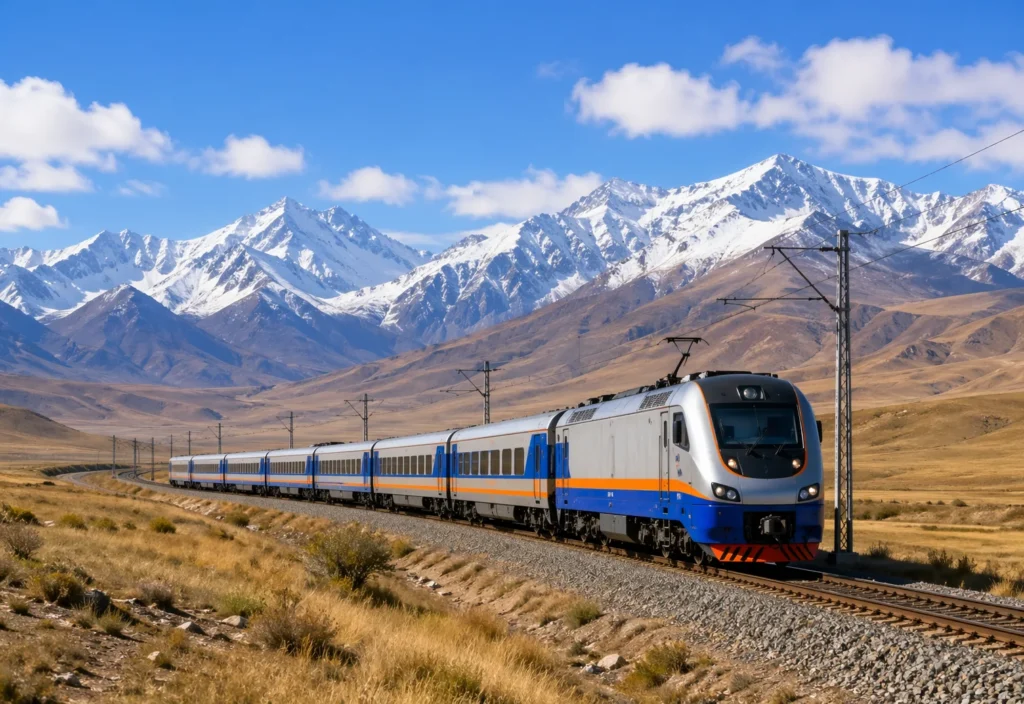
Kazakhstan has announced an ambitious plan to build 5,000 kilometers of new railway lines over the next four years, a move expected to strengthen the nation’s role as a major Eurasian transport hub while creating fresh opportunities for rail tourism and regional travel. The large-scale infrastructure program was highlighted during an international railway conference in Astana attended by transport leaders and rail industry representatives from more than 30 countries.
The project is part of Kazakhstan’s broader strategy to transform its geographic position into an economic advantage. As the world’s largest landlocked country, Kazakhstan sits between Europe and Asia, making it a vital corridor for cargo movement, passenger mobility, and cross-border tourism.
While freight growth is a major priority, improved rail connectivity can also reshape tourism by making destinations more accessible, reducing travel times, and encouraging sustainable overland journeys across Central Asia.
Railways Set to Redefine Kazakhstan Connectivity
Railways play a central role in national development by connecting cities, ports, industrial zones, and tourism regions. For Kazakhstan, expanding the rail network can unlock stronger domestic mobility while supporting international transit routes that pass through the country.
Over the past decade, Kazakhstan has already invested heavily in transport modernization, building thousands of kilometers of mainline routes. The next stage aims to accelerate that momentum with another 5,000 kilometers of new rail infrastructure.
For travelers, better rail access can open new routes to cultural cities, natural landscapes, mountain areas, and emerging destinations that are currently less connected.
As rail networks expand, tourism often follows. Improved stations, faster services, and wider route coverage make multi-city journeys easier and more attractive for domestic and foreign visitors alike.
Growing Role in Eurasian Travel Routes
Kazakhstan occupies a strategic position along overland routes linking Europe, China, the Caucasus, the Middle East, and South Asia. This gives the country long-term potential not only in trade logistics but also in international rail travel.
The government’s vision of a more integrated Eurasian transport system could support future tourism circuits that combine multiple countries through seamless train journeys.
Around the world, travelers are showing greater interest in scenic rail holidays, slow travel, and lower-emission transport options. As a result, countries with strong rail links are increasingly well placed to benefit from changing tourism preferences.
Kazakhstan’s vast steppes, dramatic landscapes, Silk Road heritage, and modern cities could become more accessible to international travelers choosing rail-based itineraries across the region.
Middle Corridor Gains Momentum
One of the most important routes in Kazakhstan’s transport strategy is the Trans-Caspian International Transport Route, often known as the Middle Corridor. This route connects Asia and Europe through Central Asia and the Caspian Sea, offering an alternative east-west link.
Rail and port modernization along this corridor is already underway, including expanded capacity at Aktau and Kuryk ports. Faster delivery times and stronger infrastructure are expected to improve efficiency for freight, but the same improvements can also support passenger mobility and tourism development over time.
Modern transport corridors often stimulate investment in hospitality, city development, and visitor services along the route. Towns and regional hubs connected to major rail systems can gain new tourism visibility and economic opportunities.
For Kazakhstan, stronger corridor performance may increase international awareness of the country as more than just a transit point, but as a destination in its own right.
North-South Corridor Opens New Possibilities
Kazakhstan is also developing the North-South transport corridor, which links Central Asia with markets in the Persian Gulf and India. This route could enhance access to new visitor markets and deepen travel ties with countries across South Asia and the Middle East.
Improved connectivity can encourage business travel, cultural exchange, and future tourism partnerships. Easier movement between regions often leads to stronger airline cooperation, rail packages, and combined travel itineraries.
As infrastructure improves, Kazakhstan may become increasingly attractive for stopover tourism, conference travel, and regional exploration.
Digital Rail Systems Improve Travel Experience
Alongside physical construction, Kazakhstan is prioritizing digital transformation in transport. Faster border processing, smarter logistics systems, and paperless procedures can make rail travel more efficient for both cargo and passengers.
The government has emphasized digitalization and artificial intelligence as national priorities, with new systems already reducing customs clearance times at key borders.
For tourism, digital upgrades can improve journey planning, ticketing, security checks, and border crossings. Travelers increasingly expect smooth and technology-enabled experiences when moving between countries.
Smart rail systems can also help operators manage schedules, improve punctuality, and respond faster to changing demand.
This combination of infrastructure and digital progress is essential for creating modern travel networks.
Why Rail Tourism Matters
Rail tourism is gaining popularity globally as travelers look for more sustainable and immersive ways to explore destinations. Train journeys often provide scenic views, comfortable city-center access, and the opportunity to experience landscapes that flights bypass.
Kazakhstan has strong potential in this segment due to its scale and diversity. Visitors can travel between cosmopolitan centers such as Astana and Almaty, explore cultural heritage sites, or cross wide-open natural terrain that defines the Central Asian experience.
Rail also supports domestic tourism by making weekend trips, family travel, and regional holidays easier for residents.
As new lines are completed, tourism boards and private operators may develop themed routes, cross-border packages, and experiential journeys designed for leisure travelers.
Economic Benefits Beyond Freight
Although freight transit remains a major driver of railway investment, tourism can add significant complementary value. Visitors spend on hotels, restaurants, local transport, attractions, guides, and shopping.
Rail-linked destinations often benefit from year-round visitor flows rather than only seasonal peaks. Better transport can also help smaller cities participate in the tourism economy.
For Kazakhstan, combining logistics growth with tourism development can diversify returns from infrastructure spending and create broader employment opportunities.
Outlook for Kazakhstan Tourism and Transport
Kazakhstan’s 5,000-kilometer railway expansion is more than an infrastructure announcement. It is a signal that the country wants to play a bigger role in the movement of people, goods, and ideas across Eurasia.
With stronger corridors, smarter systems, and growing international attention on rail travel, Kazakhstan has the chance to emerge as both a strategic transit hub and a compelling tourism destination.
If investment continues and visitor-focused services grow alongside freight capacity, the nation’s railway future could become one of the most exciting travel stories in Central Asia.