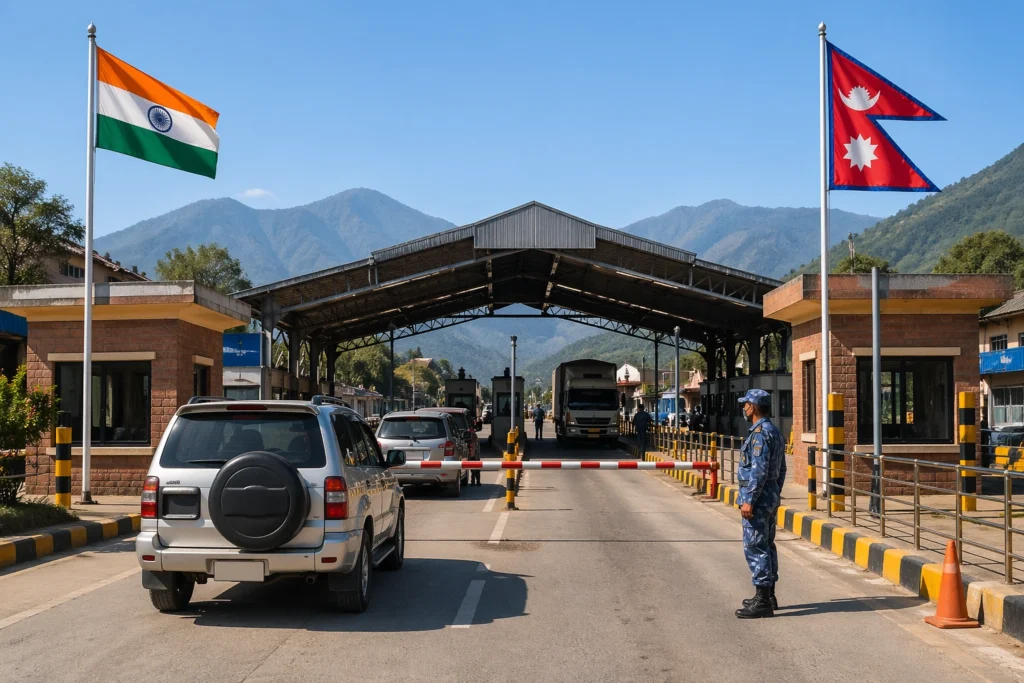
India and Nepal have introduced stricter border control measures for Indian vehicles and goods crossing into Nepal, marking a significant shift in how one of South Asia’s busiest land borders operates. The new rules require vehicle registration, permits, and customs declarations for certain goods, with authorities aiming to strengthen security, regulate legal movement, and crack down on smuggling.
For travelers, traders, and tour operators, the changes are expected to reshape long-standing cross-border habits. While the India-Nepal border remains one of the region’s most open and culturally connected frontiers, movement by road is now becoming more formalized through stronger documentation and enforcement procedures.
Why the Rules Are Changing
For decades, the India-Nepal border allowed relatively easy movement under historic bilateral arrangements that supported tourism, trade, and family ties. However, concerns over illegal trade, unregulated vehicle movement, and smuggling have grown in recent years.
Authorities now want greater visibility over what enters Nepal and how long foreign vehicles remain in the country. The updated framework is designed to improve transparency, protect tax revenues, and support stronger law enforcement cooperation between the two neighbors.
The changes reflect a wider regional trend in which borders remain open to legitimate travel while becoming stricter on undocumented movement.
New Rules for Indian Vehicles Entering Nepal
Under the revised system, Indian vehicles entering Nepal must complete an official registration process at the border and obtain a permit valid for the duration of the visit. This applies to private cars, commercial vehicles, and tourist coaches.
Authorities have also introduced a stay limit of 30 days per year for Indian vehicles inside Nepal. The measure is intended to prevent long-term unregulated use of foreign vehicles and ensure all entries are properly recorded.
Travelers who exceed the allowed period may face penalties, and enforcement action could include fines or vehicle seizure depending on the case.
For road trippers and self-drive tourists, advance planning will now be essential.
Customs Declarations for Goods
The second major change affects goods carried across the border. Travelers bringing items into Nepal may now need to declare them formally, especially if they exceed specified value thresholds.
According to the supplied information, goods worth more than ₹100 per item may require declaration and applicable customs duties. Authorities say the aim is to reduce informal trade and ensure proper taxation of goods entering the country.
Electronics, textiles, luxury items, and high-value consumer products are among the categories likely to face greater scrutiny.
For shoppers and traders, keeping receipts and invoices is expected to become increasingly important.
What This Means for Travelers
For many tourists, the impact may be limited if they are carrying standard personal luggage and crossing for short visits. However, anyone driving into Nepal or transporting goods should prepare for additional procedures and possible waiting times at land checkpoints.
Travelers are advised to carry:
- Valid vehicle registration documents
- Required border permit paperwork
- Identity and travel documents
- Receipts for purchased goods
- Completed customs declarations where needed
Families, road tourists, pilgrimage groups, and transport operators may need extra time during busy travel periods.
Impact on Tourism and Local Economies
The India-Nepal border supports major tourism flows, especially for pilgrimage travel, adventure tourism, shopping trips, and family visits. Stricter procedures could initially slow crossings, but authorities are betting that a more organized system will create long-term benefits.
A transparent border process can improve traveler confidence, reduce illegal trade, and support fairer market competition for businesses operating legally.
Destinations in Nepal that depend heavily on Indian visitors may watch implementation closely to ensure new checks do not discourage tourism demand.
Smuggling Crackdown and Security Focus
Smuggling has been a persistent issue along parts of the border, with undocumented movement of goods affecting tax collection and market pricing. By requiring declarations and vehicle permits, authorities hope to make illicit activity more difficult and easier to detect.
Improved data on cross-border movement can also help both countries respond faster to security risks, trafficking concerns, and unauthorized commercial activity.
Cooperation Between Two Close Neighbors
Despite the stricter rules, the changes also demonstrate continued India-Nepal cooperation. Rather than reducing ties, the measures aim to modernize border management while preserving legitimate travel and trade links.
That balance is crucial. Millions of people on both sides of the frontier share deep economic, cultural, and family connections.
What Happens Next
In the coming months, awareness and enforcement will be key. Travelers and businesses who understand the new system early are likely to face fewer delays and smoother crossings.
For now, the message is clear: the India-Nepal border remains open—but it is entering a new era of tighter checks, stronger compliance, and more structured movement for vehicles and goods.
For more travel news like this, keep reading Global Travel Wire