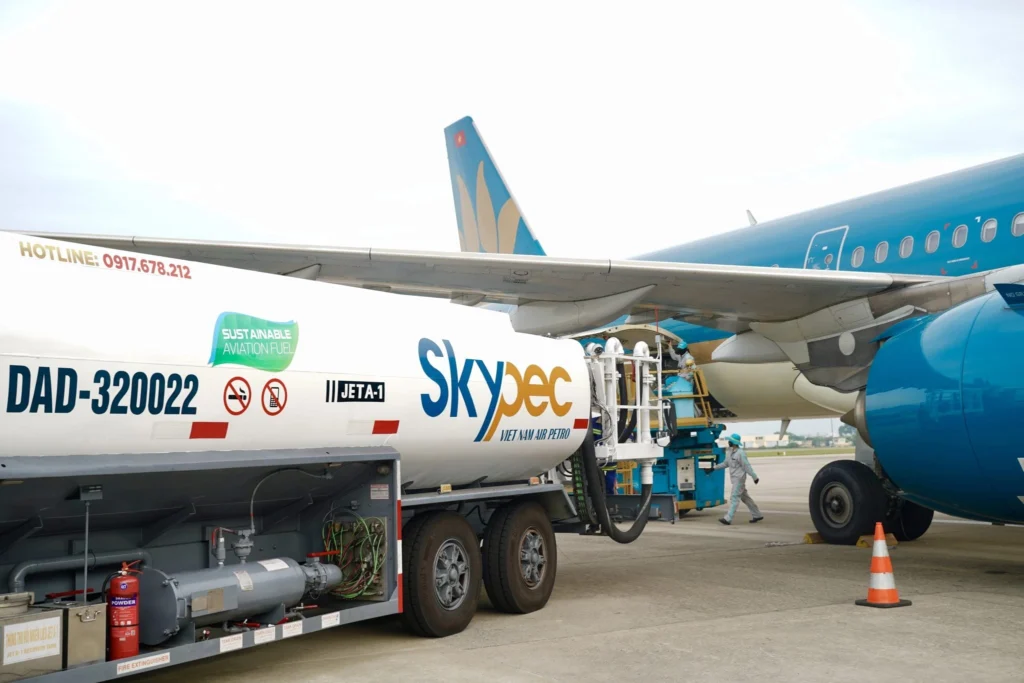
Vietnam Airlines has reduced domestic flight schedules and suspended multiple routes as airlines worldwide respond to soaring jet fuel costs, supply pressure, and mounting operational uncertainty. The move places the carrier among a growing list of international airlines adjusting capacity as fuel expenses reshape the economics of global air travel.
The latest cuts highlight how energy market volatility can rapidly spread across tourism, aviation, and passenger demand. For travelers, the consequences are already visible: higher fares, fewer route choices, crowded flights on key corridors, and growing uncertainty when planning trips in the months ahead.
Vietnam Airlines Scales Back Services
According to the information provided, Vietnam Airlines has suspended seven domestic routes and removed approximately 23 weekly flights as part of a cost-control strategy. The affected services include lower-demand sectors such as Hai Phong–Buon Ma Thuot, Hai Phong–Cam Ranh, Hai Phong–Phu Quoc, Hai Phong–Can Tho, Ho Chi Minh City–Van Don, Ho Chi Minh City–Rach Gia, and Ho Chi Minh City–Dien Bien.
Meanwhile, higher-demand trunk routes linking Hanoi, Ho Chi Minh City, and Da Nang are being prioritized.
This approach reflects a common airline strategy during cost shocks: protect core profitable routes while trimming weaker sectors.
Why Fuel Prices Matter So Much
Jet fuel is one of the largest expenses for any airline, often ranking just behind labor costs. When prices rise sharply, carriers must either absorb the increase, pass costs on to passengers, or reduce operations.
The current pressure comes from disrupted supply chains and tighter fuel availability, according to the supplied information. When fuel costs rise quickly, airlines with thin margins—especially low-cost and short-haul operators—can be hit hardest.
Even large international carriers with strong networks are forced to review schedules, aircraft deployment, and route profitability.
A Wider Global Airline Response
The trend is not limited to one region. Airlines across Asia and Europe are also scaling back.
Cathay Pacific has announced capacity reductions, while its low-cost affiliate HK Express is adjusting services. Vietjet has reduced frequencies on selected domestic routes. European carriers including Lufthansa, KLM, SAS, and Virgin Atlantic are also cited as introducing schedule changes, cancellations, or surcharges to manage higher operating costs.
Although the scale differs by airline, the pattern is consistent: preserve network strength where demand is highest and reduce exposure elsewhere.
What It Means for Travelers
For passengers, airline schedule reductions can affect every stage of the journey.
Higher airfares: Fuel surcharges or reduced seat supply can push ticket prices upward, especially on popular routes.
Fewer options: Some secondary destinations may see fewer flights or temporary suspensions, making itineraries less convenient.
Busier flights: When airlines consolidate schedules, remaining departures often fill faster.
Planning uncertainty: Timetables can change more frequently during volatile operating periods.
Travelers booking in the near term may benefit from reserving early, staying flexible with dates, and monitoring airline updates closely.
Tourism Impact Spreads Beyond Airlines
Reduced connectivity can affect hotels, attractions, tour operators, and local economies that rely on steady visitor arrivals.
Domestic route cuts may hit emerging destinations particularly hard if they depend on air access for tourism growth. International reductions can also slow business travel, meetings, and event demand.
For destinations competing for visitors, stable airline capacity is often just as important as marketing campaigns.
Pressure on Low-Cost Carriers
Budget airlines can face special challenges during fuel spikes because they compete heavily on price and often operate with tighter margins. Passing higher costs directly to customers can weaken demand, but absorbing them can damage profitability.
That creates difficult decisions around route cuts, frequency reductions, or fare increases.
As a result, travelers may notice fewer ultra-low fares than in previous seasons.
How Airlines Typically Respond
During fuel crises, airlines often use several levers:
- Retire or ground less efficient aircraft
- Reduce marginal routes
- Raise fares or add surcharges
- Increase focus on premium or high-demand markets
- Improve operational efficiency
- Hedge fuel costs where possible
These actions can stabilize finances but may also reshape route networks for months.
What Comes Next
Much depends on how energy markets and supply conditions evolve. If fuel costs ease, some suspended routes could return and fare pressure may soften. If volatility continues, more airlines may extend cuts or further adjust schedules.
For now, carriers are balancing demand recovery with cost discipline in a highly uncertain environment.
A Challenging New Phase for Air Travel
Vietnam Airlines’ schedule reductions are part of a broader aviation reality: airlines remain highly exposed to external shocks. When fuel prices surge, the impact reaches far beyond balance sheets to affect traveler choice, tourism growth, and global mobility.
For passengers in 2026, flexibility and early planning may be more valuable than ever.
For more travel news like this, keep reading Global Travel Wire