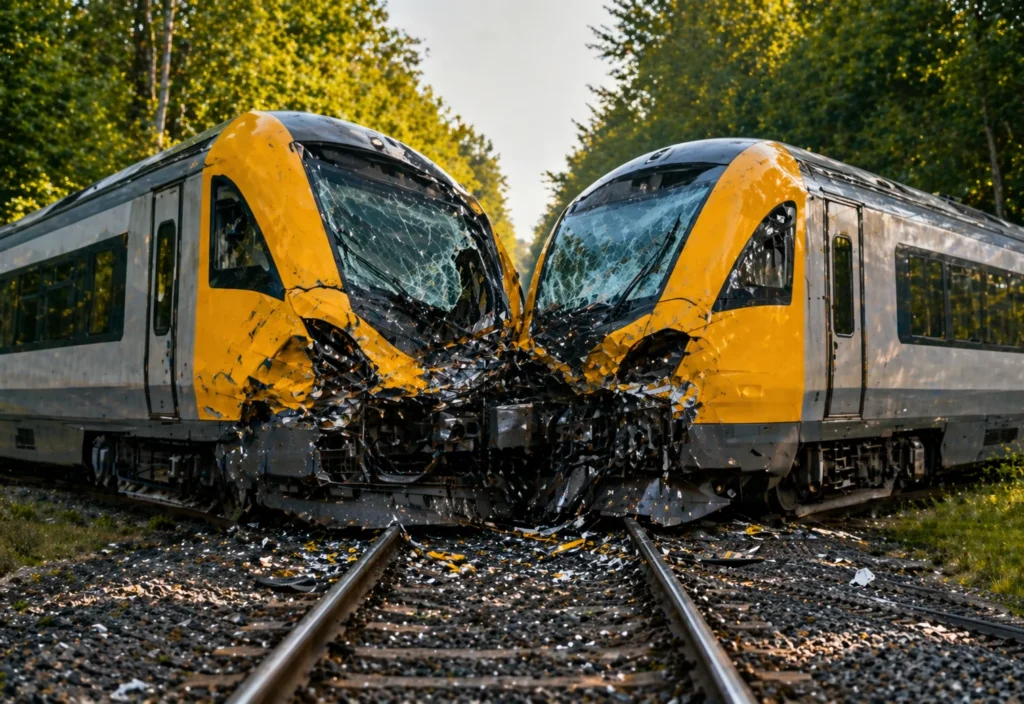
A serious train collision north of Copenhagen has left multiple passengers injured and prompted an emergency response in Denmark. Authorities confirmed that two local trains were involved in a head-on crash on a regional rail line, leading to injuries among those on board and immediate rescue operations at the scene.
Emergency teams, medical personnel, and railway officials responded quickly to secure the area, assist passengers, and begin the first stages of an investigation into the cause of the incident. While rail accidents remain uncommon in Denmark, the collision has raised fresh attention on transport safety, commuter confidence, and the importance of resilient public transport systems.
The incident is significant not only for local communities but also for travelers, as Denmark is widely recognized for its efficient rail network and strong public transport infrastructure.
Emergency Response Activated Quickly
The collision occurred on the Gribskov rail line, a local route connecting towns north of the Danish capital. Rescue crews arrived rapidly after the early morning crash and focused first on evacuating passengers, treating injuries, and ensuring no one remained trapped inside the trains.
Authorities reported that multiple emergency vehicles and rescue workers were deployed to the location. Medical teams provided assistance to those injured, while passengers not physically harmed were also offered support.
Swift emergency response is a key element of modern transport resilience. In incidents involving rail systems, the speed of evacuation, medical treatment, and communication can significantly reduce risk and support recovery.
The response in Denmark highlights the readiness of local emergency services to manage transport incidents efficiently under pressure.
Regional Rail Line Serves Daily Travelers
The affected route is part of the wider public transport system used by commuters, students, workers, and residents traveling between communities north of Copenhagen. Regional rail services are especially important in countries like Denmark, where public transport plays a central role in daily mobility and sustainable travel.
For many passengers, local trains offer dependable access to employment centers, education, healthcare, and city connections. Disruptions on such lines therefore have wider impacts beyond the immediate incident.
Following the collision, temporary service changes and replacement travel arrangements are likely to be an important priority for transport authorities as investigations continue.
Maintaining mobility after an incident is essential for both residents and visitors who rely on public transport networks.
Investigation into the Cause Begins
Officials have stated that it is too early to determine the cause of the collision. A full investigation is expected to examine operational systems, signaling, communication protocols, train movements, infrastructure conditions, and other technical or human factors.
Rail investigations are designed not only to determine what happened but also to prevent similar incidents in the future. Findings can lead to improvements in procedures, staff training, technology, and safety oversight.
In countries with mature rail systems, accident reviews often result in long-term upgrades that strengthen public confidence and network performance.
The coming inquiry in Denmark is therefore likely to be closely followed by transport professionals and passengers alike.
Denmark’s Strong Rail Reputation
Denmark is known internationally for high-quality public transport, integrated ticketing, and a strong commitment to sustainable mobility. Rail services form an important part of that model, linking cities, suburbs, and regional towns through dependable networks.
Because serious rail accidents are relatively rare, incidents of this nature attract strong public attention. They can influence perceptions of safety even when systems remain broadly reliable.
For tourism, transport reputation matters. Visitors often choose destinations where trains, metros, and buses are easy to use, punctual, and safe. Denmark’s long-standing image as a well-connected country means authorities are likely to prioritize both transparency and rapid recovery.
Strong communication after transport incidents is essential for maintaining traveler trust.
Impact on Travelers and Tourism
Although the collision primarily affects local passengers, it also matters for tourism. Copenhagen and surrounding regions attract international visitors year-round for culture, design, food, events, and city breaks. Many travelers use regional rail lines to explore areas beyond the capital.
When incidents occur, visitors may need updated travel information, alternate routes, and reassurance about wider network operations. Clear passenger guidance can help minimize disruption and maintain confidence in using public transport.
Tourism boards and transport providers often work together during such situations to ensure visitors receive accurate updates and practical assistance.
Because Denmark has a highly developed transport system, broader tourism impacts are expected to remain limited if services are restored efficiently.
Rail Safety and Public Confidence
Rail remains one of the safest forms of mass transport globally, especially when compared with road travel. However, even rare incidents can reinforce the need for constant vigilance, maintenance, and investment.
Modern rail safety depends on multiple layers of protection, including signaling systems, driver training, track monitoring, emergency procedures, and organizational oversight. Continuous improvement is a standard requirement in advanced transport systems.
Public confidence is often restored not only through repairs but through visible action: transparent investigations, clear updates, and practical safety enhancements.
Denmark’s handling of the aftermath will likely be as important as the investigation itself.
Wider Lessons for European Transport
Across Europe, rail travel is expanding as governments encourage lower-emission transport and reduced car dependency. More passengers are expected to use trains in coming years for commuting, domestic tourism, and international travel.
That growth makes safety, reliability, and resilience even more important. Every incident offers lessons for operators, regulators, and emergency planners across the region.
The Danish collision serves as a reminder that strong transport systems must continuously adapt, invest, and learn.
Support for Those Affected
Beyond the operational response, attention also turns to the wellbeing of passengers, families, railway staff, and emergency personnel involved in the incident. Support services can be an important part of recovery after traumatic transport events.
Even those without physical injuries may require assistance following a sudden and stressful experience. Many transport operators now include welfare and counseling support as part of incident response planning.
Outlook for Denmark Rail Travel
While the collision is a serious event, Denmark’s rail network remains an essential and trusted part of national mobility. The immediate priorities are passenger care, service restoration, and a thorough investigation.
In the longer term, any lessons learned can strengthen an already advanced transport system.
For travelers and residents, the broader message is that safe and reliable rail networks depend not only on infrastructure, but on constant improvement, readiness, and public accountability.