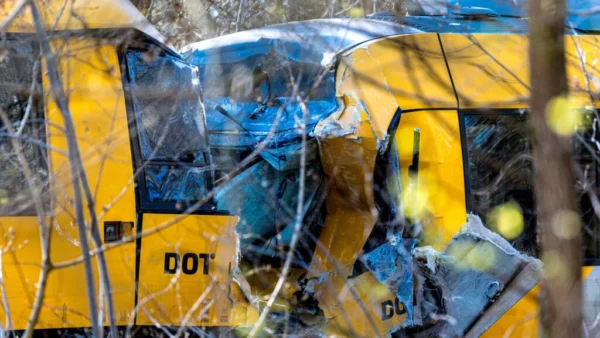
A head-on collision between two passenger trains north of Copenhagen has injured several people and caused major disruption across part of Denmark’s rail network. The crash occurred early Thursday near Hillerød and Kagerup, around 40 kilometers from the Danish capital, prompting a large emergency response and an urgent investigation into the cause of the incident.
Authorities moved quickly to evacuate passengers, treat the injured, and suspend rail services on the affected route. While no passengers were reported trapped, the incident has raised immediate questions about rail safety, signaling systems, and operational controls on one of the region’s commuter corridors.
Collision on a Busy Commuter Line
The crash took place at approximately 6:30 a.m. local time on the Gribskov Line, a route used by daily commuters and visitors traveling through North Zealand. Two local passenger trains collided on a shared section of track, according to the information provided.
Morning services are often among the busiest periods of the day, meaning even short disruptions can quickly affect large numbers of travelers. With the route linking communities north of Copenhagen, cancellations and delays are likely to ripple through regional transport plans.
For commuters, that can mean missed appointments, late arrivals, and longer journeys using replacement transport.
Several Injured, Emergency Teams Respond
Initial reports indicated that between five and ten people were injured, with some suffering serious injuries. Emergency responders, including police, paramedics, and fire crews, were deployed rapidly to the scene. Injured passengers were transported to nearby hospitals while rescue teams secured the area.
The swift evacuation helped prevent further harm and allowed investigators to begin site assessments soon after the collision.
For travelers, visible emergency responses can be reassuring, but they also underline the seriousness of any rail incident involving active passenger services.
Rail Services Suspended
Train operations on the affected section of the Gribskov Line were temporarily suspended following the crash. Authorities began clearing the site while arranging alternative travel options such as bus services and taxis for impacted passengers.
Service suspensions can affect far more than the immediate line. Passengers may reroute through other rail corridors, increasing crowding elsewhere in the network. Visitors with onward flights, hotel check-ins, tours, or cruise departures may also need to change plans at short notice.
As summer travel approaches, reliable rail operations become especially important for both domestic mobility and inbound tourism.
Questions Over Rail Safety
Denmark’s rail system is widely regarded as efficient and dependable, making the collision especially significant. Incidents of this nature often lead to close scrutiny of operational systems and passenger safeguards.
Investigators are expected to examine several areas, including:
- Signal system performance
- Communication between rail staff
- Train dispatch procedures
- Human factors or operational error
- Track or infrastructure conditions
The findings could shape future policy decisions and investment priorities across the network.
Why It Matters for Travelers
Railways are a critical part of European tourism and commuter life. Visitors often rely on trains for airport transfers, city-to-city journeys, scenic day trips, and sustainable travel options. When a serious disruption occurs, traveler confidence can be affected temporarily, especially among international visitors unfamiliar with local alternatives.
For Copenhagen and surrounding regions, dependable rail access supports hotels, attractions, business events, and local commerce. Fast restoration of services and clear communication are therefore essential not only for residents but for the wider visitor economy.
Authorities Launch Urgent Investigation
Transport authorities and infrastructure managers are expected to conduct a full review into the circumstances surrounding the collision. Such investigations typically include technical data analysis, interviews, operational logs, and inspections of equipment involved.
Depending on the outcome, authorities may recommend upgraded signaling systems, enhanced training, revised operating procedures, or new safety technology.
Major incidents often become turning points for transport networks, accelerating reforms that might otherwise have taken years to implement.
Advice for Passengers Now
Travelers in Denmark are being urged to monitor official rail updates, allow extra travel time, and check replacement transport options before departing. Those with time-sensitive plans should consider alternate routes or earlier departures until normal service resumes.
Passengers connecting to airports or international services may benefit from building extra buffer time into itineraries over the coming days.
Focus Turns to Recovery
While the immediate priority remains caring for the injured and restoring operations, the longer-term challenge will be rebuilding confidence and ensuring lessons are learned.
Denmark’s rail network remains central to sustainable mobility and regional tourism. How quickly services recover—and how effectively safety improvements follow—will shape traveler perception in the weeks ahead.
For now, passengers across the Copenhagen region face delays, while the country waits for answers about how the collision happened and how future incidents can be prevented.
For more travel news like this, keep reading Global Travel Wire