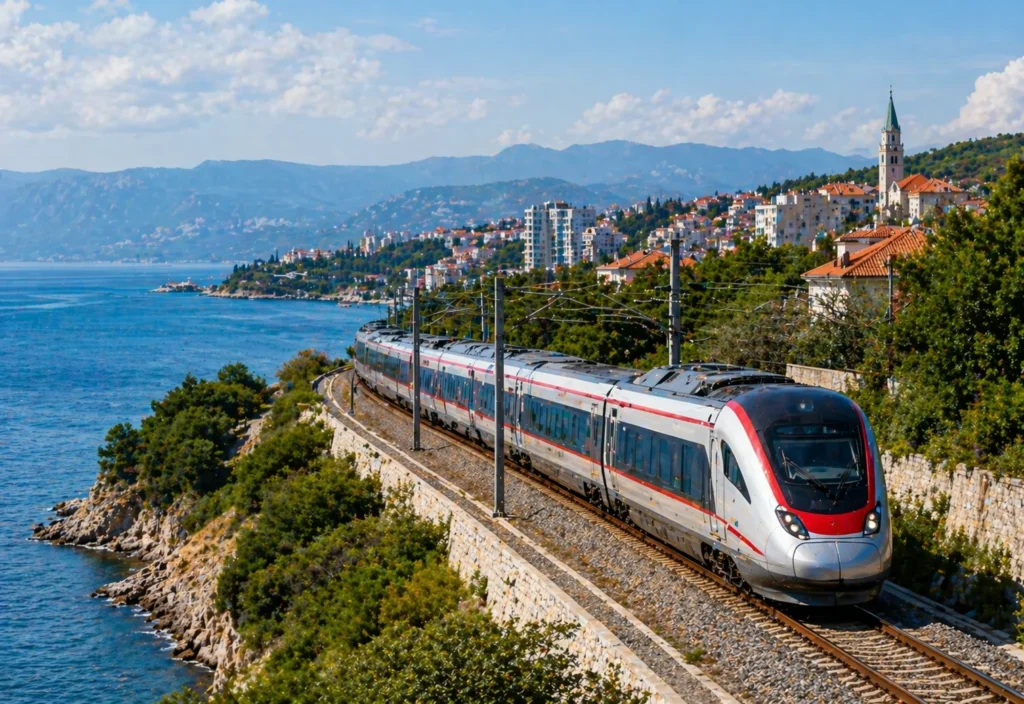
Croatia has taken a major step toward transforming national transport and tourism connectivity after signing a €280 million contract to modernize part of the important Zagreb–Rijeka railway corridor. The project is expected to improve travel times, increase capacity and strengthen links between the capital city, the Adriatic coast and the Port of Rijeka.
The investment highlights Croatia’s wider ambition to build a modern rail system that supports tourism growth, sustainable transport and stronger connections with European travel markets. As rail travel becomes increasingly popular among international visitors, improved infrastructure can play a major role in shaping the country’s tourism future.
For travelers heading to Croatia, the upgrade signals a more efficient and comfortable way to move between city breaks, coastal holidays and regional destinations in the years ahead.
Key Section of Zagreb–Rijeka Line to Be Upgraded
The project will focus on the 44-kilometre Hrvatski Leskovac–Karlovac section, a vital part of the wider route linking Zagreb with Rijeka on the Adriatic coast.
Planned works include reconstruction of the existing track, construction of a second track, electrification of the route and the installation of new signaling, safety and communication systems. The upgraded section is expected to be completed by 2029.
These improvements are designed to increase line capacity, reduce bottlenecks and allow smoother movement of both passenger and freight services.
For tourism, modern rail corridors are essential because they make travel easier, greener and more attractive for visitors exploring multiple destinations.
Why the Zagreb–Rijeka Route Matters for Tourism
The railway between Zagreb and Rijeka connects two of Croatia’s most important travel hubs.
Zagreb, the capital, attracts visitors with its historic upper town, museums, markets, events and café culture. Rijeka, located on the northern Adriatic coast, is a major gateway to seaside holidays, island travel and cruise activity.
Improving the connection between these cities can help travelers combine urban tourism with coastal experiences in one itinerary. It also benefits domestic tourism by making weekend escapes and short breaks more convenient for residents.
As modern tourists increasingly seek multi-stop holidays, strong rail links become a valuable tourism asset.
Sustainable Travel Demand Is Rising
Across Europe, rail travel is experiencing renewed demand as travelers look for more sustainable alternatives to short-haul flights and long road journeys.
Many tourism boards now promote train travel as a low-emission option that allows visitors to enjoy scenic routes while reducing environmental impact. Croatia’s railway investment aligns with this wider European trend.
Electrification of the line is especially important because it supports cleaner operations and long-term efficiency. Modern signaling systems can also improve punctuality, reliability and passenger confidence.
For environmentally conscious travelers, better rail infrastructure can directly influence destination choice.
Easier Access to the Adriatic Coast
Croatia’s coastline remains one of Europe’s most popular summer tourism regions, drawing visitors for beaches, islands, sailing, wellness breaks and historic seaside towns.
Rijeka’s location makes it a useful gateway for travelers heading to Kvarner Bay, Istria and nearby island destinations. Faster and more reliable rail services from Zagreb could encourage more visitors to begin coastal holidays by train rather than by car.
This can help reduce seasonal road congestion while supporting balanced tourism flows.
Improved inland-to-coast connections are particularly valuable during peak summer months, when highways and airports often experience heavy demand.
Benefits for International Visitors
Croatia continues to attract growing numbers of international tourists from across Europe and beyond. Many arrive by air, road or cruise, but rail travel is becoming more attractive for travelers seeking flexibility and regional exploration.
The upgraded corridor could create stronger opportunities for:
- City and coast combined holidays
- Multi-country rail itineraries
- Sustainable European travel routes
- Weekend breaks from Zagreb
- Easy onward travel from Rijeka port
- Scenic journeys through inland Croatia
For visitors already traveling through Central Europe, rail links can become a practical and enjoyable way to add Croatia to broader itineraries.
Economic Impact Beyond Tourism
Although tourism is a major beneficiary, railway modernization also supports wider economic growth.
Improved freight movement to the Port of Rijeka can strengthen trade competitiveness and logistics performance. Better passenger transport can support regional mobility, commuting and investment in communities along the route.
Large infrastructure projects also create jobs in engineering, construction, maintenance and future operations.
Governments often view rail investment as a high-impact strategy because it supports multiple sectors at once—tourism, trade, employment and sustainability.
For Croatia, this project represents more than transport improvement; it is part of long-term national development.
Croatia’s Wider Rail Modernization Vision
Officials have stated broader plans to invest heavily in railway reconstruction over the coming decade. This reflects growing recognition that modern transport networks are essential for economic competitiveness and visitor satisfaction.
Travelers today compare destinations not only by attractions, but by how easy they are to navigate. Reliable trains, integrated stations and efficient connections can improve the entire holiday experience.
As Croatia upgrades more rail corridors, the country may become even more attractive to independent travelers, families and eco-conscious tourists seeking convenient movement between destinations.
Rail modernization can also support year-round tourism by making off-season travel easier and more comfortable.
What This Means for Travelers in 2026 and Beyond
While construction will continue through 2029, the long-term benefits are already clear. Travelers can expect a stronger transport future that supports easier movement between Croatia’s capital and coast.
In the coming years, the project may deliver:
- Faster rail journeys
- Higher service frequency
- More reliable schedules
- Improved comfort and safety
- Better access to coastal tourism regions
- Stronger sustainable travel options
These advantages matter in a tourism market where convenience increasingly shapes booking decisions.
Positive Outlook for Croatia Tourism
Croatia remains one of Europe’s standout leisure destinations thanks to its coastline, heritage cities, islands, gastronomy and natural beauty. Stronger rail infrastructure can help unlock the next phase of growth by making the country easier to explore.
The Zagreb–Rijeka railway upgrade shows how transport investment and tourism development often go hand in hand. Better journeys create better visitor experiences, stronger local economies and more sustainable travel choices.
For Croatia, the message is clear: the route to future tourism success is being built on the railway tracks connecting city and sea.
For more travel news like this, keep reading Global Travel Wire