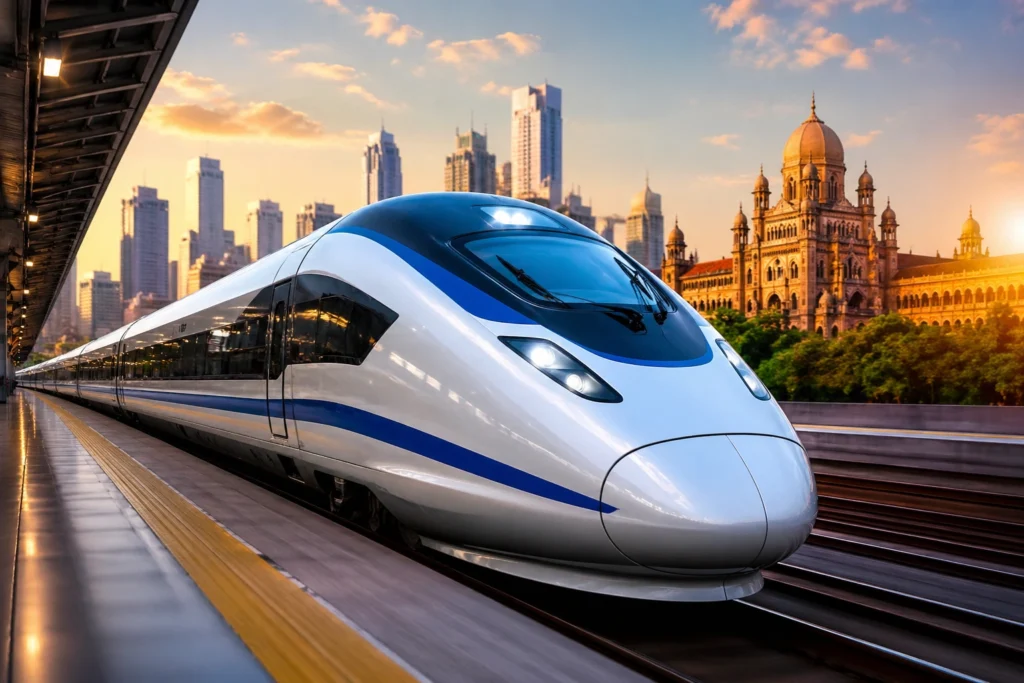
India’s first domestically built bullet train is moving toward a landmark 2027 debut, setting the stage for one of the biggest shifts in the country’s modern travel history. Designed to run at speeds of up to 320 km/h on the Mumbai–Ahmedabad High-Speed Rail Corridor, the new service is expected to cut journey times between the two cities to about two hours, creating a powerful alternative to short-haul flights and conventional rail.
The project carries significance far beyond transport. It signals a new era for tourism, regional business travel, hospitality investment, and visitor mobility in one of the world’s fastest-growing travel markets. For international visitors arriving in India, the route could soon offer a faster and more seamless way to explore western India’s commercial centers, heritage destinations, and emerging leisure hubs.
Faster Travel Could Redefine Domestic Mobility
Today, many travelers choose flights between Mumbai and Ahmedabad because of time savings. However, the total airport experience often includes early arrival, security screening, boarding procedures, baggage waits, and transfers to city centers. High-speed rail changes that equation by offering central station departures, shorter pre-boarding times, and direct downtown-to-downtown access.
For business travelers, that means easier same-day return trips. For leisure visitors, it opens the possibility of combining multiple cities in one itinerary without losing valuable sightseeing time. Weekend breaks, conference travel, family visits, and corporate meetings are all likely to benefit from faster schedules and greater reliability.
Pressure Builds on Short-Haul Airlines
The launch could create fresh competition for airlines serving western India’s short domestic sectors. Carriers such as Air India and international brands connecting passengers onward from Mumbai may need to adapt as some travelers switch from air to rail for point-to-point journeys.
While aviation will remain essential for long-haul travel, international arrivals, and wider domestic networks, high-speed rail often reshapes passenger behavior on routes where city-center convenience matters most. That could lead airlines to focus more heavily on premium services, feeder traffic, loyalty benefits, and international connectivity rather than relying on quick domestic hops alone.
For travelers, more competition usually means better value, stronger schedules, and improved service standards across both transport sectors.
Tourism Benefits Extend Beyond Two Major Cities
The biggest winners may be destinations along the wider corridor. Easier access tends to spread tourism demand beyond gateway cities, helping secondary markets capture new spending. Cities such as Surat, Vadodara, and Gandhinagar could see increased visitor flows as travel times shrink and multi-stop itineraries become simpler to plan.
That creates opportunities for hotels, guided tours, restaurants, attractions, event venues, and local transport operators. Regional tourism boards and city planners are likely to benefit from stronger visibility as travelers seek new experiences beyond Mumbai’s iconic waterfront and Ahmedabad’s cultural heritage districts.
The ability to move quickly between business and leisure destinations also supports the growing “bleisure” trend, where travelers combine work trips with short holidays.
Hospitality Sector Positioned for Growth
When transport improves, hotel demand often follows. New rail-linked visitor traffic can encourage fresh investment in branded hotels, boutique stays, serviced apartments, and dining concepts near stations and city centers.
Mumbai may attract more short-stay business visitors, while Ahmedabad could gain from expanded conference, heritage, and weekend travel demand. Midscale and premium hotel operators may especially benefit if travelers increasingly treat the corridor as one connected tourism zone rather than two separate cities.
Retail and food sectors also stand to gain as stations evolve into major commercial hubs with shopping, dining, and traveler services.
Sustainable Travel Appeal
The bullet train also aligns with rising demand for greener mobility. Many travelers now consider environmental impact when choosing transport. Electrified high-speed rail can provide a lower-emission alternative to road travel and certain short-haul aviation segments, especially when supported by efficient operations and modern infrastructure.
That sustainability angle may resonate strongly with younger travelers, international visitors, and corporate travel buyers with environmental targets.
Better Experience for International Visitors
For overseas tourists landing in Mumbai, the future journey onward could become much easier. Instead of arranging a domestic flight or lengthy road transfer, visitors may be able to continue directly by high-speed train to Gujarat’s cultural landmarks, business districts, and leisure attractions.
Likewise, Ahmedabad arrivals would gain quick access to Mumbai’s entertainment, cruise, retail, and financial offerings. The result is a more connected visitor experience that encourages longer stays and higher spending across multiple destinations.
What Travelers Should Watch Next
As the 2027 target approaches, travelers should monitor station development, ticketing systems, baggage rules, onboard services, and tourism packages linked to the route. Rail-and-air combined itineraries, hotel promotions, and city passes could become key products once operations begin.
If rollout timelines stay on track, India’s Swadeshi Bullet Train will do more than save time. It could reshape how millions of people travel, push airlines to innovate, strengthen tourism economies, and place high-speed rail at the center of India’s next travel chapter.
For more travel news like this, keep reading Global Travel Wire