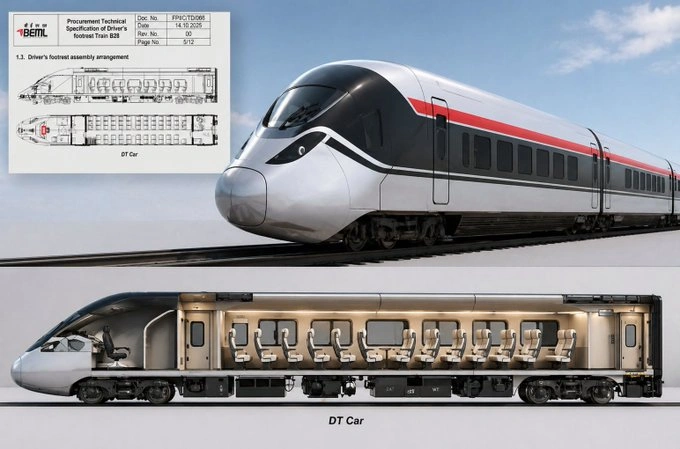
India has marked a major milestone in its transport modernization drive with the launch of the BEML Aditya B-28 manufacturing facility in Bengaluru, a new production hub dedicated to indigenous high-speed trainsets capable of reaching 280 kmph. Inaugurated by Union Minister Ashwini Vaishnaw, the facility signals a bold step toward self-reliant bullet train technology and a new era of faster intercity connectivity built on domestic engineering and manufacturing strength.
The project is being seen as one of the strongest expressions yet of the country’s Made in India strategy in advanced transport. It moves India closer to joining the select group of nations with homegrown capabilities in high-speed rail design, production and long-term maintenance.
A New Chapter for Indian High-Speed Rail
The Aditya B-28 program represents the next stage in India’s rail evolution after the success of semi-high-speed train initiatives such as Vande Bharat. While earlier projects focused on upgrading conventional networks, the new facility is geared toward a faster class of trains designed for future dedicated corridors and next-generation routes.
For passengers, trains capable of 280 kmph could significantly cut journey times between major cities, making rail more competitive with air travel on many domestic sectors. Faster rail links can also improve convenience by reducing airport transfers, security wait times and city-center access challenges.
Inside the Bengaluru Facility
The new BEML plant has been built to handle advanced stainless steel and aluminum coach fabrication, precision assembly and testing for high-speed operations. Automated systems including robotic welding and quality-control technology are expected to play a key role in meeting demanding safety and performance standards.
The facility will also focus on critical components such as bogies, braking systems and propulsion integration. These systems must withstand the thermal and mechanical stresses associated with high-speed travel, making domestic development especially important for long-term reliability and cost control.
Why Indigenous Manufacturing Matters
Building high-speed trains locally offers strategic advantages beyond national pride. Domestic production can reduce reliance on imported technology, lower lifecycle maintenance costs and create a local ecosystem for spare parts, upgrades and technical expertise.
It also gives policymakers more control over future expansion plans. As new corridors emerge, locally manufactured fleets can be adapted faster to Indian operating conditions, passenger demand patterns and infrastructure requirements.
Economic Impact and Job Creation
Large-scale transport manufacturing projects often generate benefits far beyond the factory floor. The Bengaluru facility is expected to create high-skilled jobs in engineering, design, software, production and quality assurance. It can also stimulate supplier networks in metals, electronics, materials and industrial services.
Training programs linked to the plant may help build a new generation of specialists in high-speed rail systems, strengthening India’s long-term industrial capacity. For Bengaluru, already known as a technology center, the addition of advanced rail manufacturing deepens its role in national innovation.
Benefits for Travelers and Tourism
Faster rail can transform domestic tourism by making weekend trips, multi-city holidays and business travel more practical. Destinations that once required lengthy journeys may become easier to reach, supporting hotels, restaurants, attractions and local economies.
High-speed services also appeal to travelers seeking comfort, city-center convenience and lower-stress alternatives to flying. If deployed across major corridors, the Aditya B-28 could reshape how Indians and international visitors move between urban hubs.
Future Export Potential
Industry observers may also view the project through an international lens. If the technology proves successful domestically, India could eventually position itself as a supplier of high-speed rail solutions for emerging markets seeking more affordable alternatives to established global manufacturers.
That would mark a major shift from technology importer to exporter and could open new commercial opportunities across Asia, Africa and beyond.
The Road Ahead
The launch of the Aditya B-28 facility is more than an industrial event. It is a statement about India’s transport ambitions, engineering confidence and long-term infrastructure strategy. With manufacturing now underway, attention will turn to production timelines, corridor readiness and eventual passenger deployment.
For India’s rail future, the message is clear: speed, self-reliance and modern mobility are moving from vision to reality.
For more travel news like this, keep reading Global Travel Wire