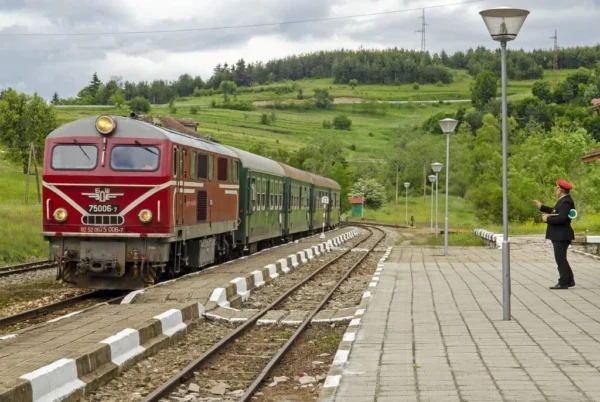
Bulgaria and North Macedonia are preparing to launch construction this summer on a long-awaited cross-border railway that could redefine travel, trade, and tourism across the Balkans. Once completed, the new connection between Sofia and Skopje is expected to cut journey times from around four hours by road to just 90 minutes, creating one of southeastern Europe’s most significant transport upgrades in recent years.
The project is part of the wider Pan-European Transport Corridor VIII, a strategic route designed to strengthen east-west links across the region. For travelers, tourism businesses, and exporters, the railway promises faster movement, stronger regional integration, and fresh economic opportunities for cities and communities on both sides of the border.
A New Era for Balkan Travel
For years, overland travel between the two capitals has relied mainly on roads, where traffic congestion, weather conditions, and border delays can slow journeys. The planned rail corridor will offer a faster, more predictable alternative, giving passengers a modern cross-border option that connects two important cultural and commercial centers.
A 90-minute travel time could transform visitor behavior. Weekend breaks, business day trips, multi-city holidays, and short cultural escapes would become far easier to plan. Instead of choosing one destination, travelers may increasingly combine Sofia and Skopje in a single itinerary.
That kind of flexibility often drives higher visitor spending, longer regional stays, and stronger demand across transport and hospitality sectors.
Tourism Set for Major Boost
Tourism stands out as one of the clearest beneficiaries of the railway. Sofia attracts visitors with its historic landmarks, mountain access, museums, and growing city-break appeal. Skopje offers a dynamic urban scene, Ottoman-era heritage, lively public spaces, and access to scenic natural areas.
Faster rail links can help both capitals market themselves as twin-destination experiences. International tourists arriving in one city may find it easier to add the other without needing domestic flights or lengthy road transfers.
Beyond the capitals, secondary destinations could also gain. Improved accessibility often encourages visitors to explore lesser-known towns, rural attractions, and heritage sites along the route. Local hotels, guesthouses, restaurants, guides, and tour operators may all benefit as new visitor flows spread beyond the main gateways.
Trade and Business Connectivity Strengthen
The impact is not limited to leisure travel. Faster passenger and freight movement can support stronger trade ties between Bulgaria, North Macedonia, and neighboring markets. Reduced transit times improve supply chains, business travel efficiency, and investor confidence.
For companies operating across the Balkans, easier access between the two capitals may encourage new partnerships, conferences, and commercial expansion. Better logistics can also help regional producers reach customers more efficiently, supporting jobs and local enterprise growth.
Transport infrastructure often acts as an economic catalyst, and this route is expected to do exactly that.
Sustainable Alternative to Road Transport
The railway also supports wider environmental goals. Shifting travelers from cars and buses to rail can reduce road congestion, lower emissions, and improve urban air quality. As sustainability becomes a larger factor in travel planning, rail networks are increasingly viewed as a practical solution for medium-distance regional journeys.
For visitors, that means a greener option without sacrificing speed or convenience. For cities such as Sofia and Skopje, fewer vehicles on busy roads could help ease pressure on urban infrastructure while improving the traveler experience.
Construction Timeline and Strategic Importance
Construction is due to begin this summer in multiple phases, with one of the most critical elements focused on the missing cross-border section between Gyueshevo in Bulgaria and Deve Bair in North Macedonia. That stretch has long been seen as the key obstacle preventing a full rail connection.
The overall investment is valued at approximately €4.2 billion, supported by national funding and additional European backing. The target for full completion is 2030, when the final sections are expected to become operational.
The project’s inclusion in Corridor VIII highlights its broader geopolitical value. Improved infrastructure across the Western Balkans is increasingly linked to trade resilience, tourism development, and closer European integration.
What It Means for Travelers
As construction progresses, travelers should watch for future ticketing systems, station upgrades, tourism packages, and cross-border rail schedules. Once services launch, the route could become one of the easiest ways to experience two capitals in a single trip.
Rail-linked city breaks, cultural tours, conference travel, and scenic regional journeys are all likely to grow. Airlines and long-distance coach operators may also need to adapt as travelers gain a competitive new option.
Outlook for the Region
The Sofia–Skopje railway is more than a transport project. It represents a shift toward a more connected Balkans where borders are easier to cross, tourism moves more freely, and economic ties deepen through modern infrastructure.
If timelines remain on track, the first trains could usher in a new chapter for southeastern Europe—one defined by faster journeys, broader tourism growth, and stronger regional cooperation.
For more travel news like this, keep reading Global Travel Wire