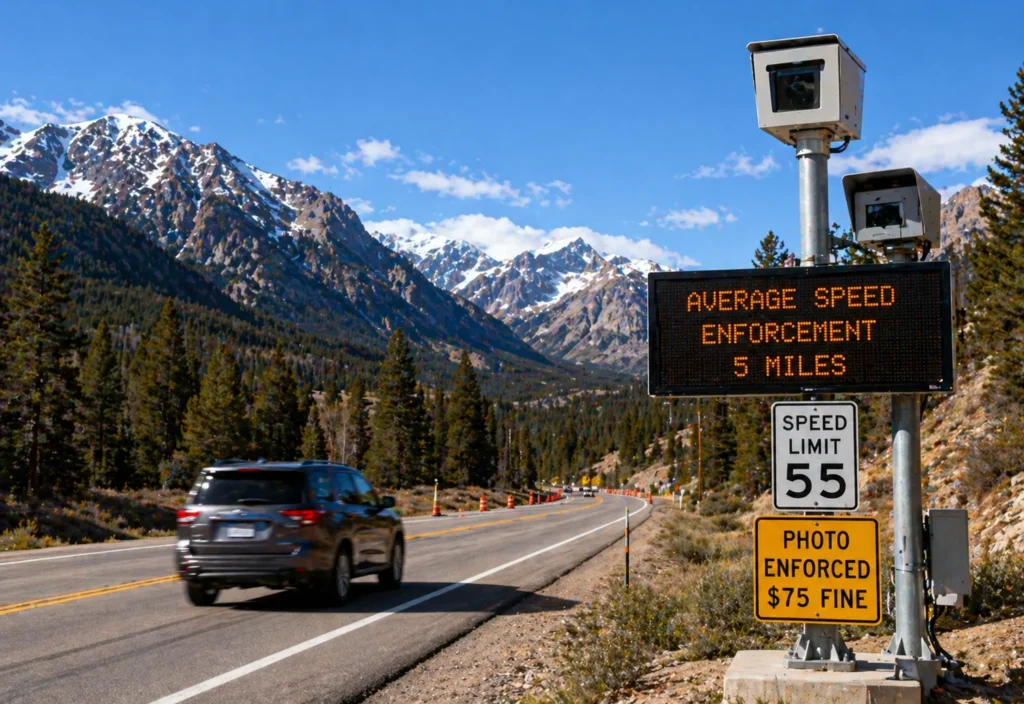
Road travelers heading to Colorado in 2026 may need to rethink how they drive after the launch of a new speed enforcement system designed to improve highway safety and reduce dangerous speeding in work zones. The updated program uses average-speed camera technology rather than traditional single-point speed traps, creating a major shift for tourists, self-drive visitors, and domestic road trippers.
For years, many drivers relied on navigation apps, radar alerts, and roadside awareness to avoid speeding penalties. Colorado’s new system changes that formula by measuring speed over a stretch of road instead of one specific moment. For visitors exploring the state’s mountains, national parks, ski regions, and scenic highways, the message is clear: safe and steady driving matters more than quick braking before a camera.
What Is Changing in Colorado?
Colorado transportation authorities have introduced new automated speed enforcement cameras in selected high-risk areas, especially construction zones and roadwork corridors.
Unlike traditional cameras that capture a driver’s speed at one location, the new system records a vehicle entering and leaving a monitored zone. It then calculates the average speed across the full distance traveled.
If a driver’s average speed exceeds the legal limit, an automatic fine may be issued.
This approach is designed to encourage consistent safe driving rather than temporary slowdowns near visible enforcement points.
Why It Matters for Tourism
Colorado is one of America’s most popular road trip destinations. Visitors travel by car to experience:
Rocky Mountain landscapes
Ski resorts
National parks
Scenic byways
Outdoor festivals
Historic towns
Adventure tourism regions
Many travelers rent vehicles or drive from neighboring states to explore the state at their own pace.
Because road journeys are such a central part of Colorado tourism, any change in traffic enforcement can directly affect the visitor experience. Tourists unfamiliar with local rules may be surprised if they assume slowing down near one camera is enough.
Instead, maintaining legal speed limits throughout the monitored zone is now essential.
Why Authorities Are Using Average-Speed Cameras
Construction zones are among the most dangerous sections of road networks. Narrow lanes, changing traffic patterns, reduced shoulders, equipment movement, and nearby workers all increase risk.
Traditional police patrols can be difficult in these areas because officers may have limited space to stop vehicles safely.
Average-speed systems help solve that problem by encouraging compliance across the entire zone rather than at a single checkpoint.
This can reduce sudden braking, aggressive lane changes, and high-speed driving through active work areas.
For travelers, safer roads benefit everyone.
GPS Apps May Not Work the Same Way
Many drivers use navigation apps that provide alerts for traffic incidents, road closures, hazards, and known enforcement points.
These tools remain useful for route planning, live traffic conditions, and travel time estimates. However, average-speed systems reduce the value of one-time warnings because the enforcement covers the entire monitored stretch.
A driver who slows briefly near an alert but speeds elsewhere in the zone may still exceed the average speed threshold.
That means visitors should view navigation apps as travel assistants—not as tools to outsmart safety systems.
Better Habits for Road Trip Travelers
For tourists driving in Colorado, the smartest approach is simple and stress-free.
Best practices include:
Follow posted speed limits consistently
Pay attention in construction areas
Leave extra travel time for mountain routes
Use cruise control when appropriate
Watch for changing weather conditions
Avoid distracted driving
Keep safe following distances
Check road conditions before departure
These habits improve safety while reducing the risk of fines or delays.
Colorado’s Appeal as a Drive Destination
Few states rely on scenic driving tourism as strongly as Colorado. Roads connect travelers to alpine towns, hiking trails, ski villages, hot springs, lakes, and iconic landscapes.
Popular experiences often include:
Denver to Rocky Mountain National Park
Scenic drives near Aspen and Vail
Mesa Verde cultural visits
Colorado Springs and Pikes Peak routes
Summer mountain escapes
Winter ski holidays
Autumn foliage drives
Because visitors spend significant time on highways, safe road behavior is critical to the tourism economy.
Smooth and secure transport helps travelers enjoy more attractions and spend more time exploring destinations.
What Rental Car Visitors Should Know
Many Colorado tourists use rental vehicles. If fines are issued through automated systems, rental companies may forward charges to the renter depending on agreement terms.
Travelers should review rental policies carefully, including administrative fees related to traffic notices.
Simple preparation can prevent unwelcome surprises after the trip ends.
Before driving, visitors should also understand:
Local speed limits
Work zone signage
Mountain driving rules
Weather preparedness needs
Parking regulations in resort towns
Being informed creates a better holiday experience.
A Wider Trend in Tourism Mobility
Colorado is part of a broader global shift toward smarter road management. Cities, regions, and tourism destinations worldwide are adopting technology to improve safety, reduce congestion, and manage transport more efficiently.
Modern travel now includes digital toll roads, real-time parking systems, low-emission zones, and automated traffic enforcement.
For tourists, this means travel convenience is increasing—but so is the need to understand local regulations.
Destinations that balance visitor access with public safety often create stronger long-term tourism systems.
Safety Benefits for Visitors and Residents
While some travelers may focus on fines, the broader purpose of the new system is accident prevention.
Speeding increases stopping distance, crash severity, and risk to roadside workers. In mountain and weather-sensitive regions, excessive speed can become even more dangerous.
If average-speed enforcement reduces collisions and improves traffic flow, both residents and visitors benefit.
Safer roads mean:
Less disruption from crashes
Lower travel stress
Better journey reliability
Improved protection for workers
More enjoyable self-drive vacations
How to Prepare for a Colorado Road Trip in 2026
If Colorado is on your travel list this year, add road planning to your itinerary.
Helpful steps include:
Download maps in advance for remote areas
Monitor weather forecasts
Plan fuel stops in mountain regions
Drive within limits throughout monitored zones
Allow flexible schedules instead of rushing
Carry essentials for seasonal conditions
Learn basic road signs and local rules
A relaxed traveler is often a safer traveler.
Final Outlook
Colorado speed cameras represent more than a traffic update—they reflect how tourism and transport are evolving together. As destinations welcome millions of visitors, road safety systems are becoming smarter and more consistent.
For travelers, this does not reduce the joy of a Colorado road trip. It simply rewards steady, responsible driving over risky shortcuts.
The mountains, parks, ski towns, and scenic highways are still waiting. The best way to enjoy them in 2026 is to slow down, drive smart, and make the journey part of the adventure.