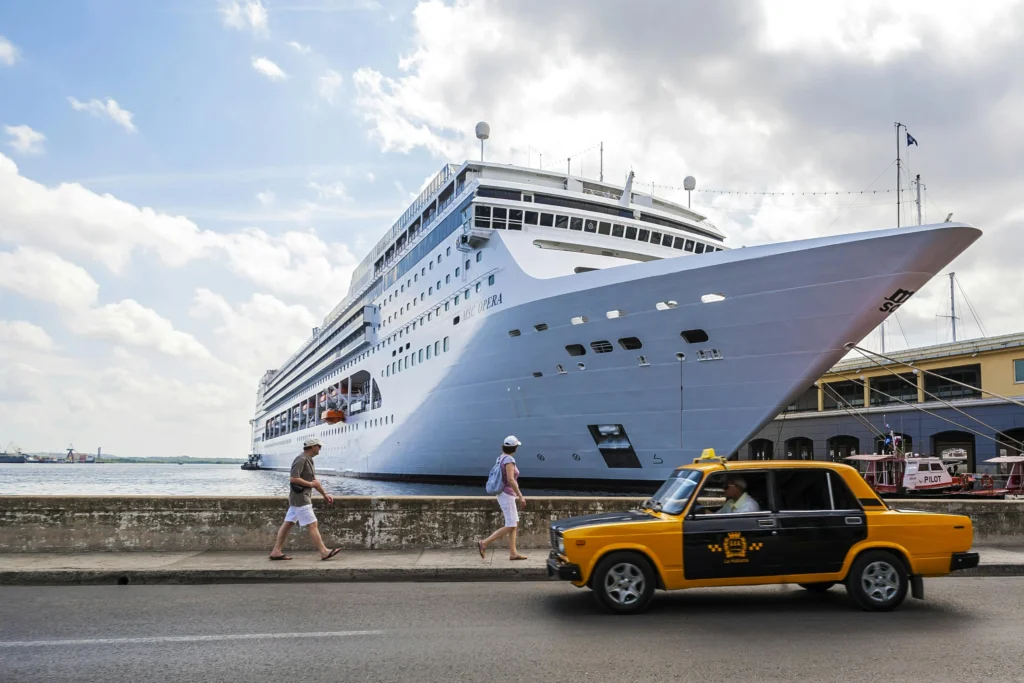
The parameters governing international maritime travel and Caribbean cruise risk management have been fundamentally altered by a major judicial decision from the highest court in the United States. In an 8-1 landmark ruling, the Supreme Court revived a massive multi-million dollar lawsuit against four prominent global cruise line operators. The decision systematically overturns a previous federal appeals court verdict that had temporarily shielded the companies from liability regarding their past operational stops in Havana, Cuba.
The extensive legal dispute centers on the commercial use of port infrastructure that was nationalized by former Cuban leader Fidel Castro’s administration over 65 years ago. Havana Docks Corporation, an American commercial entity that originally constructed and operated the passenger terminals before the 1959 Cuban revolution, initiated the litigation. For contemporary travel planners, international port authorities, and maritime legal experts, the high court’s intervention introduces critical new precedents concerning historical property rights and the long-term safety of international vacation itineraries.
The Legislative Core: Unpacking Title III of the Helms-Burton Act
To fully comprehend how this judicial shift impacts the future of international tourism routing, it is necessary to examine the statutory framework utilized by the justices. The Supreme Court case focused directly on the interpretation of the Cuban Liberty and Democratic Solidarity Act of 1996, commonly known as the Helms-Burton Act. Specifically, Title III of this federal statute grants American citizens and corporations a distinct private right of action to seek substantial civil damages from any commercial entity accused of “trafficking” in property that was unlawfully confiscated by the Cuban state.
For more than two decades following the passage of the act, consecutive U.S. presidents utilized their executive authority to continuously suspend the activation of Title III. This long-standing policy was maintained to preserve diplomatic flexibility and protect international business alliances from sudden litigation. However, federal policies changed decisively in 2019 when the executive branch allowed the suspension to lapse, immediately opening federal courtrooms to historical property claimants and exposing the global transportation sector to monumental financial risks for utilizing nationalized Caribbean infrastructure.
The Rise and Fall of the Havana Cruise Thaw
The operational period at the heart of the lawsuit occurred between 2016 and 2019, a timeframe widely regarded as a brief golden era for Cuban tourism expansion. Following a comprehensive easing of travel restrictions under a broader administrative thaw in bilateral relations, federal authorities explicitly permitted American cruise lines to resume passenger service to the island nation. Seizing the opportunity to satisfy intense consumer demand for authentic cultural itineraries, major operators including Carnival, Norwegian, Royal Caribbean, and MSC Cruises integrated the historic Port of Havana into their primary regional deployments.
During this peak period, hundreds of thousands of international travelers arrived at the Havana terminal, disembarking for highly publicized cultural excursions to local heritage landmarks, historic neighborhoods, and famous eco-tourism zones. However, this commercial corridor was abruptly shut down in 2019 when shifting federal policies activated the Helms-Burton litigation rules and introduced strict new travel bans. Maritime operators were forced to instantly drop their scheduled Cuban port calls, hastily rerouting multi-million dollar vessels mid-voyage to alternative destinations across the Caribbean.
Assessing Liability: Executive Licenses Versus Statutory Accountability
In the initial federal court proceedings held in Miami, a U.S. District Judge ruled that the cruise lines were fully liable for using the Havana terminal without compensating the original American concession holders, eventually awarding a combined judgment exceeding $400 million. A critical component of this initial ruling established that travel licenses issued by the federal government’s Treasury Department to facilitate passenger transport did not serve as a legal shield against statutory property claims under the Helms-Burton Act. Although a regional appeals court later threw out the massive fine by interpreting the original port operating contract as expired, the Supreme Court has now completely rejected that narrow contractual view.
Writing for the overwhelming majority, Justice Clarence Thomas clarified that the lower appeals court erred in its assessment of the statute, affirming that the plain language of the law protects the underlying certified claim regardless of changing historical timelines. While the Supreme Court’s ruling does not represent the absolute final resolution of the entire lawsuit—as the case must now return to the lower courts to evaluate remaining secondary defenses—the decision sends a powerful warning to the international tourism sector. Moving forward, comprehensive risk management strategies must prioritize exhaustive historical due diligence, ensuring that compliance with current executive travel permissions is never mistaken for total immunity from deep-rooted statutory property liabilities.
For more travel news like this, keep reading Global Travel Wire