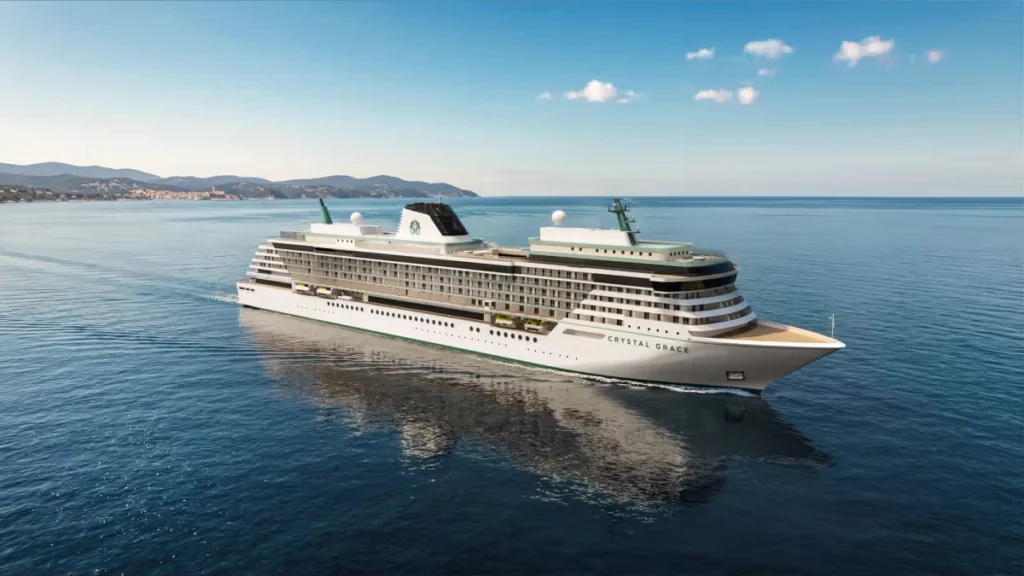
Crystal Cruises is accelerating a major transformation in the luxury maritime tourism sector through the development of its upcoming vessel Crystal Grace, a new-generation cruise ship designed to redefine operational standards, crew welfare, and premium travel infrastructure ahead of its 2028 debut. The project is already generating significant economic and business-to-business ripple effects across the United States, Italy, Monaco, and the Bahamas as global cruise operators increasingly invest in workforce-focused ship design and high-end maritime logistics.
The luxury vessel, operating under the A&K Travel Group (AKTG) portfolio, is scheduled to officially enter service on June 11, 2028. Industry analysts say the ship represents a broader shift in cruise industry strategy where crew wellbeing, operational resilience, and integrated infrastructure are becoming essential drivers of long-term profitability and service quality.
Crystal Grace Introduces Major Crew-Centered Infrastructure
One of the most significant features aboard Crystal Grace will be a purpose-built 1,582-square-foot crew recreation complex located on Deck 12. Designed to support up to 100 crew members simultaneously, the facility includes indoor social areas with 74 seats, a dedicated fitness center equipped with Technogym equipment, lounge spaces, a bar, and retail conveniences tailored specifically for onboard staff.
The design also incorporates outdoor wellness areas featuring sun loungers, a jacuzzi, and shower facilities, creating a resort-style environment intended to improve morale and support long-term crew retention.
Cruise executives increasingly view crew welfare as directly connected to passenger satisfaction, operational efficiency, and workforce stability — particularly within the luxury cruise segment where personalized service standards remain exceptionally high.
Cruise Industry Shifts Toward Workforce Sustainability
The infrastructure investments aboard Crystal Grace reflect a wider industry movement toward modernizing onboard living standards for maritime workers. Luxury operators are now allocating more ship space toward crew-focused facilities without compromising premium passenger accommodations.
Industry specialists note that enhanced employee environments can significantly reduce recruitment costs, improve service consistency, and strengthen long-term operational resilience across global cruise fleets.
AKTG leadership emphasized that the ship’s recreational facilities were intentionally designed to support crew wellbeing while reinforcing Crystal Cruises’ luxury hospitality standards.
The vessel will additionally feature two dedicated crew dining facilities on Deck 3, streamlining onboard logistics while improving meal accessibility and staff scheduling efficiency.
United States Cruise Hubs Face Expanding Operational Demands
The development of Crystal Grace is expected to impact major cruise and aviation corridors across the United States, where luxury cruise homeports such as PortMiami and Port Everglades serve as central departure points and logistics hubs for premium cruise operations.
Enhanced crew infrastructure often requires more sophisticated provisioning systems, longer port stays, and complex crew rotation scheduling, creating increased demand for maritime employment agencies, supply chain operators, and airport logistics services.
Aviation analysts also note that large-scale crew movements connected to luxury cruise deployments continue driving steady demand for international airline capacity between Europe, North America, and Caribbean cruise gateways. Airlines are increasingly adjusting schedules and corporate travel programs to accommodate cruise industry staffing flows.
Italy Benefits From High-End Maritime Manufacturing Demand
Italy’s globally recognized shipbuilding and marine design sectors are expected to gain substantial business opportunities from the expansion of advanced luxury cruise infrastructure.
The incorporation of premium wellness systems, ergonomic interior design, and specialized maritime furniture is increasing demand for Italian marine engineering firms, interior designers, and commercial wellness manufacturers including Technogym.
Industry experts say luxury cruise ships are now placing greater emphasis on balancing revenue-generating passenger spaces with highly functional crew environments, creating new engineering and architectural challenges for shipbuilders across Europe.
Italian suppliers are also benefiting from rising demand for compact, space-efficient hospitality infrastructure tailored specifically for cruise ship operations.
Monaco and Bahamas Strengthen Strategic Maritime Roles
Monaco continues playing a central strategic role within the luxury travel and cruise investment sector as headquarters for influential maritime tourism groups including AKTG. Financial analysts suggest that investments in crew-focused infrastructure can stabilize long-term operating costs by reducing staff turnover and improving workforce retention rates.
Meanwhile, the Bahamas maintains its importance as one of the world’s leading cruise vessel flag registries. The Bahamian Maritime Authority continues overseeing labor compliance standards and operational regulations for many major international cruise fleets.
The advanced crew facilities aboard Crystal Grace are expected to exceed baseline Maritime Labour Convention standards, strengthening operational compliance and supporting the Bahamas’ reputation as a preferred registry jurisdiction for premium cruise operators.
Luxury Hotels and Tourism Businesses Prepare for Increased Demand
The arrival of Crystal Grace is also expected to stimulate surrounding hospitality sectors through pre- and post-cruise hotel demand, crew accommodation needs, and expanded shore excursion activity.
Luxury travelers frequently extend journeys with premium hotel stays before embarkation and after disembarkation, boosting room revenue for upscale properties located near major cruise terminals and international airports.
At the same time, destination management companies are increasingly exploring specialized excursion packages designed specifically for off-duty crew members during extended port calls. Local tourism operators see growing opportunities to diversify beyond traditional passenger-focused revenue models.
Aviation and Cruise Networks Become More Interconnected
As luxury cruise fleets expand globally, airlines and cruise companies are developing increasingly integrated operational relationships. Crew rotations involving hundreds of maritime workers require coordinated flight schedules, flexible corporate fare structures, and large-scale baggage handling systems across major international airports.
Travel management companies are also building customized corporate programs for cruise operators involving flexible ticketing policies and synchronized logistical planning tied to seasonal ship deployments.
Industry analysts believe this growing integration between aviation and maritime tourism sectors will continue strengthening long-term B2B travel partnerships worldwide.
Crystal Grace Signals New Era for Luxury Cruise Infrastructure
The launch of Crystal Grace highlights how luxury cruise tourism is evolving beyond passenger-facing amenities toward more comprehensive infrastructure strategies focused on workforce wellbeing, operational sustainability, and long-term service consistency.
By combining advanced crew facilities, integrated logistics planning, and high-end hospitality infrastructure, Crystal Cruises is positioning the vessel as a next-generation model for premium maritime tourism development.
As the cruise industry prepares for continued growth into 2028 and beyond, projects such as Crystal Grace are expected to influence future ship design, global tourism investment, and the broader transformation of luxury maritime travel operations worldwide.
For more travel news like this, keep reading Global Travel Wire