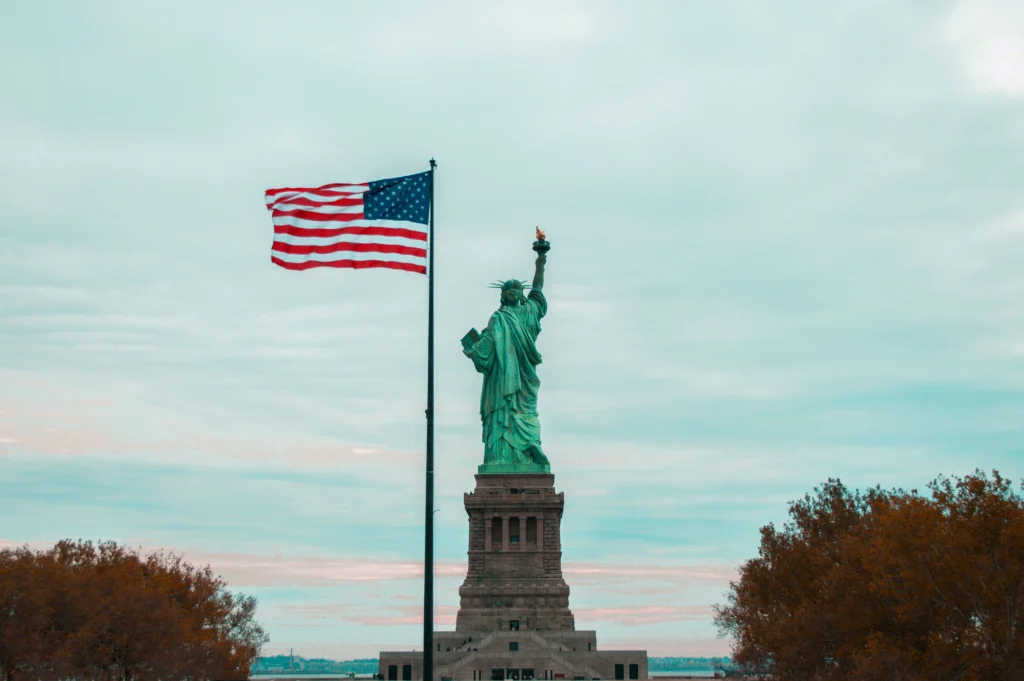
Global travel confidence has received a major boost following an official policy shift by U.S. Customs and Border Protection. In a formal announcement, federal authorities confirmed the total cancellation of a previously proposed mass social media data collection initiative. The controversial program, which would have allowed border officers to systematically screen the public social media accounts of international visitors during entry processing, has been permanently shelved.
By officially reversing this directive, federal agencies are actively removing significant non-tariff barriers that had begun to deter international travelers from choosing America as a primary destination. Tourism statistics indicate that even though the digital surveillance initiative was never fully implemented, the mere public discussion of the policy triggered measurable apprehension across major overseas travel markets. The formal policy reversal underscores a renewed national commitment to facilitating seamless international travel while keeping border security firmly rooted in evidence-based practices.
Federal Reversal Restores Global Traveler Confidence
According to statements from federal transportation and commerce authorities, the decision to abandon mass digital screening represents a strategic alignment with international data privacy standards. Official tourism boards noted that global travelers increasingly evaluate destination choices based on the clarity and fairness of border procedures. By ensuring that personal digital footprints are not subject to blanket surveillance, the United States is strengthening its competitive edge in the highly lucrative global leisure and business travel sectors.
The decision directly addresses the concerns raised by international trade partners and tourism stakeholders who warned that intrusive screening protocols could divert high-spending visitors to competing destinations. Official federal guidance now emphasizes that transparent, privacy-respecting border processing is essential to sustaining a welcoming national image and supporting long-term economic growth.
Standardized Entry Pathways and Visa Requirements
With the formal elimination of the social media screening proposal, entry procedures across all major visa and visa-free pathways have returned to established, standardized frameworks. Federal travel authorities have outlined the exact operational parameters for international arrivals under the verified guidelines:
Visa Waiver Program Eligibility
Citizens from more than 40 designated nations can continue to enter the United States for up to 90 days without a traditional visa. This streamlined pathway applies to travelers holding passports from Canada, the United Kingdom, Japan, South Korea, Australia, New Zealand, and the majority of European Union member states. Eligible individuals are only required to secure authorization via the official Electronic System for Travel Authorization before boarding their flights.
Standard Nonimmigrant Visas
Travelers from non-Visa Waiver countries pursuing leisure, family visits, or short-term recreational stays can apply for the standard B-2 tourist visa category. This classification typically permits multiple entries with authorized stays extending up to six months. Similarly, corporate professionals, conference attendees, and academic exchange participants utilizing B-1 business visas or specialized student credentials will experience standard, uniform processing completely free of supplemental digital screening.
Official Step-by-Step Border Processing Guidelines
To maintain transparency and assist international visitors with trip planning, federal agencies have re-issued the correct, verified application procedures for entering the country.
For Visa Waiver Program travelers, the process remains strictly digital. Applicants must access the official Electronic System for Travel Authorization portal online to submit basic biographical details, passport numbers, and standard security declarations. The processing fee is strictly set at $14 per applicant through the verified government portal. Most authorizations are processed within minutes, though travelers are advised to submit their forms at least 72 hours prior to departure. Approved authorizations remain valid for up to two years or until the associated passport expires.
For traditional nonimmigrant visa applicants, the process involves completing the official Form DS-160 online via the U.S. Department of State portal. After submitting the digital form, applicants must schedule and attend a mandatory in-person interview at the nearest embassy or consulate. Required documentation includes a valid passport, the application confirmation page, and verified evidence of financial self-sufficiency.
Upon arrival at the port of entry, travelers will undergo standard inspection by border officers. In compliance with the latest administrative updates, questioning will focus strictly on the traditional pillars of immigration control: the specific purpose of the visit, intended duration of stay, verified lodging arrangements, and proof of return transportation. No officer is authorized to request social media handles, passwords, or access to private digital profiles under standard screening protocols.
Data-Driven Security Over Mass Surveillance
Federal security agencies have emphasized that abandoning mass social media collection does not compromise national safety. Instead, border security operations are prioritizing advanced intelligence-led methodologies, international data-sharing partnerships, and behavioral analysis. By focusing resources on specific, verified risk indicators rather than broad data collection, border checkpoints can maintain rigorous safety standards while accelerating passenger processing times.
Official statistics demonstrate that targeted, intelligence-driven screening is exponentially more efficient than analyzing billions of public social media posts. This optimized approach minimizes border congestion, reduces administrative strain on federal personnel, and ensures that arriving passengers encounter a professional, predictable, and welcoming environment.
Economic Implications for the Hospitality and Leisure Sectors
The formal cancellation of the data collection policy has major positive implications for the domestic hospitality, aviation, and retail sectors. Official economic reports show that international travel contributes roughly $300 billion annually to the national economy, directly supporting more than two and a half million American jobs. High-value international leisure travelers and large-scale corporate delegations are critical drivers of seasonal revenue in major metropolitan hubs.
By formalizing this policy change, tourism marketing entities can confidently assure global markets that traveler privacy is heavily respected. Industry projections estimate a steady recovery in booking volumes from previously hesitant European, Asian, and Oceanic markets, positioning the nation for robust tourism growth in the coming quarters.
For more travel news like this, keep reading Global Travel Wire