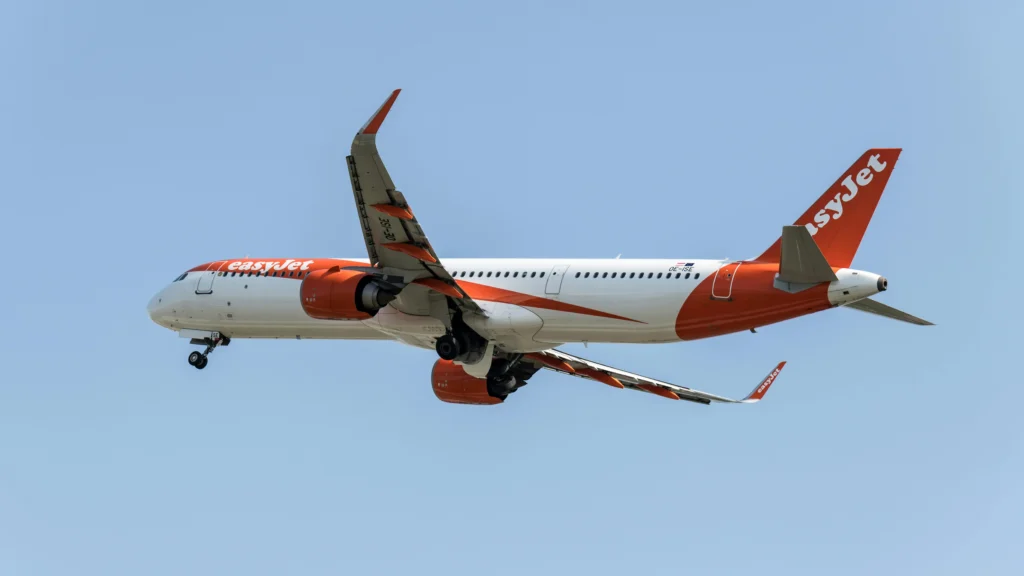
A major mid-flight safety alert has spotlighted the strict operational guidelines governing passenger baggage compliance and global air transport. An easyJet Airbus A320-200 operating as Flight EZY2618 was forced to abandon its planned transcontinental trajectory between Egypt and the United Kingdom, executing an urgent precautionary diversion to Rome Fiumicino Airport. The operational disruption occurred after a passenger informed cabin crew members that an actively charging lithium-ion power bank had been inadvertently left running inside a checked baggage container in the cargo hold.
According to official flight tracking logs and carrier dispatches, the aircraft had departed Hurghada International Airport bound for London Luton Airport with 180 passengers on board. More than three hours into the flight, the captain initiated an immediate turn toward the Italian capital, announcing that an unauthorized item had been identified within the unpressurized hold. The aircraft landed safely in Rome, where airport ground handlers and safety teams immediately oversaw routine passenger disembarkation and hold inspections. Because the unplanned landing coincided with strict airport night curfews and crew rest limits, the airline provided all 180 travelers with overnight hotel accommodations and meals before arranging a replacement flight to London the following afternoon.
Why Charging Lithium Batteries Present Severe High-Altitude Risks
The strict enforcement of international aviation safety guidelines stems directly from the volatile chemical nature of lithium-ion power sources when transported at high altitudes. Public safety bulletins issued by the UK Civil Aviation Authority emphasize that lithium batteries pose an immediate risk of “thermal runaway.” This dangerous chemical process involves a sudden, rapid spike in inner cell temperature, which can quickly result in intense self-sustaining fires, localized explosions, and the high-volume release of toxic gases.
When a portable power bank is actively charging an electronic device, the heat generated by the circuit increases significantly. In a confined, unsupervised cargo compartment where temperature control is limited and automatic fire suppression capabilities are heavily restricted, an unmonitored thermal event could spread to adjacent luggage before aircraft sensors detect a breach. By mandating that these portable power units remain exclusively within the main passenger cabin, civil aviation boards ensure that cabin crew can use specialized on-board containment gear to immediately cool down and isolate any malfunctioning device.
Evolving Regulatory Frameworks and Strict New Passenger Mandates
To address the growing volume of portable electronics carried by international tourists, global regulatory bodies have systematically updated their emergency transport protocols. The International Civil Aviation Organization implemented a comprehensive addendum to the Technical Instructions for the Safe Transport of Dangerous Goods by Air. These updated rules establish explicit distinctions between standard spare batteries and portable power banks, adding strict new parameters for passenger compliance:
Complete Cargo Prohibitions: All portable external power banks and spare individual lithium-ion cells are completely banned from checked hold luggage. If a passenger’s carry-on bag is checked in at the boarding gate due to overhead locker capacity limits, all power banks must be physically removed and carried by hand into the cabin.
Turn-Off Requirements for Checked Items: Standard electronic devices containing built-in batteries, such as laptops or tablets, are permitted in checked luggage only if they are completely powered down, placed out of sleep or hibernation modes, and packed securely to prevent accidental activation.
On-Board Charging Prohibitions: Passengers and flight crews are strictly forbidden from recharging external power banks using aircraft seat power supplies during a flight. Furthermore, devices should not be used to charge secondary personal electronics while in transit.
Capacity and Quantity Caps: Individuals are restricted to a maximum of two portable power banks, with neither unit exceeding a maximum rating of 100 Watt-hours (~27,000mAh) unless explicit prior authorization is granted by the operating carrier.
The Broader Economic and Operational Impact on Tourism Gateways
While actual in-flight cargo fires remain rare due to aggressive institutional safeguards, non-compliance with luggage rules continues to cause severe operational strains across the global tourism network. Sudden mid-air diversions require aircraft to dump or consume extra fuel, incur substantial unscheduled airport landing fees, disrupt tight hub scheduling networks, and generate massive passenger accommodation costs for airlines.
For international vacationers and business travelers, these incidents lead to missed travel connections, extended transit delays, and stressful structural disruptions. Regional tourism boards note that individual passenger negligence can instantly impact hundreds of travelers simultaneously, emphasizing the absolute necessity of public education campaigns at all airport check-in counters and digital booking gateways.
Mandatory Guidelines for Inbound and Outbound Flight Passengers
To preserve international aviation safety and ensure uninterrupted holiday transits, national aviation directors urge all commercial airline passengers to adhere to several vital packing guidelines:
Audit Carry-On Inventories: Prior to arriving at airport security checkpoints, ensure that all portable battery packs, charging bricks, and loose lithium batteries are packed exclusively within cabin baggage.
Verify Battery Capacity Markings: Ensure that all portable power banks clearly display their manufactured capacity ratings. Under international rules, any power source lacking visible specification labels cannot be accepted on board.
Insulate Exposed Battery Terminals: Protect spare battery cells from short-circuiting by storing them inside their original retail packaging, placing individual units in separate plastic pouches, or covering exposed metal terminals with electrical tape.
Acknowledge Pre-Flight Declarations: Carefully read and answer all hazardous materials questionnaires presented during digital check-in or at self-service terminal kiosks, as packing prohibited items in checked bags can carry hefty financial penalties and potential legal prosecution under federal aviation safety laws.
For more travel news like this, keep reading Global Travel Wire