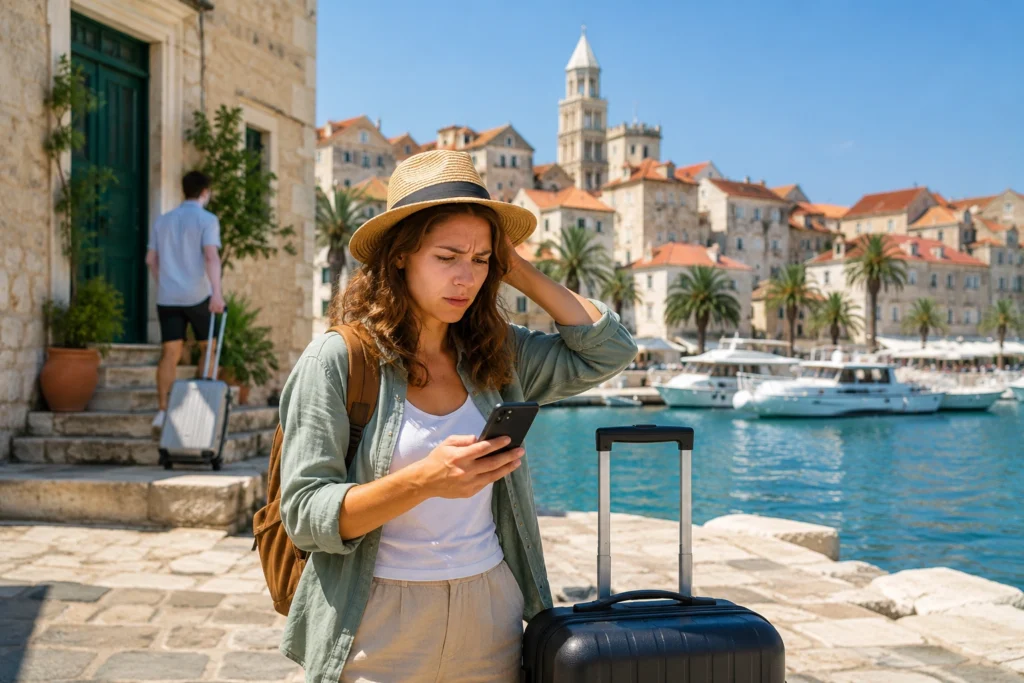
Travellers planning summer holidays in Croatia are being urged to take extra care when booking accommodation online, particularly in high-demand coastal destinations such as Dubrovnik and Split. Official consumer guidance warns that fake accommodation offers, misleading advertisements and payment requests outside trusted booking systems can expose holidaymakers to financial loss and last-minute travel disruption.
Croatia remains one of Europe’s most popular tourism destinations. The country recorded 20.7 million tourist arrivals and 94.8 million overnight stays in commercial accommodation during 2025. Foreign visitors accounted for 17.6 million arrivals and 85.6 million overnight stays, highlighting the importance of international tourism to hotels, apartments, restaurants, transport services and local businesses.
Although official statistics do not confirm a nationwide surge in Croatia-specific booking fraud, strong seasonal demand can create opportunities for deceptive online offers. Travellers searching for coastal apartments, villas and hotel rooms should verify listings carefully before making payments.
Dubrovnik and Split Attract Heavy Visitor Demand
Dubrovnik and Split remain among Croatia’s leading destinations for international travellers. Dubrovnik recorded the highest number of overnight stays by foreign visitors in May 2025, while Split ranked among the country’s most popular coastal destinations. During July 2025, Dubrovnik recorded 736,000 overnight stays by foreign visitors and Split recorded 647,000.
This demand supports a thriving hospitality economy across the Adriatic coast. However, limited availability during busy travel periods can encourage visitors to make rushed decisions when they find an attractive offer.
Travellers should remain cautious when an apartment, villa or hotel room appears significantly cheaper than comparable accommodation in the same area. An unusually low price, urgent payment deadline or request to move communication away from a trusted booking platform should be treated as a warning sign.
Fake Accommodation Offers Can Disrupt Holidays
Official consumer guidance advises travellers to choose accommodation listed on established booking platforms and to review the provider’s ratings carefully. Positive guest feedback, clear cancellation terms and transparent payment procedures can help reduce the risk of fraud.
Holidaymakers should also check whether photographs, descriptions and contact details appear consistent. When booking a hotel directly, travellers should confirm that they are using the property’s official website rather than a misleading advertisement designed to imitate a legitimate business.
The risk is not limited to financial loss. A traveller who arrives in Dubrovnik or Split without a valid reservation may face difficulty finding alternative accommodation during peak periods. Last-minute prices can be significantly higher, while availability may be limited near major attractions, beaches and transport hubs.
Payments Should Remain Inside Trusted Systems
Travellers should use the payment methods provided by established booking systems and avoid transferring money directly to unknown individuals. Requests to pay through informal channels, personal accounts or methods with limited consumer protection should be approached with caution.
Keeping communication and payment inside the booking platform creates a clearer transaction record and can make it easier to seek assistance if a dispute arises.
Visitors should also keep copies of booking confirmations, receipts and messages. These records may help accommodation providers, payment companies or authorities respond more efficiently if a problem occurs.
Hotels and Tourism Businesses Have a Role to Play
Croatia’s tourism reputation depends on visitor confidence. Hotels, apartment operators and travel agencies can support safer bookings by maintaining accurate digital listings, using clear contact details and responding quickly when travellers ask for verification.
Local tourism businesses should also monitor for copied photographs or misleading advertisements that appear to imitate their properties. Early reporting can help reduce the risk of travellers being misled by false offers.
For Dubrovnik and Split, protecting visitor trust is especially important because tourism supports a wide network of restaurants, attractions, guides, transport operators and local retailers.
Smart Planning Can Protect the Holiday Experience
Travellers booking a Croatia summer escape should compare prices across several trusted sources, read recent reviews and confirm the property address before paying. They should be particularly careful when responding to advertisements on social media or search engines.
A few additional checks can prevent a holiday from becoming an expensive and stressful experience. Croatia’s coastline, historic cities and island destinations continue to attract visitors from around the world, but secure booking practices are now an essential part of responsible travel planning.
As summer demand builds across Dubrovnik, Split and the wider Adriatic coast, travellers should prioritise verified accommodation, safe payment methods and careful digital checks before finalising their Croatian holiday.
For more travel news like this, keep reading Global Travel Wire