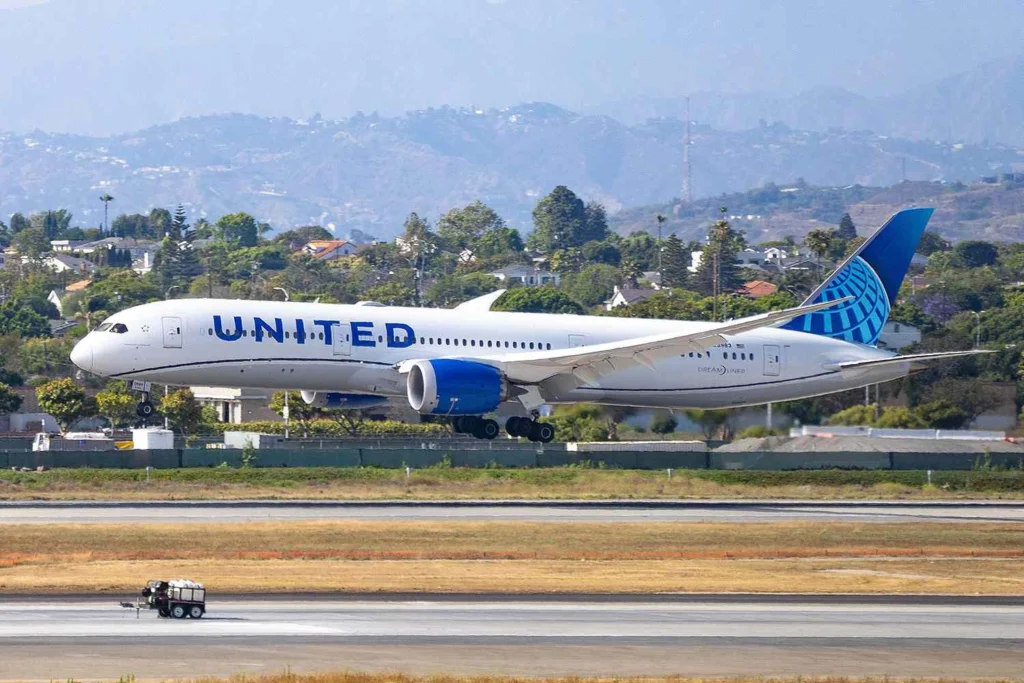
A United Airlines flight travelling from Newark Liberty International Airport to Palma de Mallorca returned to New Jersey after a reported onboard security concern involving the discoverable name of a Bluetooth device.
The incident disrupted a transatlantic journey to one of Spain’s most popular island destinations and placed renewed attention on how airlines respond when potentially threatening language appears inside an aircraft cabin.
United Flight 236 was operating between Newark and Palma de Mallorca when the crew became aware of the reported issue. The Boeing 767 service returned safely to Newark, where passengers faced delays while the situation was assessed.
The precise sequence of events, the identity of the device owner and the full security response have not been confirmed publicly through an official detailed statement. However, the episode demonstrates why airline crews treat any apparent threat seriously, even when the concern may ultimately be linked to a digital device name rather than a physical danger.
Safety Takes Priority Over Holiday Schedules
For passengers heading to Mallorca, the return to Newark created an unexpected disruption at the start of an international journey. Palma de Mallorca is a major Mediterranean tourism gateway, serving beach resorts, hotels, restaurants and attractions across the Balearic Islands.
A delayed arrival can affect more than a single flight. Travellers may miss hotel transfers, car-hire reservations, ferry connections and pre-booked activities. Families beginning a holiday can also face additional costs when schedules change at short notice.
Yet aviation security procedures are designed around caution. When crews receive information that could indicate a potential threat, the priority is to protect passengers and allow authorities to assess the aircraft in a controlled environment.
This can involve returning to the departure airport, arranging inspections and reviewing whether the flight can continue safely. Such decisions may be inconvenient, but airlines cannot dismiss threatening language simply because it appears through a wireless connection.
Bluetooth Names Can Create Serious Consequences
Smartphones, headphones, speakers and other personal electronics often broadcast discoverable Bluetooth names. Passengers may rename devices casually, without considering how other travellers or crew members could interpret what appears on a nearby screen.
Inside an aircraft, however, words associated with weapons or explosives can trigger a security response. A name intended as a joke may cause alarm, disrupt flight operations and create anxiety among passengers.
Travellers should avoid using provocative, threatening or misleading names for personal devices. They should also follow cabin-crew instructions immediately when asked to switch off wireless connections or electronic equipment.
The lesson is simple: behaviour that appears harmless on the ground can carry serious consequences in the highly regulated environment of commercial aviation.
Newark Disruption Can Affect Wider Travel Plans
Newark Liberty International Airport is a major transatlantic gateway serving travellers heading to Europe and other international destinations. When a long-haul aircraft returns after departure, the operational impact can extend across the airline network.
Aircraft inspections, passenger rebooking, crew working-time limits and replacement arrangements can all influence when a flight resumes. Travellers may also need to adjust onward transport plans after reaching their destination later than expected.
For tourism businesses in Mallorca, reliable aviation remains essential. Resorts, hotels, restaurants, tour operators and transfer companies depend on predictable arrivals during busy seasonal periods. Even a single disruption can require rapid changes for visitors and service providers.
Passengers Should Follow Crew Instructions Promptly
The reported incident provides a useful reminder for international travellers. Passengers should keep personal devices appropriately named, listen carefully to safety announcements and comply quickly with instructions from cabin crew.
When a flight is delayed or diverted, travellers should monitor the airline app, review rebooking information and retain receipts for necessary expenses. Those with hotel stays, transfers or tours should contact providers as soon as their arrival time changes.
Travel insurance may also help with certain disruption-related costs, depending on the policy and circumstances. Passengers should review coverage before departure rather than assuming every delay or missed connection is automatically included.
Aviation Security Depends on Responsible Behaviour
International travel relies on trust between passengers, airlines, airports and security authorities. Most journeys operate smoothly, but even an unusual digital signal can require a careful response when safety is involved.
The reported return of United Flight 236 to Newark shows why crews act decisively when a potential threat emerges. For travellers, the message is equally clear: responsible use of electronic devices is not merely a matter of etiquette. In the air, it is part of protecting everyone’s journey.
For more travel news like this, keep reading Global Travel Wire