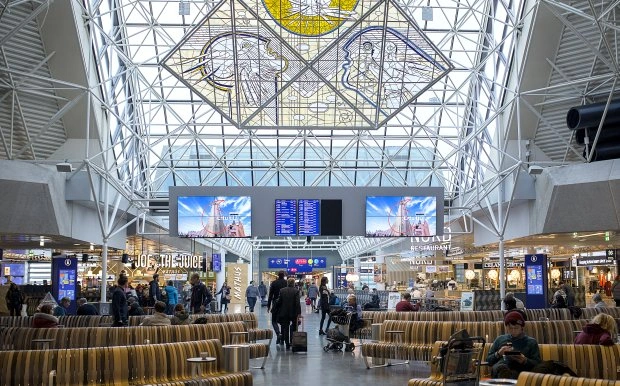
Travelers using Keflavík International Airport faced schedule changes as Iceland’s primary international aviation gateway recorded 16 delayed flights and six cancellations, disrupting journeys across parts of its European and North American network.
The disruption affected passengers traveling through an airport that plays a central role in Iceland’s tourism industry. Keflavík connects the country with major cities including London, Copenhagen, Paris, Amsterdam and New York, while also supporting onward journeys between Europe and North America.
Passengers facing schedule changes should monitor their airline communications and confirm flight details before traveling to the airport. Travelers with onward connections, hotel bookings, airport transfers or tour reservations may need to adjust their plans if delays continue.
Icelandair and International Carriers Serve Key Routes
Keflavík is Iceland’s most important international airport and a major operating base for Icelandair. The airport also welcomes international carriers serving destinations across Europe and North America, including Lufthansa and British Airways.
The affected flight snapshot highlights how even a limited number of cancellations can create wider complications at a connecting airport. Travelers may face missed onward flights, revised baggage arrangements and longer waiting times, particularly when journeys involve multiple sectors.
Passengers flying to or from London, Copenhagen, Paris, Amsterdam and New York should check their schedules carefully. These cities remain among Keflavík’s most important international markets and frequently serve as connecting gateways for longer journeys.
Travelers should note that PLAY Airlines is no longer operating flights. The Icelandic carrier ceased operations in September 2025, meaning current passenger disruption at Keflavík involves other airlines serving the airport.
Keflavík Welcomed 8.1 Million Passengers in 2025
The operational pressure comes as Keflavík continues to handle substantial passenger volumes.
The airport welcomed 8.1 million passengers in 2025, making it the fourth-busiest year in its history. Although the total represented a 2% decline compared with the previous year, the figure underlined Keflavík’s importance as one of the North Atlantic region’s key aviation hubs.
Passenger demand remained significant in 2026. Keflavík handled 571,570 passengers in April alone, when 20 airlines operated flights to 65 destinations. London, Copenhagen, New York, Paris and Amsterdam ranked as the most popular destinations during the month.
More than 7.5 million passengers are expected to travel through the airport in 2026, including approximately 2.24 million international tourists.
Flight Changes Can Affect Iceland Tourism Businesses
Keflavík Airport is the main entry point for most international visitors arriving in Iceland. From the terminal, travelers continue toward Reykjavík, the Blue Lagoon, the Golden Circle, the South Coast and destinations across the country.
As a result, delays and cancellations can affect more than airline schedules. Hotels, rental-car providers, airport transfer companies, tour operators and restaurants may need to manage late arrivals or revised bookings.
The impact can also extend to travelers departing Iceland after organized tours, cruise itineraries and road trips. A delayed flight can create complications for passengers with connecting services elsewhere in Europe or North America.
Tourism businesses can reduce disruption by maintaining flexible arrival arrangements and communicating clearly with guests whose flights have changed.
Iceland Weather Requires Constant Operational Monitoring
Keflavík operates in a North Atlantic environment where conditions can change quickly. Strong winds, reduced visibility, snow and other weather factors can influence aviation operations at different times of the year.
The airport maintains weather-monitoring systems that provide observations, forecasts, radar information and alerts for aviation teams. However, flight delays and cancellations can result from several factors, including aircraft rotations, crew scheduling, air traffic restrictions and operational requirements.
No single cause should be assumed for the latest disruption unless confirmed by the airport or the relevant airline.
For passengers, the most reliable approach is to monitor official airport departure and arrival information alongside airline notifications.
Travelers Should Prepare for Schedule Changes
Passengers affected by a cancellation should contact their airline to review rebooking options and confirm baggage arrangements. Travelers facing delays should allow additional time for onward connections and keep accommodation providers informed if arrival times change.
Those traveling outside the Schengen Area, including passengers heading to the United Kingdom or North America, should also allow time for passport-control procedures.
Keflavík Remains a Vital North Atlantic Gateway
Despite temporary disruption, Keflavík International Airport remains central to Iceland’s global accessibility and tourism economy.
Its location between Europe and North America gives travelers direct access to Iceland’s natural attractions while supporting international connections across the Atlantic.
As passenger demand continues through 2026, reliable operations, timely communication and flexible travel planning will remain essential. For travelers using Keflavík, checking flight status before departure is the simplest way to avoid unnecessary complications and manage changing schedules with greater confidence.
For more travel news like this, keep reading Global Travel Wire