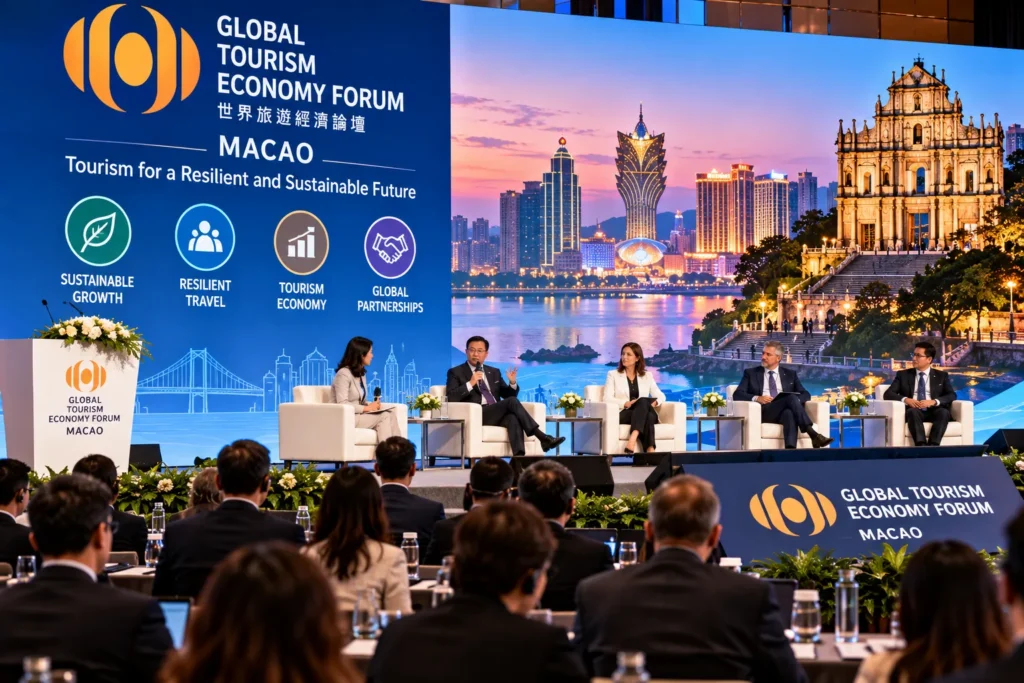
The global travel sector has converged on China’s capital for the official opening of the 2026 Beijing International Cultural Tourism Consumption Expo. Hosted by the Beijing Municipal Bureau of Culture and Tourism, the three-day international event commenced at Phase II of the China National Convention Center. The deployment showcases how modern computing infrastructure, digital operational tools, and collaborative cross-border agreements are transforming the international visitor economy.
This year’s exposition structure points to a strong resurgence in cross-border business synchronization. Total registered exhibitors reached 637 companies, marking a 26 percent volume expansion compared to the prior fiscal cycle. Domestic regional representation expanded concurrently, with 30 cities from 12 provincial-level areas installing interactive showcases, representing a 15 percent year-over-year increase. The localized arrays highlight how regional tourism boards are utilizing targeted structural upgrades to capture high-yield international travelers.
International Presence and Inbound Tourism Integration
A key feature of the operational footprint is the significant expansion of the international exhibition sector, which grew its physical area by 30 percent. A total of 33 prominent travel enterprises and official tourism organizations spanning 17 countries and regions—including France, Australia, New Zealand, Pakistan, Mongolia, Cambodia, and the Philippines—established dedicated pavilions. These entities are utilizing the unified platform to distribute localized handicrafts, niche cultural assets, and specific destination packages tailored to evolving global travel trends.
+-------------------------------------------------------------------+
|            2026 Beijing Cultural Tourism Expo Growth Indices      |
+-------------------------------------------------------------------+
| Total Registered Exhibitors  | 637 enterprises; a 26% escalation  |
|                              | year-over-year.                    |
+------------------------------+------------------------------------+
| Provincial-Level Delegations | 30 major municipal groups; up 15%  |
|                              | from prior cycle.                  |
+------------------------------+------------------------------------+
| Dedicated International Space| 30% area expansion across 17 distinct|
|                              | global sovereign regions.          |
+-------------------------------------------------------------------+
To optimize transaction efficiency, the exhibition runs in close coordination with the 2026 Beijing Inbound Tourism Development Conference. This specialized forum brought together more than 300 major inbound travel agents and international buyers representing 40 distinct countries and regions. By organizing centralized business-to-business negotiation spaces, the event provides a direct procurement pipeline for major operators, hotels, and historic scenic zones to sign high-volume cross-border cooperation protocols.
Domestically Sourced Regional Showcases and Cultural Heritage Preservation
The domestic pavilions display a clear emphasis on balancing ancestral preservation with structural modernizations. Broad regional exhibition groups from across China, including Tianjin, Hebei, Jiangsu, Guangdong, Guangxi, Inner Mongolia, and Ningxia, introduced time-honored specialties and intangible cultural heritage projects. Notable localized highlights include representations from the historic Lizhuang Ancient Town along the Yangtze River and ecological lifestyle products designed by the National Wetland Museum of China.
At the center of the regional displays, the Beijing pavilion brought together prominent city landmarks, historical museums, and licensed consumer assets like the Beijing Gifts brand. All 16 administrative districts of the capital presented integrated travel itineraries designed to blend deep historical architecture with the energy of modern urban lifestyle corridors. Furthermore, institutions like the Capital Museum provided interactive interfaces mapping specialized history portfolios, including artifacts tracing major global trade civilizations.
Smart Tourism Technology and Artificial Intelligence Deployment
A primary differentiator of the 2026 expo is the systematic integration of intelligent supply-and-demand automated matching architecture. Prior to the formal venue opening, the digital matchmaking platform enabled global buyers and suppliers to log specific operational parameters, automatically generating structured business meetings. This automated framework allowed participants to settle preliminary negotiations digitally, reducing transaction friction on the physical trade floor.
On the main exhibition floor, technology groups and consumer automotive brands demonstrated how artificial intelligence is rewriting the baseline for independent travel and eco-wellness mobility:
Interactive Mobile Robotics: Advanced humanoid robots developed by Unitree Robotics managed real-time crowd interactions, demonstrating the future utility of mechanical service agents in hospitality.
Green Self-Driving Technology: New energy automotive innovators, including Xiaomi Group, NIO, and ARCFOX, displayed their latest smart vehicle systems, mapping out new structural directions for autonomous road-trip tourism.
Real-Time Linguistic Translation: Advanced computing wear, such as real-time translation smart glasses manufactured by iFLYTEK, demonstrated immediate applications for eliminating international cross-cultural communication barriers.
Automated Hospitality Systems: Specialized AI fashion-changing units and automated beverage-making service robots performed continuous operational sequences, highlighting the expanding automation of retail tourism nodes.
Operational Outcomes and Strategic Forward Outlook
The business distribution networks managed across the floor highlight a shift toward premium travel value yields. Major industry entities, including BTG Group, Trip.com Group, and Utour Group, utilized the opening sessions to launch unbundled experiential packages, targeting consumer segments that value deeper destination engagement over traditional sight-centric tours.
The expo continues its public and professional schedule through June 7. Moving into the secondary phase of the operational calendar, the event will host specialized infrastructure panels, including a targeted tourism resource matching conference for global hotel networks and local travel agencies, alongside the Second Smart Tourism Ecosystem Conference. These concurrent sessions highlight how the active integration of digital technology and administrative coordination helps secure long-term stability and sustainable consumer growth across the modern international cultural tourism exhibition landscape.
For more travel news like this, keep reading Global Travel Wire