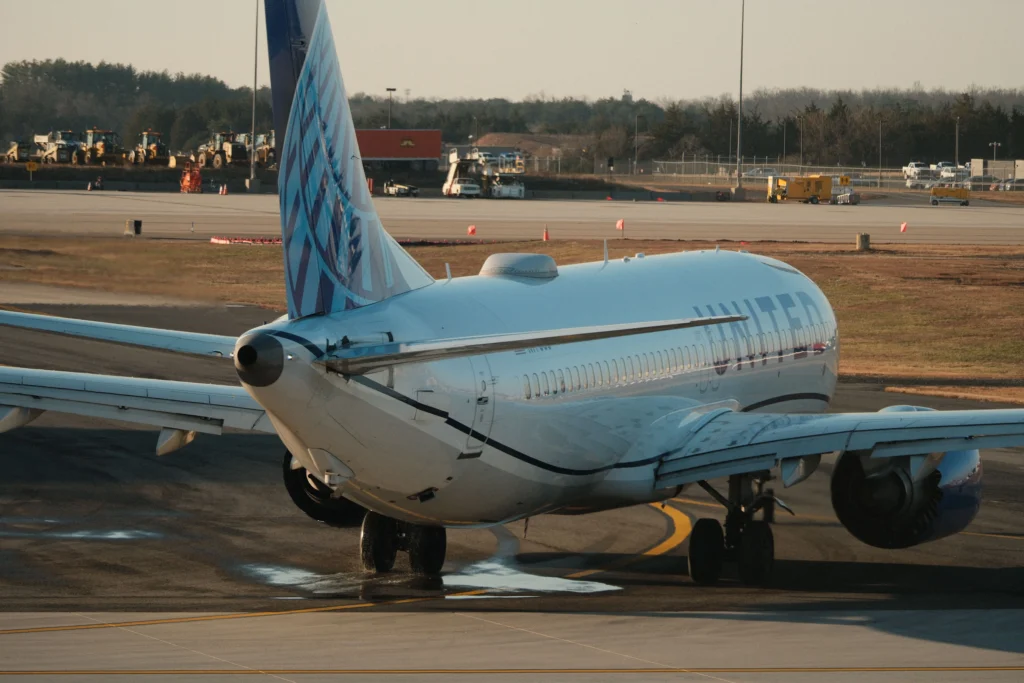
An operational review has been initiated following a standard tactical diversion involving a commercial aircraft departing from the National Capital Region. A United Airlines Boeing 737-900 narrowbody aircraft successfully executed a controlled precautionary return to Washington Dulles International Airport after flight crew identified a minor mechanical issue with the nose landing gear assembly shortly after takeoff.
The routine safety maneuver concluded without further complications, demonstrating the efficacy of modern commercial transport engineering systems and rigorous pilot training frameworks. All 179 passengers and crew members aboard the scheduled interstate service disembarked normally via traditional airport terminal jet bridges, with no operational injuries or secondary airfield service disruptions reported by regional transit authorities.
Flight Operations and Initial Climb Indicators
The flight path logs indicate that the commercial service, operating as an domestic scheduled connection from Washington Dulles to Houston George Bush Intercontinental Airport, commenced its standard departure sequence under local air traffic command. During the initial climb phase immediately following rotation from the active runway surface, automated flight deck indicators signaled a deviation from standard operating parameters within the forward landing gear containment area.
System telemetry confirmed that while the primary main landing gear retracted seamlessly into the fuselage cavities, the forward nose gear assembly experienced a temporary mechanical failure to fully cycle into the nested position. Following established global air transport checklist procedures, the flight crew maintained a stabilized low-altitude climb profile, level at approximately 4,000 feet, to properly assess the onboard technical data and establish direct radio communications with regional radar control centers.
Strategic Precautionary Diversion Management
To prioritize safety, the flight deck crew elected to terminate the planned route to Texas and execute an immediate return to the origin hub. Aviation safety reports indicate that such actions are standard industry maneuvers designed to mitigate potential aerodynamic or mechanical discrepancies well before an aircraft enters high-altitude cruise corridors.
Crucially, standard data parameters verified that the landing gear mechanism remained mechanically locked in the down position throughout the short flight sequence. Because the structural integrity of the aircraft’s landing components was fully established, there was no requirement to declare an emergency or deploy secondary runway fire and rescue response fleets at the terminal.
The flight crew completed necessary regional holding patterns to align with standard airport approach paths and managed the descent via radar vectors provided by civil air traffic controllers. The aircraft completed a smooth landing sequence on a parallel runway at Washington Dulles approximately 50 minutes after its initial departure roll.
Federal Oversight and Fleet Reliability Standards
In alignment with statutory requirements governing civil aviation operations, the Federal Aviation Administration (FAA) receives formal operational filings regarding mechanical diversions to monitor overall commercial fleet trends. Comprehensive maintenance tracking protocols verify that routine technical inspections are standard operational occurrences across large-scale hub-and-spoke carrier networks.
Engineers routinely check the following parameters during subsequent ground evaluations to isolate specific root causes:
Hydraulic Pressure Integrity: Evaluation of lines and actuators responsible for moving heavy components.
Proximity Sensor Calibration: Inspection of digital systems that register physical gear positioning.
Mechanical Linkage Alignment: Checking the structural gear tracks for debris or minor alignment anomalies.
The utilization of advanced redundant engineering designs ensures that even if a primary component experiences a minor cycling interruption, baseline structural capacity remains fully intact to allow safe runway contacts.
Impact on Terminal Logistics and Passenger Experience
Following the standard runway arrival, the Boeing 737-900 taxied under its own auxiliary power directly to a designated operations gate. Ground logistics crews immediately reassigned the 179 travelers to an identical replacement aircraft stationed at the hub to minimize disruptions to consumer travel plans.
The continuity of regional transport links was maintained throughout the afternoon, with the secondary aircraft departing Washington Dulles to successfully deliver travelers to Houston with a net arrival delay of approximately two and a half hours. The affected jet was temporarily routed into an onsite maintenance hangar for automated diagnostic checks and component validation before being formally cleared by certified mechanics to return to active commercial flight operations.
Statisticians from national transport bureaus emphasize that localized diversions serve as evidence of highly effective oversight parameters. Modern transportation networks rely heavily on early detection systems that prompt flight crews to execute proactive returns for minor technical variances rather than allowing operations to proceed under non-standard configurations. By utilizing standardized safety criteria, global air transport gateways safely move millions of travelers daily while maintaining exceptional cross-border transit metrics.
For more travel news like this, keep reading Global Travel Wire