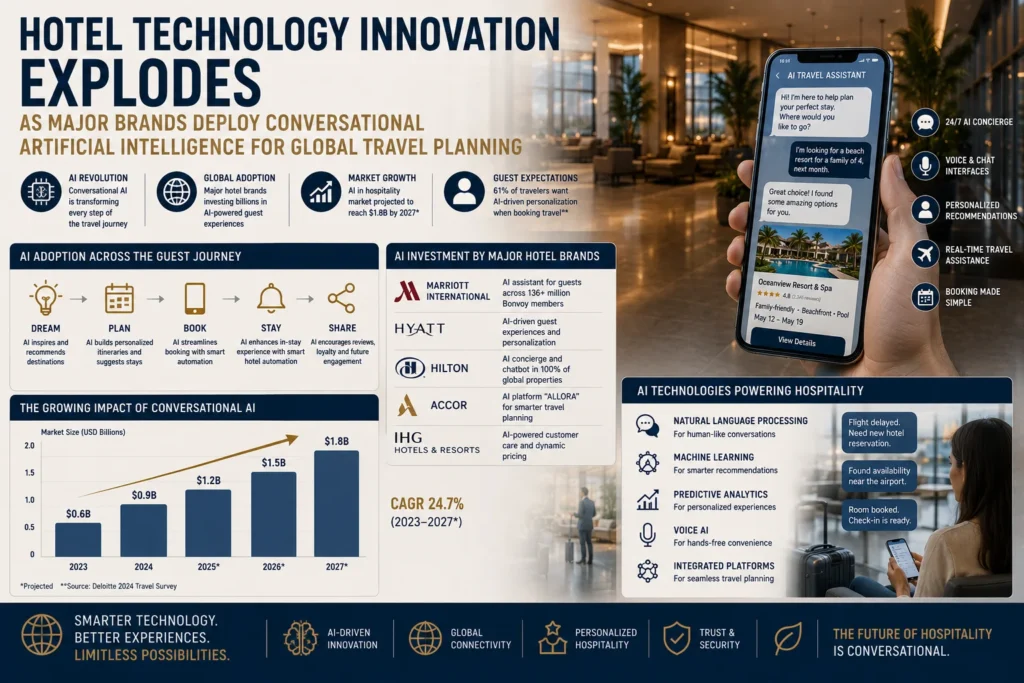
The global hospitality sector is undergoing a profound structural evolution as major international lodging brands shift their technological investments directly toward customer-facing discovery systems. Official corporate filings and public industry statements reveal that traditional filtering mechanics are systematically being updated in favor of generative architecture. This digital transition aims to capture consumer intent at the very beginning of the travel planning cycle, altering how hundreds of millions of international travelers interact with digital booking ecosystems.
As consumer patterns adapt to natural language processing interfaces across the broader digital economy, travel suppliers face mounting pressure to modernize their direct-to-consumer infrastructure. The industry’s early deployment of automated tools heavily prioritized behind-the-scenes operational optimization, automated revenue management, and standardized customer service chat functions. However, current development roadmaps show an intense focus on the top of the booking funnel, where global consumers actively research unfamiliar destinations, evaluate custom resort itineraries, and choose specific properties for their upcoming journeys.
The Deployment of Intent Based Booking Architecture
At the forefront of this industrial shift, Marriott International has officially initiated the beta rollout of its proprietary discovery interface known as Ask Bonvoy. This platform introduces a natural language search system engineered to let users map out entire itineraries through descriptive prose rather than inputting rigid dates and predefined geographical coordinates. Under the initial testing parameters, the conversational system is available to a targeted segment of loyalty members and newly enrolled users accessing the main digital portal and mobile application software.
The strategic design of this conversational interface targets a long-standing limitation within traditional hospitality commerce. Standard booking engines operate with high efficiency when a traveler possesses a definitive destination and clear timing parameters. However, they struggle to serve consumers who understand only the qualitative experience they desire. By allowing users to describe their target vacation parameters—such as a remote golf-focused getaway, a luxury spa retreat with fine dining, or a highly specific family-friendly coastal resort—the system cross-references the prompt against a vast global portfolio comprising approximately 10,000 properties operating across 146 countries and territories.
Verified Architecture Protecting Brand Integrity
A distinguishing characteristic of this modern wave of hotel technology innovation is the utilization of closed, verified data environments. Unlike generic public search applications that draw generalized text from unverified locations across the open internet, these specialized hospitality models are grounded exclusively within brand-owned property records. The systems ingest proprietary data points regarding localized amenities, on-site dining venues, specialized spa treatments, and recreational activities maintained securely within the brand’s master asset management databases.
This rigid focus on verified data accuracy addresses a critical challenge for premium enterprises implementing artificial intelligence. In the global tourism and accommodation sector, misinformation regarding specific room categories, exact resort features, or operational amenity hours can directly degrade consumer satisfaction and impact immediate brand equity. By ensuring that responses are generated strictly from internally audited information, the hospitality sector creates a safe digital environment that reliably bridges the gap between digital discovery and the physical guest experience.
The Multi-Million Member Loyalty Advantage
The deployment of proprietary search tools highlights the immense competitive value of massive loyalty ecosystems in the modern digital landscape. With global loyalty networks like Marriott Bonvoy encompassing nearly 283 million registered members worldwide, corporate parent groups possess vast pools of historical travel data. Official developmental guidelines indicate that future updates of these conversational platforms will fully incorporate points-based redemption logic, allowing for highly individualized property recommendations that align with a member’s specific travel history, reward balances, and localized property preferences.
This integrated capability establishes a powerful barrier between independent hotel apps and multi-brand third-party intermediaries. While online travel agencies and general search aggregators can consolidate wide-ranging property options across competing corporate flags, they lack the granular, long-term consumer relationship insights held by native hospitality operators. As travel planning technology becomes increasingly personalized, these secured corporate data pools are emerging as major strategic assets for capturing direct bookings and minimizing external customer acquisition costs.
An Industry Wide Push for Algorithmic Visibility
The competitive landscape is expanding rapidly as multiple top-tier hospitality conglomerates deploy parallel systems to retain digital dominance. Earlier this fiscal cycle, Hilton introduced its native conversational planning framework, explicitly designed to guide consumers through comprehensive property evaluations via interactive digital dialogue. Concurrently, Accor has steadily expanded its testing of generative digital booking tools, while international groups like InterContinental Hotels Group have launched specialized companion applications within external artificial intelligence storefronts to maximize their consumer touchpoints.
This industry-wide push is heavily driven by the realization that visibility within conversational search platforms will soon dictate market share as heavily as visibility within traditional search engine result pages. With major external technology providers and online travel agencies investing aggressively in conversational booking updates, hotel brands are acting decisively to embed these systems directly into their native mobile apps and websites. By securing the discovery interface within their own digital borders, international hotel chains aim to protect their customer relationships and ensure that the future of travel planning remains a direct, seamless dialogue between the guest and the host property.
For more travel news like this, keep reading Global Travel Wire