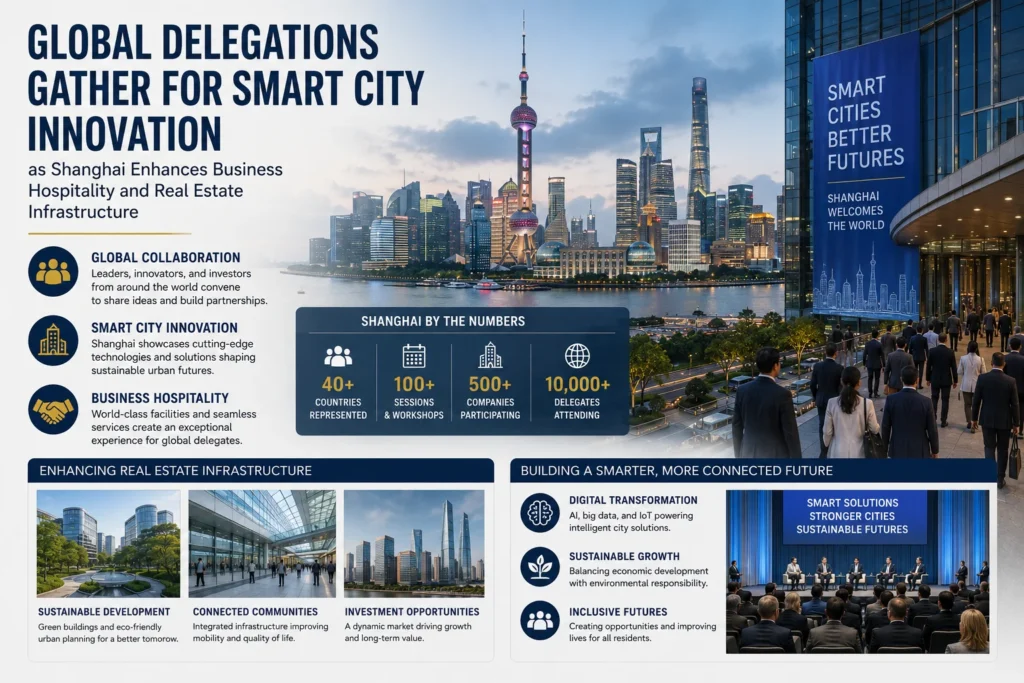
International commerce and corporate destination management are seeing a noticeable structural integration as large-scale industrial exhibitions align with urban infrastructure development. The city of Shanghai is coordinating its municipal services and world-class venue facilities to host the China International Property Management Industry Expo, universally recognized as the SPM Expo. Scheduled to take place in early July, this industrial convention is serving as a significant catalyst for high-spending corporate arrivals, accelerating the recovery of international business travel and reinforcing municipal frameworks for urban technology integration across the Yangtze River Delta.
Official metrics from tourism bureaus and commerce ministries emphasize that modern business exhibitions function as major economic engines for host municipalities. Local event itineraries indicate that the upcoming exhibition will host between 180 and 250 specialized exhibitors, highlighting advanced property tech systems, robotic facility controls, and sustainable architectural design. The projected influx of corporate delegates—ranging between 15,000 and 25,000 professional participants—is driving notable demand across premium service sectors, highlighting the critical role that large-scale industrial gatherings play in anchoring municipal tourism revenue.
Industrial Gatherings Support Hospitality Growth and Corporate Travel Infrastructure
The scale of this global gathering introduces visible commercial benefits for urban infrastructure providers throughout the region. Large conventions generate immediate requirements for international air travel, private logistics networks, and multi-tiered lodging systems. Administrative records from previous high-level industrial exhibitions demonstrate that the arrival of overseas delegations correlates with a measurable elevation in regional hotel occupancy metrics, specifically across premium and business-centric serviced apartment networks.
The corporate travel footprint is further expanded by the visible increase in per-capita spending inside metropolitan dining corridors and retail centers. Professional visitors arriving from international hubs—including the United States, Germany, Japan, Singapore, the United Kingdom, the United Arab Emirates, and Australia—frequently allocate extra personal capital toward high-end culinary experiences and commercial retail hubs. This pattern provides direct support to local auxiliary markets, creating a robust framework where institutional trade events directly subsidize the broader leisure and municipal entertainment economy.
Real Estate Digitalization and Smart City Integration Drive Innovation Tours
The central theme of the event focuses heavily on the deployment of advanced software platforms, digital twin infrastructure, and automated mechanical systems within commercial developments. Live demonstrations scheduled across the exhibition footprint encompass artificial intelligence tools for property operations, cloud-linked security protocols, and comprehensive energy management systems engineered to minimize carbon footprints in high-density corporate towers. This intense concentration of industrial innovation is attracting a specialized demographic of international technical observers and urban planners who view these major trade conventions as educational field studies.
The emergence of tech-driven property systems is reshaping traditional business travel profiles. Municipal trade boards have noted an increase in demand for organized innovation tours, where visiting delegates combine standard convention attendance with structured site visits to local smart districts. This integration provides international partners with firsthand examples of how dense urban environments utilize predictive maintenance data to enhance structural efficiency and optimize local quality-of-life parameters for large residential blocks.
The Rising Trend of Dual-Purpose Travel and Regional Tourism Footprints
A prominent operational trend observed by regional hospitality planners is the continuous expansion of dual-purpose itineraries, often referred to as the blending of professional corporate commitments with personal leisure exploration. Overseas delegates attending major urban expos are increasingly modifying their stay windows to experience local cultural history and regional architectural landmarks. In Shanghai, this dynamic drives foot traffic from modern commercial environments like the Lujiazui financial district to iconic heritage locations such as the Bund, Yu Garden, and historic preservation corridors.
Furthermore, the highly integrated transport infrastructure linking the Yangtze River Delta ensures that the economic impact of major metropolitan conventions radiates outward to adjacent municipalities. Utilizing advanced high-speed rail lines, international business tourists can easily extend their travel itineraries to nearby historical water towns and cultural hubs like Suzhou and Hangzhou. This geographic ease of transit expands regional tourism revenues, distributing hotel room nights and retail transactions across a wider network of municipal operators beyond the primary convention city limits.
Practical Management Guidelines for Convention Delegates and Business Executives
Navigating complex metropolitan exhibitions during peak operational windows requires systematic preparation and clear coordination with local logistics providers. To ensure a highly efficient, smooth operational experience, international delegates are advised to follow standardized pre-travel frameworks:
Pre-Register with Official Event Management Platforms: Complete all digital badging and entry verification protocols early via official government-registered organizers to minimize processing delays upon arrival at the convention center.
Coordinate Targeted Local Lodging: Secure accommodation within dedicated business districts or adjacent to primary transit lines to optimize daily transit routines and circumvent peak-hour urban traffic bottlenecks.
Structure Regional Cultural Excursions Early: Align holiday extensions and cross-border rail reservations to cultural destinations well in advance to guarantee seat availability on high-capacity routes.
Utilize Digital Commerce Applications: Ensure local digital payment methods and municipal transport cards are configured before arriving to streamline interactions within local retail, logistics, and hospitality sectors.
As municipal regulatory frameworks continue to support the expansion of international convention spaces, the alignment of smart urban technology and premium tourism management will remain a core focus for local economic planners. By providing highly specialized exhibition platforms alongside top-tier corporate hospitality infrastructure, major metropolitan hubs can continuously attract high-value global audiences, ensuring long-term institutional resilience and steady growth across the global travel sector.
For more travel news like this, keep reading Global Travel Wire