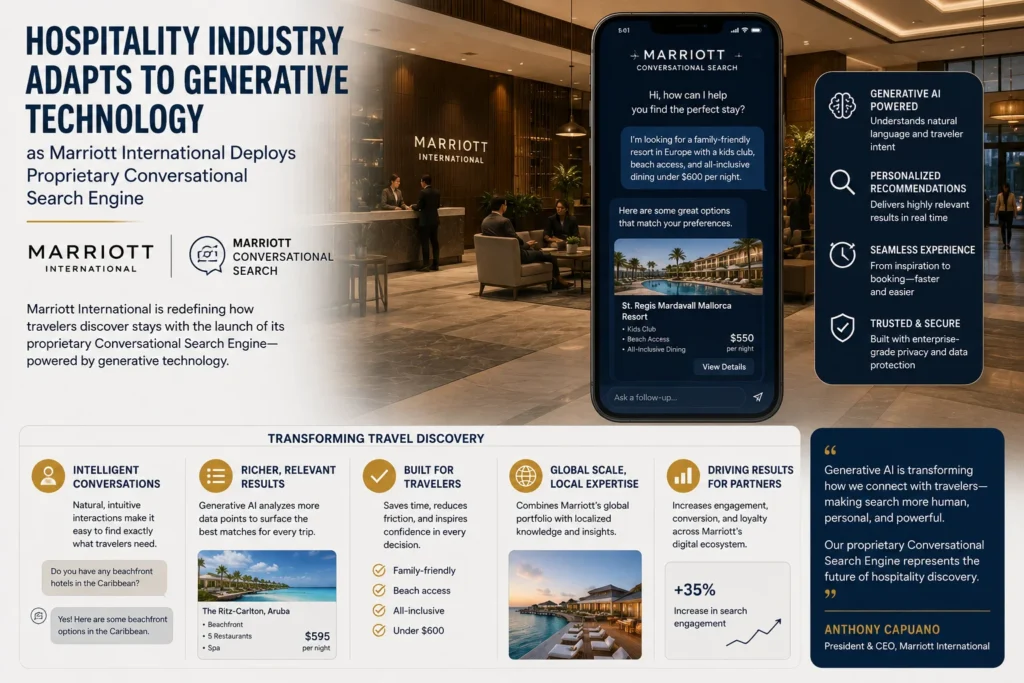
The global lodging and destination management sector is experiencing a significant operational shift as artificial intelligence redefines how consumers explore international itineraries. Marriott International has formally initiated the beta rollout of Ask Bonvoy, a conversational search platform built directly into its native digital distribution channels. Utilizing natural language processing, the interface allows travelers to navigate an expansive network of approximately 10,000 properties spanning 146 countries and territories, presenting a distinct departure from the rigid dropdown menus and location filters that have historically governed online hotel booking architectures.
Official data from international hospitality infrastructure reports highlights that major hotel groups are moving quickly to establish internal generative networks. This tech implementation is designed to keep consumer discovery within direct brand ecosystems, ensuring that travel inspiration translates into reservations without relying on external third-party search tools or online travel agencies. The phased rollout is currently active in US English across select desktop browsers and mobile operating software for an initial subset of the brand’s global user base, with an extensive international release scheduled for later in the calendar year.
Utilizing Verified Corporate Databases to Improve Recommendation Reliability
A critical operational element of the new technology is its reliance on proprietary data systems. Unlike open-source artificial intelligence platforms that scrape fragmented reviews and unverified text from across the open web, the internal search architecture relies exclusively on verified, brand-owned property data. This specialized structure ensures high reliability regarding specific property characteristics, building layouts, and operational timelines.
By processing customer intent through validated datasets, the system can provide reliable answers regarding specific physical amenities, including exact dining menus, spa packages, and specialized recreational offerings like championship golf courses. Industry data monitors indicate that this emphasis on verified data directly addresses a persistent challenge in digital travel commerce: the accidental distribution of outdated or inaccurate property information, which directly impacts customer satisfaction scores upon arrival at a resort destination.
Moving from Destination Selection to Intent-Driven Itinerary Planning
The operational integration of conversational tools is altering the traditional starting point of trip planning. Instead of forcing users to input a specific city and precise calendar dates at the beginning of their search, the conversational layout allows prospective guests to describe the broader purpose or aesthetic goal of their upcoming journey.
This natural language setup enables complex, descriptive search queries that align with modern consumer habits, including:
Targeting Lifestyle Attributes: Exploring properties based on specific design elements or unique locations, such as boutique urban environments or isolated coastal wellness retreats.
Isolating Niche Sports Infrastructure: Locating specific properties that feature high-end training facilities, dedicated pickleball installations, or on-site pro shops.
Streamlining Wellness and Relaxation Packages: Finding resort layouts that combine specialized therapeutic services with distinct wellness culinary programs.
Managing Complex Family Requirements: Pinpointing specific properties that offer interconnected room layouts, supervised children’s clubs, and child-safe shallow pool installations.
Once the ideal accommodation is identified through these descriptive conversations, the platform automatically hands off the data to existing booking engines to finalize standard credit card or loyalty points-based transactions.
Strategic Technology Alliances Shape the Future of Digital Guest Acquisition
The deployment of internal search software represents a single phase within a broader, multi-year digital transformation strategy. Official corporate data notes that the enterprise is simultaneously participating in external technology partnerships to expand its global consumer touchpoints, including collaborative testing alongside Google’s forthcoming AI travel framework and targeted pilot programs with advanced generative research laboratories like OpenAI. These joint ventures follow previous automated milestones, such as the implementation of natural language discovery tools across specialized premium home rental portfolios.
Hospitality infrastructure analysts note that establishing an independent conversational layer allows major hotel chains to secure a powerful position in the emerging landscape of automated commerce. As consumer adoption of conversational search grows, owning the direct digital interface ensures that loyalty programs—which encapsulate nearly 283 million members globally—can offer highly personalized recommendations based on past redemption habits and individual amenity preferences. This operational structure helps safeguard direct-to-consumer revenue channels while reducing the commission costs typically paid to external marketing intermediaries.
Practical Management Tips for Modern Travelers Utilizing Digital Travel Tech
As hospitality brands continue to deploy advanced digital tools, international travelers can utilize specific strategies to maximize the efficiency of their trip-planning workflows:
Frame Searches with Specific Intent: When using conversational tools, detail the exact activities or environment you desire, such as asking for coastal properties with dedicated business centers and lap pools, rather than simply searching by city name.
Combine Traditional and Modern Filters: Utilize conversational phrases to discover properties matching your preferred style, then apply traditional date and rate filters to lock in specific seasonal promotional pricing.
Pre-Verify Loyalty Program Synchronization: Ensure your digital profile is fully updated and signed in before using automated platforms to ensure recommendations align with your specific tier benefits and point-redemption eligibility.
Cross-Reference Local Civil Regulations: Use verified brand platforms to confirm current operational statuses of specific resort amenities, especially during seasons affected by changing local municipal guidelines or environmental variations.
With specialized search platforms poised to become a standard framework across the global travel industry, the alignment of machine learning with verified hospitality databases offers a clearer path forward for international tourism. By prioritizing data accuracy and streamlining the journey from initial inspiration to final confirmation, these digital tools help ensure that modern travel planning remains safe, efficient, and deeply aligned with personal preferences.
For more travel news like this, keep reading Global Travel Wire