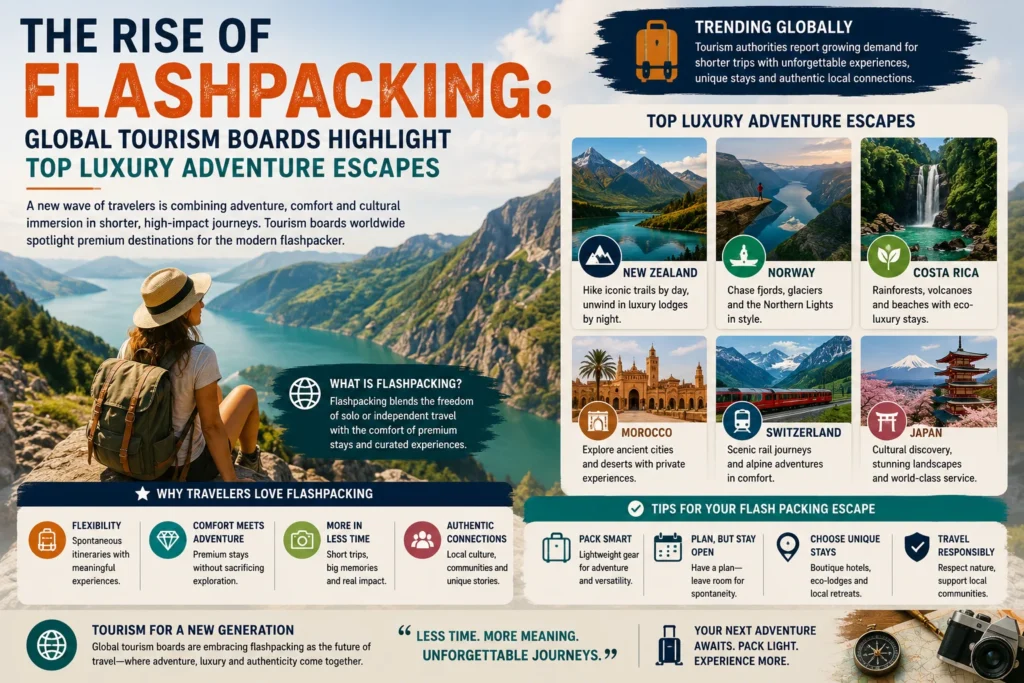
A structural shift in global travel preferences is redefining the outdoor hospitality sector, as national tourism offices document a major surge in premium independent travel. Termed “flashpacking,” this emerging trend merges the self-guided, exploratory spirit of traditional backpacking with the refined comforts of upscale boutique accommodation, high-end wellness programming, and curated culinary experiences. Instead of choosing between rugged wilderness immersion and sophisticated hospitality, modern travelers are actively selecting itineraries that offer demanding daytime physical treks followed by overnight stays in high-end eco-lodges or luxury glamping sites.
Official statistical reports from international tourism boards indicate that demand for these hybrid itineraries has grown significantly. From the alpine trails of the Rocky Mountains to the historic lagoons of Japan and the volcanic peaks of French Polynesia, public tourism authorities are investing heavily in low-impact, high-yield infrastructure to accommodate this affluent demographic.
Alpine Elegance and Wilderness Trails in Colorado
The United States Intermountain West remains a primary focus for high-altitude luxury adventure escapes. According to the Aspen Chamber Resort Association and official regional commerce logs, the paired destinations of Aspen and Snowmass Village in Colorado have expanded their network of summer trails to encompass 211 miles of managed terrain. This vast network allows travelers to execute technical day hikes through extensive aspen groves and alpine wildflower meadows before returning to premium urban centers.
Notable routes optimized for single-day excursions include the 3.98-mile Rim Trail South, which provides panoramic 360-degree vistas of the Roaring Fork Valley, and the 5.3-mile Cathedral Lake Trail. The latter route originates near the historic Ashcroft ghost town, ascending sharply to a high-alpine tarn with clear views of the iconic Maroon Bells wilderness area. To support this market, boutique properties like the White Elephant Aspen have established footprint spaces directly inside the urban core, providing hikers with immediate access to backcountry trailheads alongside high-end amenities.
Further southwest, the historic mountain town of Telluride—situated within a dramatic glacial box canyon—showcases how Victorian mining heritage can integrate with luxury outdoor recreation. The Colorado Tourism Office highlights trail systems leading directly from the town center to Bear Creek Falls and the sheer drop of Bridal Veil Falls. After completing these demanding high-altitude routes, travelers can utilize premium wellness infrastructures, such as the Madeline Hotel & Residences in Mountain Village, which features slopeside spas and heated outdoor pools designed for athletic recovery.
National Park Glamping: Yosemite and the Maine Coast
Federal land management agencies and regional tourism authorities in the United States are reporting record utilization of private glamping enclaves located immediately adjacent to major national parks. In California’s Tuolumne and Mariposa counties, where 95 percent of Yosemite National Park is designated as protected wilderness, local tourism updates highlight a diverse collection of upscale basecamps.
Properties such as the 80-acre Under Canvas Yosemite outpost near the Big Oak Flat entrance station, Wildhaven Yosemite, and AutoCamp Yosemite in Midpines allow travelers to explore iconic geological features like Half Dome, Hetch Hetchy Reservoir, and the ancient sequoias of Tuolumne Grove. These custom low-impact developments provide safari-style canvas tents and refurbished airstreams equipped with private bathrooms, proper bedding, and solar-powered charging arrays, minimizing environmental pressure on the park’s interior.
On the Atlantic seaboard, the Maine Office of Tourism highlights a similar convergence of maritime wilderness and refined comfort within the 47,000 acres of Acadia National Park. Flashpackers frequently complete dawn ascents of Cadillac Mountain—the first point to witness sunrise in the United States during select seasons—before exploring the park’s 158 miles of historic carriage roads and rugged granite headlands. Waterfront properties like Under Canvas Acadia and the historic Bar Harbor Inn & Spa provide a dual experience, combining shoreline campfire programs with fine seaside dining.
Cultural Immersive Networks in Europe and Asia
European and Asian tourism ministries are deploying creative infrastructure assets to capture the flashpacking market through regional cycling and wellness networks:
Hungary: The Hungarian Tourism Agency is highlighting multi-modal itineraries that link the architectural ruin bars and thermal bath networks of Budapest with regional cycling paths. Travelers can navigate the newly expanded EuroVelo 6 cycling route along the Danube River before transitioning to the Tokaj wine region or Lake Balaton, Central Europe’s largest freshwater lake. New boutique properties, such as the Birgés Hotel in Balatonfüred, cater directly to active cyclists seeking design-forward accommodations amidst historic vineyards.
France: In the French Alps, the Méribel Tourism Office reports a growing market for high-altitude wellness retreats located along the expansive Three Valleys trail network. Secluded properties like the Refuge de la Traye modernize the traditional alpine shelter concept by introducing eco-responsible design, outdoor mountain-view saunas, and hydrotherapy infinity pools directly accessible from long-distance hiking loops.
Japan: The Mie Prefecture Tourism Federation, in collaboration with the Kii Peninsula transport network, is promoting the cultural assets of the Ise-Shima National Park. Located under two hours from Osaka via the Kintetsu railway, the region allows hikers to visit Ise Jingu, Japan’s most sacred Shinto shrine, and interact with the Ama, the region’s traditional female pearl divers. Premium eco-resorts like ISESHIMA Base and the private waterfront villas of COVA Kakuda on Ago Bay utilize the nation’s highly efficient hands-free luggage forwarding infrastructure, allowing hikers to move between coastal villages completely unencumbered by heavy baggage.
Island-Hopping Dynamics in French Polynesia
In the South Pacific, Tahiti Tourisme has documented an operational shift toward dynamic island-hopping itineraries that move away from static resort vacations. By utilizing multi-island air passes managed by domestic carriers, independent travelers are structuring custom journeys across the archipelago.
This mobile approach allows visitors to combine stays at locally owned family pensions and upscale eco-lodges while exploring the steep volcanic interior of Moorea, diving the deep ocean lagoons of Rangiroa, or visiting the vanilla plantations of Taha’a. This strategy effectively decentralizes tourism revenue, supporting local economies while fulfilling the consumer demand for authentic, unscripted adventure paired with boutique comfort.
National tourism administrators emphasize that the long-term sustainability of these luxury adventure escapes depends on strict adherence to environmental conservation mandates. By keeping group sizes small and focusing infrastructure on eco-certified glamping and boutique redevelopments, global destinations are successfully preserving the pristine natural landscapes that attract independent travelers in the first place.
For more travel news like this, keep reading Global Travel Wire