California’s high-speed rail programme has entered a decisive new stage after officials approved procurement for an estimated $2.4 billion civil works contract covering the Merced–Madera extension.
The California High-Speed Rail Authority Board authorised the release of a Request for Qualifications for the collaborative design-build contract on June 24, 2026. The decision opens the next phase of construction planning for a key Central Valley corridor that will extend the system north towards Merced.
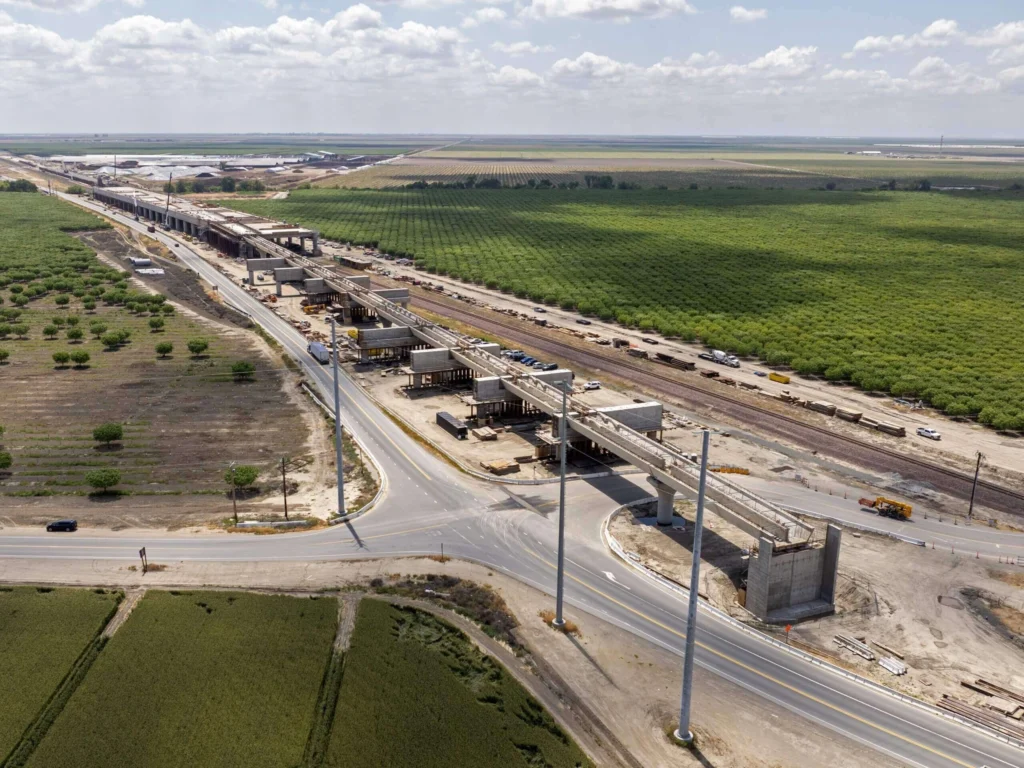
The contract covers major grading, structures and roadway improvements along approximately 30.3 miles of new high-speed rail guideway between southern Merced and the existing construction interface in Madera County.
For communities, contractors and transport planners, the move signals that the programme is progressing from design and regulatory preparation towards larger-scale physical delivery.
July RFQ Launch Sets Procurement Timeline
The Authority expects to advertise the RFQ in July 2026, with Statements of Qualifications due in November. Two design-build teams are scheduled to be shortlisted in December before entering an extended collaborative proposal and design-development period.
Final proposals are expected in October 2027, followed by a proposed contract award in November. Major construction is currently anticipated between late 2027 and 2030.
This timetable provides contractors, engineering groups and regional suppliers with a clearer roadmap for one of the largest upcoming civil infrastructure opportunities in the United States.
The procurement could also generate work for smaller companies through engineering support, construction services, materials, logistics and local supply chains.
Collaborative Design-Build Changes Project Delivery
The Merced–Madera contract will use a collaborative design-build model rather than relying solely on a conventional process in which design and construction are separated.
Under the approach, the two shortlisted teams will work with the Authority during project development to refine technical plans, review alternative concepts and identify construction risks before submitting final fixed-price proposals.
This structure is intended to strengthen cost and schedule certainty while reducing the possibility of disputes after construction begins.
It also allows contractors to contribute practical construction knowledge earlier, potentially improving sequencing, design efficiency and coordination with utilities, road networks and other third parties.
For US infrastructure delivery, the model represents a notable shift towards early contractor involvement on major rail projects.
Central Valley Construction Continues to Expand
The procurement comes as construction activity accelerates across the broader Merced–Bakersfield corridor.
The Authority reports that 171 miles are currently under design or construction, with more than 80 miles of guideway completed. Sixty-one major structures have been finished, while another 30 are under construction across Madera, Fresno, Kings and Tulare counties.
Track and systems installation is also scheduled to begin during 2026, creating a visible transition from civil structures towards the operational railway infrastructure needed for future train services.
The Merced extension is important because it will bring the initial Central Valley system closer to a larger urban centre, improving its potential connection with existing regional transport and intercity rail services.
Tourism and Regional Mobility Could Benefit
Although the procurement is primarily an infrastructure development, its long-term impact could extend into tourism and regional travel.
A completed high-speed rail corridor would make it easier for travellers to move between Central Valley communities while creating future connections towards the San Francisco Bay Area and Southern California.
Merced serves as an important gateway for visitors travelling towards Yosemite National Park and surrounding outdoor destinations. Improved rail connectivity could eventually support more car-free itineraries, easier transfers and stronger visitor movement through local hotels, restaurants and transport services.
Fresno, Bakersfield and other Central Valley cities may also gain greater visibility as business and leisure destinations as the rail system develops.
For local communities, station-area investment could encourage hospitality, retail and mixed-use development around future passenger hubs.
Clean Energy Partnership Adds Strategic Dimension
Alongside the Merced–Madera procurement, the Authority is advancing the Cal CLEAN Partnership Agreement, a public-private initiative intended to explore reliable clean power for future railway operations.
A selected partner will conduct an initial six-month assessment at no cost to the Authority, examining renewable generation, energy resilience and opportunities to create value from publicly owned infrastructure. A recommended partner is expected in August 2026, with an initial agreement targeted for September.
This initiative matters because California’s system is planned as an electrified railway required to operate without an ongoing taxpayer subsidy.
Energy planning, asset commercialisation and infrastructure delivery are therefore becoming increasingly connected within the programme’s long-term strategy.
Environmental Clearance Reduces Development Risk
California has now environmentally cleared 463 miles of the planned 494-mile route between San Francisco and Los Angeles–Anaheim.
This substantially reduces regulatory uncertainty across the wider alignment and provides a clearer foundation for future procurement and construction phases.
The programme has also created nearly 19,200 jobs and generated close to $25 billion in statewide economic activity, demonstrating that its influence already extends beyond future passenger operations.
Merced–Madera Becomes a Critical Test
The $2.4 billion Merced–Madera contract will be a major test of California’s new delivery strategy.
Its success will depend on contractor collaboration, cost discipline, funding stability and coordination with the programme’s track, systems and energy plans.
However, the approval marks a clear move towards execution. Rather than remaining a long-term transport concept, California High-Speed Rail is building a connected Central Valley backbone designed to support future mobility, regional development and lower-emission travel across the state.
For more travel news like this, keep reading Global Travel Wire