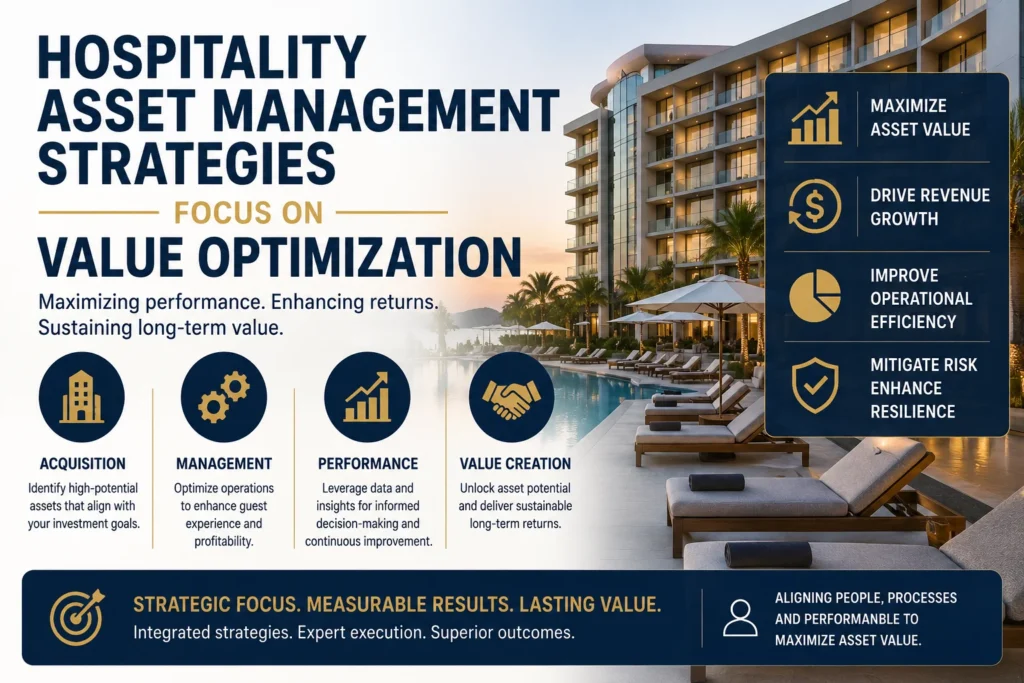
The global hospitality sector is shifting toward asset maximization as real estate investment trends prioritize efficiency and incremental growth. At the 48th Annual NYU International Hospitality Investment Forum held at the New York Marriott Marquis, industry leaders highlighted that property management strategies are evolving beyond baseline rate increases. Instead, current initiatives lean heavily on targeted capital deployment and operational technologies to enhance real property values.
According to global tourism and hospitality investment frameworks, properties must actively adapt to fluid consumer behaviors to capture market share. Data shared by leading real estate investment trusts indicates a multi-billion dollar trend in return-on-investment capital being directed back into existing hotel portfolios. These structural reinvestments emphasize transformational updates over standard maintenance, specifically targeting underutilized spatial footprints to cultivate higher margins.
Transformational Renovations and Strategic Space Allocation
A primary focus within modern property management is the restructuring of on-site amenities, particularly food-and-beverage outlets, spa facilities, and retail spaces. Institutional performance metrics reveal that hotels undergoing structured space conversions achieved an average gain of nine points in their Revenue Per Available Room (RevPAR) share index upon stabilization. To secure these gains, analysts utilize extensive case studies and market underwriting to evaluate localized competitor pricing before finalizing physical alterations.
Strategic conversions frequently involve scaling down underperforming full-service venues to create high-margin environments. For instance, transforming underutilized dining spaces into compact, experience-driven lounges or retail zones has successfully reduced food overhead while increasing overall asset profitability. In specific luxury assets, reducing restaurant seating capacities and converting the remaining square footage into specialized retail space yielded a 10% increase in average daily rates alongside elevated occupancy levels.
Enhancing Guest Value and Baseline Operational Efficiency
Beyond large-scale spatial redesigns, hospitality operators are focusing on building long-term value through rigorous preventative maintenance and functional room updates. Keeping guest accommodations in peak structural condition directly mitigates rising operational costs, particularly utility and electricity expenditures, which present ongoing challenges to regional bottom lines.
By ensuring room functionality remains consistent, properties can confidently implement higher average daily rates. This operational readiness encourages travelers to remain on-property, driving secondary expenditures such as late checkouts and ancillary lounge revenue. The ultimate objective of these synchronized asset updates is to boost Gross Operating Profit (GOP) margins, translating directly into stronger cash flows and enhanced asset valuations during future refinancing or exit windows.
Integrating Artificial Intelligence into the Hospitality Architecture
The adoption of artificial intelligence represents the next operational shift in maximizing real estate performance. When evaluating technology investments, hospitality boards utilize strict guidelines, requiring new platforms to fulfill specific criteria: driving operational efficiency, generating incremental revenue, or improving the overall guest and workforce experience. To protect capital, operators rely on designated test properties to run controlled field trials and validate proof of concepts prior to portfolio-wide deployment.
The integration of artificial intelligence is also changing how properties position themselves across search environments. Industry specialists note a transition from standard search engine optimization to generative AI optimization. To ensure properties remain visible as digital booking habits change, management groups are updating digital assets—utilizing direct, scannable, bullet-style information architectures and high-resolution imagery tailored specifically for algorithmic indexing.
Long-Term Outlook for Hospitality Capital Markets
As the hospitality investment landscape becomes more disciplined, the ability to extract value from existing assets remains a critical differentiator for global brands. The consensus among financial delegates indicates that the industry is entering a sophisticated phase of refinement, where growth is dictated by precise property management rather than rapid physical expansion.
By balancing targeted physical renovations with advanced data and artificial intelligence tools, hospitality enterprises are successfully future-proofing their portfolios. These combined efforts ensure that properties can maintain competitive positioning, satisfy evolving global traveler demands, and deliver sustainable financial returns to institutional investors within an increasingly competitive global travel marketplace.
For more travel news like this, keep reading Global Travel Wire